A UK Driver's Guide to Cleaning Out Fuel Tank After Misfuelling
- Misfuelled Car Fixer

- Feb 7
- 17 min read
It’s that sinking feeling every driver dreads. You're standing at the pump, you’ve just put the nozzle back, and then you see it—the wrong colour handle. You’ve just put the wrong fuel in your car.
Before you let the panic set in, taking a moment to understand the signs of fuel contamination is the first step toward fixing it. It’ll confirm if you need to be thinking about cleaning out the fuel tank. The most critical rule is also the simplest: do not turn the key or start the engine. This single action prevents the wrong fuel from being pumped through your entire system, saving you from a world of mechanical and financial pain.
How to Tell If Your Fuel Is Contaminated
Of course, realising you’ve used the wrong nozzle at the petrol station is the most obvious sign you’ve got a problem. But fuel contamination isn't always so clear-cut.
Sometimes, the issue is more subtle, creeping in from water getting into the tank, sediment building up over time, or even microbes growing in old fuel. Whatever the cause, your vehicle is usually the first to tell you when something is seriously wrong.
Imagine you've just filled up and pulled away from the forecourt. A few hundred metres down the road, the car starts to cough and splutter, feeling like it's about to give up completely. This is a classic symptom of contaminated fuel hitting the engine. It's your car's way of screaming for help.
Common Symptoms of Misfuelling or Contamination
If you've driven even a short distance after mixing up petrol and diesel, your car is going to protest, and it won't be quiet about it. The exact symptoms can vary a little depending on whether you've put petrol in a diesel engine or the other way around, but the general warnings are pretty similar.
Here are the key signs you need to watch out for:
Engine Spluttering and Misfiring: The engine is really struggling to burn the incorrect fuel, which leads to a rough, jerky ride.
Loss of Power: Your car will feel sluggish and heavy. It just won't accelerate properly because it's being starved of the right fuel.
Excessive Smoke from the Exhaust: Putting petrol in a diesel engine is notorious for this. It often produces thick clouds of white or grey smoke as the unburnt fuel vapourises in the hot exhaust.
Engine Warning Lights: Your dashboard will probably light up like a Christmas tree. Expect the engine management or check engine light to appear, signalling a critical fault.
Difficulty Starting or Not Starting at all: If you do try to start the engine, it might turn over but just refuse to catch. In many cases, it won't even get that far.
Recognising these issues is absolutely vital. For a more detailed breakdown, you might be interested in our guide on the specific symptoms of wrong fuel in a car.
The single most important thing you can do after a misfuelling mistake is to do absolutely nothing that involves the ignition. Don't start the car. Don't even turn the key to the 'on' position to listen to the radio. This simple inaction can save you thousands of pounds in repairs.
The table below offers a quick-glance guide to help you identify what might be wrong and what to do—or, more importantly, what not to do.
Misfuelling Symptoms And Immediate Actions
Symptom | Potential Cause | Immediate Action (Do Not Start Engine) | Risk If Ignored |
|---|---|---|---|
Rough running, loss of power | Petrol in diesel, or vice-versa | Pull over safely, turn off the engine immediately | Severe fuel pump, injector, and engine damage |
Excessive white/grey smoke | Petrol in a diesel engine | Do not attempt to drive further. Call for a fuel drain | Catastrophic engine component failure |
Engine won't start, smells of petrol | Misfuelled with petrol (in diesel car) | Keep keys out of the ignition. Do not try again | Prevents fuel circulation, minimises damage |
Engine warning lights flashing | ECU detecting major fuel system fault | Stop the vehicle, call for professional assistance | Can lead to costly, full system replacement |
Acting fast based on these signs is the key to containing the problem before it spirals into a mechanical and financial nightmare.
The Scale of the Misfuelling Problem
Trust me, this mistake is far more common than you'd think and it’s a leading reason for needing a fuel tank cleaned out. In the UK, misfuelling incidents happen to around 150,000 drivers every year. A huge 62% of these cases involve diesel cars being mistakenly filled with petrol.
Starting the engine after a misfuel circulates the contaminants, leading to repair costs that average between £1,200 and £5,000 if you don't get it sorted out immediately.
The giveaways, like catching yourself putting petrol in a diesel car at the pump, are easy to diagnose. The less obvious signs, however, require you to listen to your car. That sudden loss of power or the appearance of smoke isn't just a minor glitch—it's your car telling you to pull over safely and call for a professional. Taking these signs seriously is the difference between a quick, roadside fix and a catastrophic engine failure.
Your Immediate Action Plan After Misfuelling
It’s a horrible, sinking feeling—that sudden realisation you've just put the wrong fuel in your car. Before the panic kicks in, just take a breath. What you do in the next sixty seconds is absolutely critical and can be the difference between a simple roadside fix and a repair bill stretching into the thousands.
First things first, and this is the golden rule: do not put the key in the ignition. Don't even turn it to the accessory position to close a window or listen to the radio. The moment you do, the fuel pump can prime itself, and that's all it takes to start sending the contaminated fuel through your car's veins. If the engine stays off, the problem is contained in the fuel tank, making the fix a whole lot simpler.
Safety Steps at the Petrol Station
If you’re still at the pump, you're in the best-case scenario. But you can't just leave the car where it is.
Get your hazard lights flashing straight away to warn other drivers.
Stick the car in neutral.
Ask someone for a hand to push the vehicle to a safe parking bay, well away from the pumps and the flow of traffic.
Let the petrol station staff know what’s happened. They've seen it all before and are trained to secure the area safely.
Whatever you do, don't be tempted to try a DIY fix on a busy forecourt. The risk from flammable fumes is immense, and it’s a job that needs proper, specialised equipment. Just stay with your car until the professionals arrive.
The single most important decision you'll make after misfuelling is to call for professional help without a moment's delay. Fighting that urge to "just try" and start the engine is your best defence against catastrophic engine damage.
This simple flowchart can help guide you through those first critical moments.
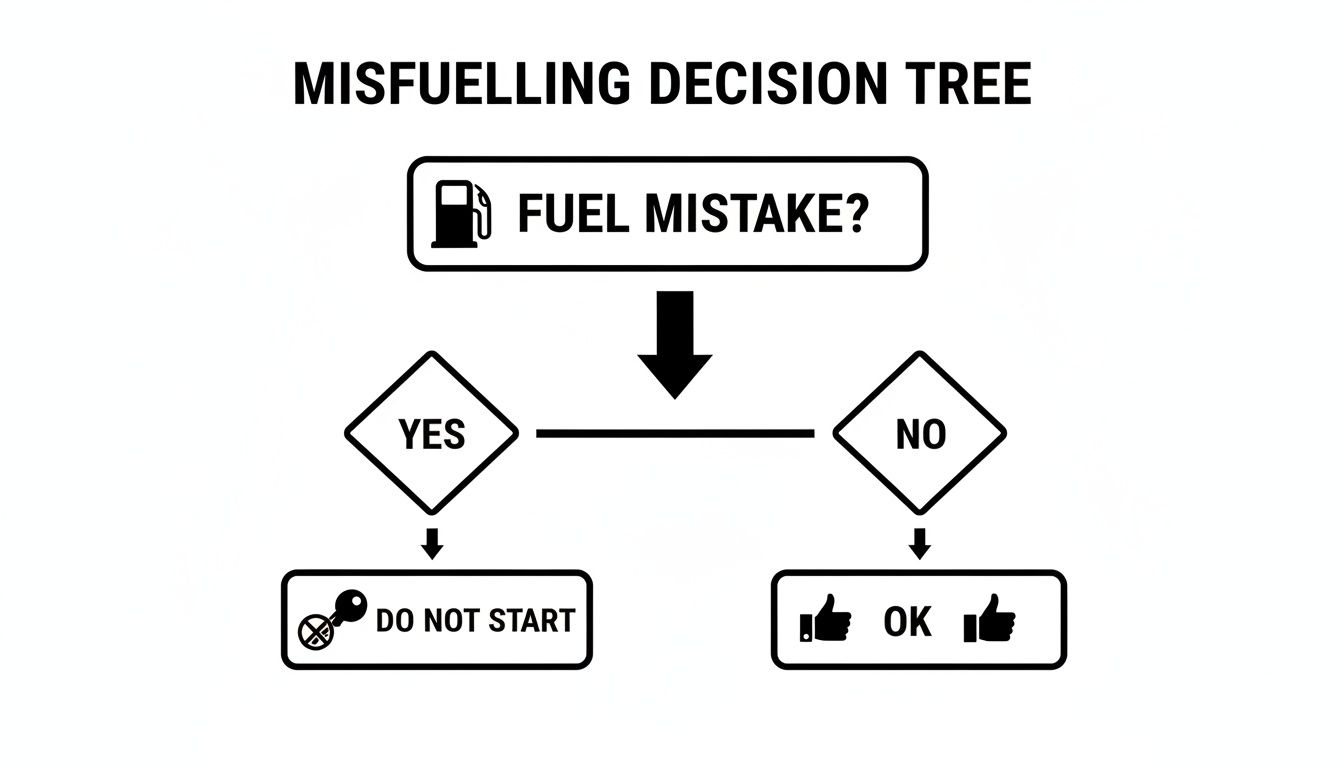
As the visual guide shows, the number one rule is always the same: if you've made a mistake at the pump, don't start the car.
Calling for a Professional Fuel Drain
Once you and your car are safely out of the way, your next and only job is to call a mobile wrong-fuel specialist. This is the only truly safe and effective option. Trying to siphon the fuel yourself is not only dangerous but you'll almost certainly leave behind a damaging residue.
When you make the call, having a few key details to hand will get the technician on their way to you much faster.
Information to Have Ready:
Your Exact Location: Give the full address of the petrol station. If you're on a motorway, provide the junction numbers and which way you were travelling.
Vehicle Details: Be ready with the make, model, and registration of your car.
The Fuel Mix-Up: Explain exactly what happened. For example, "I've put about 20 litres of unleaded into my diesel Ford Focus." For a deeper look at this very common scenario, you can read more about what happens when you put petrol in a diesel car.
Engine Status: Be honest about whether the engine has been started or not. It's crucial information that helps the technician know what they’re dealing with.
By following these immediate steps, you effectively contain the problem. You stop the wrong fuel from wrecking sensitive and expensive parts like the fuel pump, injectors, and the engine itself. A professional will handle the whole process—including the environmentally safe disposal of the contaminated fuel—getting you back on your way with minimal fuss.
Should I Try Draining the Fuel Tank Myself?
After the initial shock of misfuelling wears off, your mind will probably jump straight to finding a quick fix. A quick search online might make cleaning out the fuel tank sound like a job you can handle yourself. On paper, it seems simple enough, but let me be clear: the reality is fraught with serious, costly risks.
Attempting a DIY fuel drain is a high-risk, low-reward gamble that can threaten your safety, your car, and the environment. I get it, the temptation to save a few quid is strong, but the potential downsides are massive. Modern fuel systems are incredibly complex, and a single mistake can lead to thousands of pounds in damage. Before you even think about reaching for a siphon hose, it’s vital to understand what you’d be up against.
The Dangers of Handling Fuel
The most immediate danger is the fuel itself. Both petrol and diesel are hazardous materials that demand extreme caution. Petrol is spectacularly flammable, and its fumes can ignite with the tiniest spark from static electricity, a dropped tool, or a stray electrical current. While diesel is less volatile, it's still combustible and poses significant health risks.
Working with fuel on your driveway or in a garage is just asking for trouble. The fumes alone can cause dizziness, headaches, and serious respiratory issues if inhaled. Getting it on your skin can also lead to nasty irritation and other health problems. These are not substances to be messed with without proper training and gear.
Risking Serious Damage to Your Vehicle
Beyond the personal safety risks, a DIY attempt at cleaning out the fuel tank puts your car's sophisticated systems in grave danger. Modern cars rely on high-pressure fuel pumps and precision injectors with microscopic tolerances. They are not forgiving.
Here are just a few ways a DIY drain can go horribly wrong for your car:
Leaving Contaminants Behind: A simple siphon will never get all the contaminated fuel out. The dregs left at the bottom of the tank, along with any water or sediment, will instantly mix with the fresh fuel and continue causing damage.
Destroying the Fuel Pump: Many in-tank fuel pumps can be wrecked simply by running them dry. If you try to empty the tank this way, you risk them overheating and failing—a costly repair in itself.
Introducing Debris: Without a closed-loop, filtered system, it's all too easy to accidentally get dirt, dust, or other bits into the tank. These tiny particles can wreak havoc on your injectors and filters.
A professional service doesn't just drain the fuel; they flush the entire system. This includes the fuel lines, filters, and injectors, ensuring every last trace of the wrong fuel is gone. A DIY job can never come close to this level of thoroughness.
The stats around misfuelling highlight the financial stakes. Misfuelling incidents in the UK spike by 22% during the winter, with official data logging 45,000 stranded vehicles due to wrong fuel. While some drivers consider a DIY approach, the average cost for untreated damage from an improper clean-out is a staggering £4,193. A prompt, professional drain can save 85% of these potential costs, as technicians use specialised vacuum technology to remove 99% of contaminants. This is crucial, as uncleaned tanks can corrode 30% faster. You can find out more about the petroleum tank cleaning process over on marketreportanalytics.com.
Environmental Responsibility and Legal Disposal
So, what’s your plan for 50-60 litres of contaminated fuel? Pouring it down a drain or onto the ground is illegal, environmentally catastrophic, and carries heavy fines. Just one litre of petrol can contaminate up to a million litres of drinking water.
Your local recycling centre isn't equipped to take this kind of hazardous waste from the public. Professionals, on the other hand, are legally required to dispose of contaminated fuel according to strict UK Environment Agency regulations. They have the right licences and transport the waste fuel to authorised disposal facilities. It’s a crucial part of the service that is almost impossible for an individual to manage legally.
The Tools Tell the Real Story
To truly get a sense of the complexity, just look at the equipment needed. This isn't a job for a bucket and a bit of tubing from the shed. A professional technician arrives with a van kitted out with highly specialised, certified gear.
Essential Professional Equipment:
ATEX-Approved Pumps: These are explosion-proof pumps specifically designed to transfer flammable liquids without creating a spark.
Commercial-Grade Hoses and Fittings: Built to withstand corrosive fuels and prevent any leaks or spills.
Sealed Waste Fuel Bowser: A secure, legally compliant container for transporting the contaminated fuel away.
Full Personal Protective Equipment (PPE): This means fuel-resistant gloves, coveralls, and safety goggles to protect against splashes and fumes.
When you look at that list, it becomes crystal clear: cleaning out the fuel tank properly is an industrial process, not a weekend DIY project. The investment in this equipment alone shows why it’s a job best left to the experts who do it safely, day in and day out.
How A Professional Fuel Drain Protects Your Vehicle
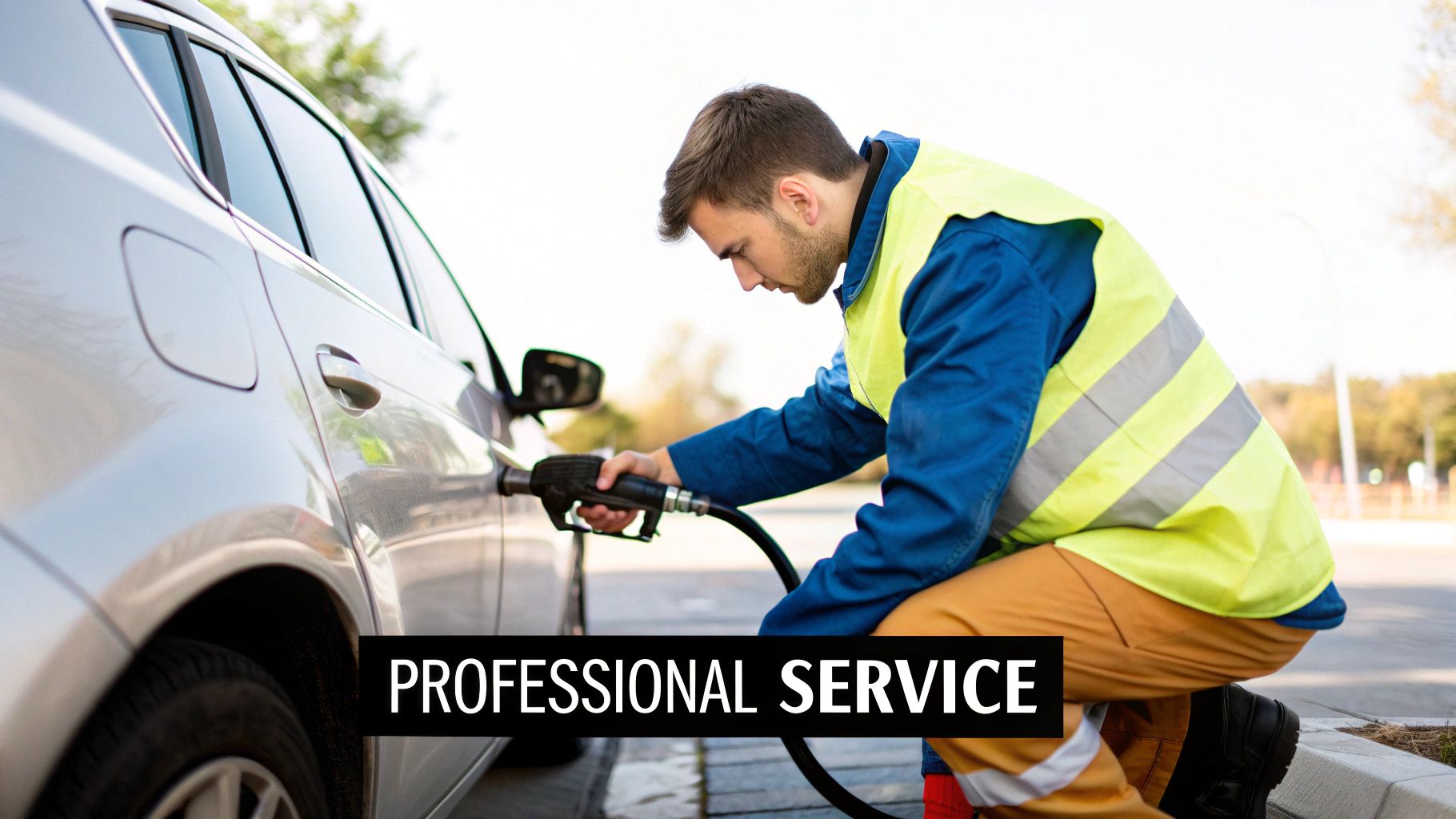
After that first gut-wrenching moment of realising you’ve misfuelled, your mind immediately jumps to getting the contaminated fuel out. While a DIY siphon might seem like a quick fix, it barely scratches the surface of what’s needed. A professional fuel drain isn't just a simple removal; it’s a meticulous, multi-stage procedure designed to safeguard every last component of your car’s sensitive fuel system.
When a certified technician from a service like Misfuelled Car Fix arrives, their first move is always safety. They'll secure the area around your vehicle, checking for any potential ignition sources and making sure the workspace is safe for everyone. This immediate control of the scene is the first clear sign you're in capable hands.
The Professional Draining and Flushing Process
The core of the service revolves around specialised, industry-grade equipment you just won't find on a shelf at your local hardware shop. Technicians use ATEX-certified, explosion-proof pumps specifically engineered for handling flammable liquids. This isn't your garden-variety siphon; it's a closed-loop system that safely pulls every last drop of the wrong fuel from your tank into a secure, legally compliant bowser.
Once the tank is empty, the real work begins. The process is far more than a simple drain; it’s a full system cleanse.
Fuel Line Flush: The technician flushes the fuel lines running from the tank right up to the engine, purging any residual wrong fuel that got drawn into them.
Filter and Injector Purge: They will clean out the fuel filter housing and often prime the system to push fresh, clean fuel through the injectors, dislodging any contaminants.
Complete System Check: After the flush, the technician adds a small amount of the correct fuel to the tank and circulates it through the system to ensure everything is absolutely clear.
This level of thoroughness is what truly sets a professional service apart. It’s about cleaning out the fuel tank and the entire pathway that fuel travels to your engine, leaving absolutely no margin for error.
A professional fuel drain is a comprehensive decontamination procedure for your car's entire fuel delivery system. It’s about removing the current problem and preventing future damage from any lingering contaminants that a simple drain would inevitably miss.
This meticulous approach becomes absolutely critical when dealing with more complex contamination cases.
Handling Special Cases Like AdBlue Contamination
Putting AdBlue in your diesel tank is hands down one of the most destructive misfuelling mistakes a driver can make. AdBlue is not a fuel additive; it's a urea-based solution that is incredibly corrosive to many materials found in a diesel fuel system, including seals, pipes, and sensitive pump components.
If AdBlue gets into the fuel system, it can crystallise as it dries, causing solid blockages and catastrophic damage to the high-pressure pump and injectors. A standard drain is completely useless here. A professional will perform a multi-stage flush using special cleaning solutions to dissolve any crystals and neutralise the corrosive effects, potentially saving you from a repair bill that could easily run into thousands of pounds for a full system replacement.
When weighing up your options, the difference between tackling this yourself and calling in an expert is stark. It's not just about convenience; it's about safety, legality, and the long-term health of your vehicle.
DIY Fuel Drain Vs Professional Service
Factor | DIY Approach | Professional Service |
|---|---|---|
Safety | Extremely High Risk. Handling fuel without proper equipment can lead to fire, explosion, or chemical burns. Fumes are toxic. | Safety is Priority #1. Technicians use ATEX-certified, explosion-proof equipment and follow strict safety protocols. |
Thoroughness | Superficial. A siphon will leave behind litres of contaminated fuel in the tank, lines, and filter housing. | Comprehensive. The entire system—tank, lines, filter, injectors—is drained, flushed, and purged of all contaminants. |
Equipment | Basic siphon hose and jerry can. Completely inadequate and unsafe for the task. | Specialist mobile units with high-speed pumps, secure waste bowsers, and system flushing tools. |
Time | Can take several hours, is messy, and often results in an incomplete job. | The entire process, from arrival to departure, is typically completed in just 45-90 minutes. |
Legal Disposal | Major Hurdle. Legally disposing of mixed, hazardous fuel is almost impossible for an individual. Fines are severe. | Fully Compliant. Licensed to transport and dispose of hazardous waste according to Environment Agency regulations. |
Outcome | High probability of leaving contaminants behind, leading to future engine damage and costly repairs. | Guaranteed Fix. Your vehicle's fuel system is professionally decontaminated, preventing long-term damage and getting you back on the road. |
Ultimately, the small saving you might make attempting a DIY drain is dwarfed by the massive risks to your safety and your vehicle's engine.
Speed, Safety, and Environmental Compliance
Opting for a professional service for cleaning out the fuel tank gives you three key advantages that a DIY attempt can never match: speed, safety, and guaranteed compliance. The entire roadside procedure is remarkably efficient. Professional mobile services in England handle over 10,000 callouts annually, successfully getting 98% of vehicles back on the road the very same day. Technicians use specialist pumps that can extract up to 100 litres per hour, meaning the whole job is typically done in just 45-90 minutes.
Crucially, these services are equipped to recycle around 70% of the drained fuel at licensed facilities, adhering to strict UK regulations for managing the 1.8 million tonnes of waste fuel generated each year. To get a sense of the scale of this industry, you can find more insights on the petroleum tank cleaning market on marketdataforecast.com.
This responsible disposal is a legal requirement. When you call a professional, you're not just protecting your car; you're also ensuring that hazardous waste is managed correctly under Environment Agency rules—a step that is next to impossible to handle legally on your own. You get total peace of mind knowing the job is done right, from start to finish.
Understanding The Costs Of A Wrong Fuel Drain
When you’re stranded on a forecourt after misfuelling, the first thought that usually follows the initial shock is, "Right, how much is this going to set me back?" It's a perfectly fair question, and knowing what to expect financially helps you make a calm, informed decision instead of a panicked one. The good news is that a professional mobile fuel drain is far more affordable than most people imagine, especially when you weigh it against the alternatives.
Calling your main dealer is almost always the most expensive option. They'll likely need to recover your car to their workshop, which immediately adds towing fees on top of their premium labour rates. Likewise, some national breakdown services can charge a hefty sum for what they class as a specialist job. A dedicated mobile wrong-fuel service, on the other hand, is built for this exact situation. We come directly to you, cutting out recovery costs and giving you a competitive, fixed price for cleaning out the fuel tank right there at the roadside.
What Influences The Price
The final cost of a fuel drain isn't a one-size-fits-all figure. A few key factors come into play, which any reputable service will run through with you upfront over the phone.
Vehicle Type: Draining a simple family hatchback is usually more straightforward than working on a big commercial van or a high-performance car with a more complex fuel system.
Your Location: While services like ours cover huge areas, how far you are from the nearest technician can sometimes affect the price, especially if you're in a very remote or hard-to-reach spot.
Amount of Fuel: The volume of contaminated fuel that needs to be safely drained and disposed of can impact the time and resources the job requires.
It always pays to be open about your situation. This lets the provider give you an accurate, no-obligation quote from the get-go, so there are no nasty surprises later on. For a much deeper dive into the numbers, check out our complete guide on the wrong fuel in car cost.
Think of a professional fuel drain as an investment in prevention. It’s a single, controlled expense that protects you from the potentially catastrophic, open-ended costs of repairing a damaged engine and fuel system.
The Customer Journey: What to Expect
From that first phone call to driving away safely, the whole process is designed to be as smooth and stress-free as we can possibly make it.
Your Experience with Misfuelled Car Fix:
When you call us, you'll speak directly to a knowledgeable controller. They'll take down your details, give you a clear, fixed quote, and get the nearest technician on their way to you.
Our specialist will arrive at your location, typically in under an hour, in a fully equipped, purpose-built vehicle. They'll secure the area and then start the process of safely cleaning out the fuel tank and the entire fuel system using ATEX-approved, explosion-proof equipment.
Once drained, the system is flushed through with fresh, correct fuel to make sure every last trace of the contaminant is gone. We'll then add a small amount of the correct fuel and start your car to ensure it’s running perfectly.
After a final check to confirm everything is working as it should, you’re free to head to the pumps, refuel properly, and get on with your day. The entire on-site process is usually wrapped up in 45-90 minutes. It's a small price and a short wait for the peace of mind that comes from knowing the job was done right.
Your Top Misfuelling Questions Answered
Even when you know what to do, that sinking feeling of having used the wrong pump leaves a lot of questions swirling around. Over the years, our technicians have heard every single one while getting drivers back on the road. We’ve pulled together the most common queries we get about cleaning out the fuel tank to give you some clarity and peace of mind.
Will My Car Insurance Cover a Fuel Drain?
This is often the first thing drivers ask, and unfortunately, the answer isn’t a simple yes or no. Most standard car insurance policies won't cover misfuelling as a basic feature. Insurers usually classify it as a self-inflicted fault, putting it in the same bracket as running out of fuel.
That said, many comprehensive policies have add-ons that can help. It's all in the small print. You'll need to check your policy documents or give your provider a call to be sure.
Here's what to look for in your policy:
Accidental Damage Cover: Some insurers might cover a fuel drain under this clause, but many have specific exclusions for misfuelling.
Breakdown Assistance: Higher-tier breakdown cover often includes help for misfuelling, but watch out for limits on the call-out cost.
Misfuelling-Specific Cover: A few providers offer this as a dedicated, optional add-on.
Just be aware that making a claim, even if it’s successful, could ding your no-claims bonus and push up your premiums next year. In many cases, paying a specialist mobile service directly is the quicker and more cost-effective way to go.
I Only Drove a Short Distance. Is the Damage Done?
You realised your mistake a few streets from the petrol station and immediately pulled over. It’s a classic scenario, and while driving any distance with the wrong fuel isn't great, acting that quickly makes a world of difference.
If you’ve only covered a mile or so at low speed, the odds of severe, permanent damage are much, much lower. Yes, the contaminated fuel has started to circulate, but it likely hasn't had time to cause catastrophic harm to the high-pressure pump or injectors.
The most critical move you can make is to stop the car as soon as it's safe. The less time that engine runs on the wrong fuel, the better the outcome. A professional flush can almost always sort the immediate problem and head off any long-term issues.
What Is the Worst-Case Scenario If I Keep Driving?
Ignoring the symptoms and pushing on is, without a doubt, the single most destructive thing you can do. Let’s be blunt: the consequences can be catastrophic for your engine and your wallet.
When you put petrol in a diesel engine, the petrol acts as a solvent, stripping away the vital lubrication that diesel provides. This leads to brutal metal-on-metal friction inside the high-pressure fuel pump, which can shred it in minutes. This sends tiny metal fragments coursing through the entire fuel system, wrecking the injectors, fuel lines, and filters.
The result is often a full fuel system replacement, a repair that can easily run from £3,000 to £5,000, sometimes more, depending on your car's make and model. For some older vehicles, damage this extensive can write the car off completely.
Can Any Garage Perform a Fuel Drain?
While plenty of garages can technically drain a fuel tank, not all are set up for it, especially at the roadside. A standard workshop might not have the specialised, ATEX-approved explosion-proof pumps needed for safely handling fuel outside of a controlled environment.
More importantly, they must hold the correct licences and have procedures in place for the legal disposal of contaminated fuel. This is a critical point that’s often missed. By choosing a dedicated wrong-fuel specialist, you're getting a technician with the right tools, training, and environmental credentials to do the job safely and correctly, wherever you are. It saves you towing fees and gets you back on your way far faster.
Made a mistake at the pump? Don't panic. Misfuelled Car Fix offers a rapid, 24/7 mobile service across England to get you safely back on the road. Call our freephone number now for an instant quote and fast assistance at https://www.misfuelledcarfix.co.uk.