Wrong Fuel in Vehicle A Guide to Fixing the Mistake

Updated: Feb 18
24/7 Hotline Nationwide: 0800 999 1182
National Wrong Fuel Rescue: https://www.misfuelledcarfix.co.uk
If you found this page, we cover you in England!
Book Online:
That sinking feeling when you realise you’ve used the wrong fuel in vehicle is something every driver dreads. Your very first move is absolutely critical: do not start the engine. Don't even turn the key to the 'accessory' position. Keeping that contaminated fuel safely contained inside the tank is the single most important thing you can do to avoid a truly eye-watering repair bill.
What to Do Immediately After Using the Wrong Fuel in Vehicle
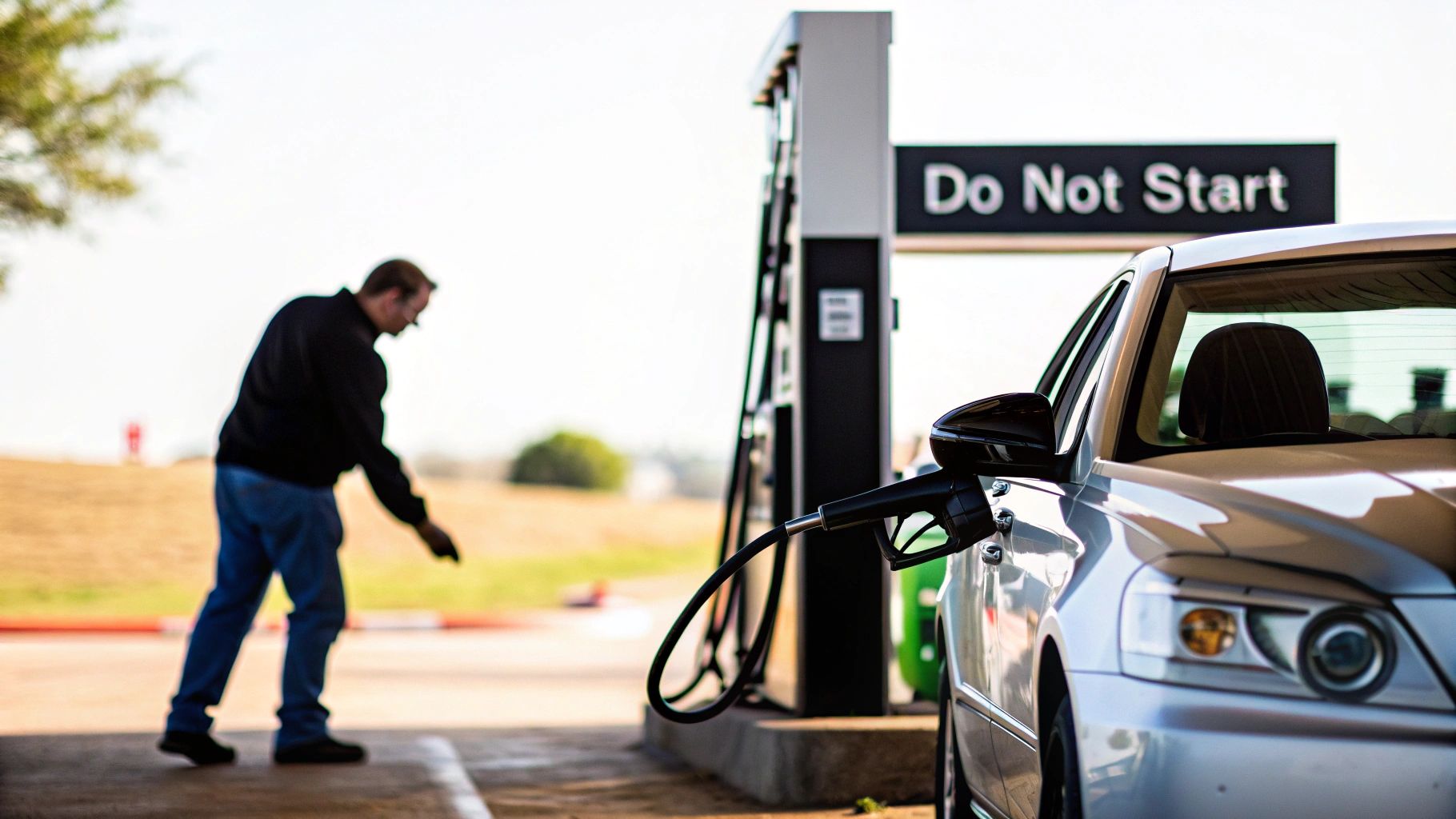
Realising you've just put petrol in your diesel car (or the other way around) can trigger a wave of panic. But trust me, a calm, methodical response makes all the difference. The real damage from misfuelling doesn’t happen at the pump; it happens the moment you turn the key.
The instant you turn the ignition, the fuel pump primes itself. This sends the wrong fuel coursing through the lines, filters, and straight into your engine's most delicate components. For a diesel engine, petrol acts like a solvent, stripping away the essential lubrication that diesel provides. This can cause brutal metal-on-metal friction, destroying high-pressure fuel pumps and injectors in a matter of minutes. The potential repair bill can easily stretch into thousands of pounds.
Your Forecourt Action Plan
If you're still at the petrol station, you’re in the best possible place to sort this out with minimal fuss and expense. Just follow these simple steps to secure your vehicle and get help on the way.
Tell the Staff: Let the petrol station attendants know what’s happened. They’ve seen it all before and can help cordon off the pump.
Engine Off, Gear in Neutral: Put the car into neutral, but do not start the engine to move it.
Push to a Safe Spot: Get some help from the staff or a kind stranger to push your car to a safe parking bay, away from the pumps. This clears the lane for other drivers and keeps you out of harm's way.
By not starting the engine, you've already dodged the worst-case scenario. The problem is entirely contained within the fuel tank. It can be fully resolved on-site by a specialist mobile fuel drain service, without ever needing to see the inside of a garage.
And don’t beat yourself up about it. Every year in the UK, around 150,000 drivers make this exact same mistake. That works out to over 400 misfuellings every single day, which just shows how common this simple slip-up is. You can find out more about how widespread the issue is on GB News.
That sinking feeling hits you a few miles after leaving the petrol station. The car starts to stutter, a strange noise kicks in, or the engine just feels… wrong.
Sometimes, the mistake isn’t caught at the pump. You might drive off completely oblivious, only for your car to start behaving erratically. Spotting these signs quickly is absolutely vital. It’s your engine’s way of screaming for help, and listening to it can be the difference between a simple roadside fuel drain and a cripplingly expensive garage bill.
The exact symptoms will depend on what went into what, but they all point to an engine desperately trying to run on fuel it was never designed for.
Petrol in a Diesel Engine
This is the classic, most common, and unfortunately most damaging misfuelling scenario. Here's why: diesel fuel is an oil. It’s designed to lubricate the incredibly precise, high-pressure components in your fuel system, like the pump and injectors.
Petrol, on the other hand, is the polar opposite. It’s a solvent.
As soon as it gets into the system, it starts stripping away that vital lubricating film. This causes intense friction and heat between moving metal parts, which quickly begin to grind themselves to pieces. The signs that this is happening will appear fast and they won't be subtle.
You're likely to experience:
A Loud Knocking Sound: A very distinct metallic clattering coming from the engine as it struggles with the uncontrolled combustion of petrol.
Severe Power Loss: The car will feel sluggish and weak, especially when you try to accelerate. It’ll feel like you’re towing a house.
Lots of Smoke: You’ll probably see thick clouds of white or grey smoke billowing from the exhaust.
Dashboard Warning Lights: Your dashboard will almost certainly light up with one or more warning lights.
Engine Stalling: Ultimately, the engine will likely splutter to a halt and then refuse to restart.
Diesel in a Petrol Engine
This is less common, mainly because the wider diesel nozzle physically won't fit into most modern petrol cars' filler necks. But it does still happen.
Petrol engines need a fine mist of fuel and air to be ignited by a spark plug. Diesel is far too oily and not flammable enough for this to work.
Instead of igniting, the thick, oily diesel just clogs everything up. It coats the spark plugs, fouls the fuel injectors, and essentially chokes the engine of what it needs to run.
The core problem here is a complete failure to ignite. The oily diesel residue smothers the spark plugs, making it impossible for them to create the spark needed for combustion. This leads to an engine that simply won't start or cuts out immediately.
The symptoms develop almost instantly. If you've put diesel in your petrol car, you should be on the lookout for a few clear indicators. For a more detailed breakdown, you can learn more about the specific wrong fuel in car symptoms in our dedicated guide.
Wrong Fuel Symptoms: Petrol vs Diesel
Here’s a quick-reference table to help you distinguish between the two scenarios at a glance. It can help you figure out what’s going on under the bonnet before you even make the call.
Symptom | Petrol in a Diesel Car (More Common & Damaging) | Diesel in a Petrol Car (Less Common) |
|---|---|---|
Engine Noise | Loud, metallic knocking | Engine misfires, splutters |
Performance | Severe and sudden power loss | Hesitation, sluggish acceleration |
Exhaust | Heavy white or grey smoke | Excessive black smoke |
Starting Issues | Engine may run briefly then stall | Will fail to start or cut out quickly |
Warning Lights | Engine management light is certain | Engine warning light will appear |
Remember, no matter which mistake you've made, the golden rule is the same: pull over as soon as it's safe and turn the engine off. Don't try to limp home – it’ll only make the damage worse.
The On-Site Fuel Drain Process Explained
Seeing that mobile fuel drain van pull up is a massive relief. Knowing exactly what the technician is about to do will give you that extra bit of confidence that your car is in good hands. The whole process is incredibly safe, efficient, and designed to get you sorted with the minimum amount of fuss.
Once the technician arrives, their first job is always safety. They’ll secure the area around your vehicle, usually with cones, and make absolutely sure there are no sparks or ignition sources anywhere nearby. They'll then do a quick assessment, confirming the fuel types involved and asking that all-important question: "Did you start the engine?"
Draining the Contaminated Fuel
The main part of the job is getting every last drop of that contaminated fuel out of your tank. This is a long way from a simple siphoning job; our technicians use highly specialised, ATEX-approved pumping equipment, which is certified as completely safe for handling flammable liquids like petrol.
This gear connects straight to your car's fuel tank, and a powerful pump extracts the mixed fuel into a secure, purpose-built container inside their van. It's a fully sealed, closed-loop system, which means it’s clean and guarantees no spills on the petrol station forecourt or the side of the road.
Flushing the Fuel System
Just draining the tank often isn't enough, especially if the wrong fuel has already been pulled into the fuel lines. This is where the next crucial step comes in: flushing the entire system.
The technician will circulate a small amount of fresh, correct fuel through the lines, past the fuel filter, and right up to the injectors. This is designed to cleanse any stubborn residue of the incorrect fuel, making sure that only pure, correct fuel will reach your engine when it’s time to restart it. For a more detailed look at the procedure, feel free to read our guide on how to drain a fuel tank safely.
The aim here is to remove 100% of the contaminant. A professional flush is what truly resets your fuel system and stops any lingering particles from causing problems later on. It’s this meticulous attention to detail that separates a proper, professional service from a basic drain.
The journey from a simple mistake at the pump to serious engine symptoms can happen frighteningly quickly, often following a predictable path.
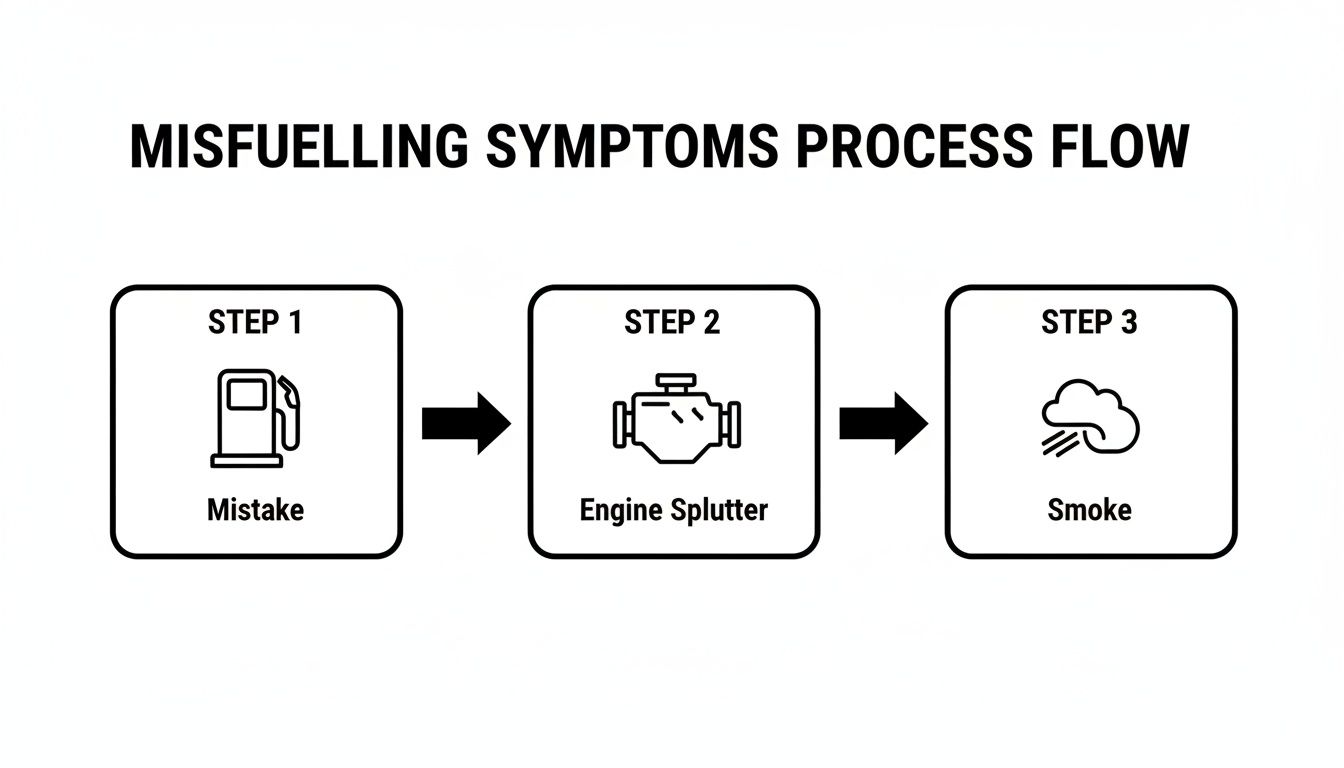
This just goes to show how fast the consequences of misfuelling can appear once you turn that key.
Final Checks and Safe Disposal
After the system is completely clean, the technician will add a small amount of the correct fuel to get you going again—usually enough to get you comfortably to the nearest petrol station to fill up properly. They'll then ask you to start the engine, just to make sure everything is running smoothly.
Finally, all the contaminated fuel that was taken out of your car is transported away for environmentally responsible disposal. It's all handled according to strict Environment Agency guidelines, so you can be sure it never harms the local ecosystem. From the moment they arrive to the moment you drive away, the entire on-site process usually takes between 60 and 90 minutes.
That heart-stopping moment of realisation a few miles down the road is a uniquely dreadful feeling. The engine starts making a strange noise, your power vanishes, and panic quickly sets in. If you've driven your car after filling up with the wrong fuel, the situation is definitely more serious, but it’s not automatically a catastrophe. What you do next is what really counts.
The very first thing you need to do is find a safe place to pull over. Indicate, get out of the flow of traffic, and bring the car to a complete stop. As soon as you're safely parked, turn the engine off immediately. This is critical: do not try to restart it under any circumstances. Every single time you turn that key, you're forcing more of that damaging, contaminated mixture through your car's delicate and expensive fuel system.
Increased Risk Doesn’t Mean Guaranteed Damage
Driving with the wrong fuel significantly ramps up the risk of damage, there's no doubt about it. In a diesel car, petrol acts like a solvent, stripping away the essential lubrication from the high-pressure fuel pump and injectors. In a petrol engine, diesel will clog up the spark plugs and the fuel system. The longer the engine runs, the higher the chance of lasting, expensive harm.
However, pulling over quickly often prevents the worst-case scenario. Many modern cars can actually run for a short distance before severe damage kicks in, especially if you only added a small amount of the wrong fuel to a nearly full tank. It’s an incredibly common mistake, particularly in busy cities. For instance, a staggering 48% of London drivers admitted to misfuelling in one survey. You can learn more about these surprising statistics on MotorTradeNews.com.
Being completely honest with the recovery technician is vital. Don't be tempted to downplay it and say you haven't started the engine. Knowing the car has been driven allows them to perform a much more thorough system flush, which is absolutely essential for preventing future problems.
How the Recovery Process Changes
When the technician arrives on the scene, their process will be a bit different than for a car that hasn't been started. They’ll still perform a full fuel drain from the tank, but the next steps are far more intensive to make sure every last trace of the contaminant is gone.
This beefed-up process includes:
A Comprehensive System Flush: The technician will circulate clean, correct fuel not just through the main fuel lines, but through every single part of the system the contaminated fuel might have reached.
Component Inspection: They’ll pay much closer attention to the fuel filter, which will likely need replacing, and they'll check for any early signs of damage to the fuel pump itself.
Engine Priming: After refilling with the correct fuel, they will carefully prime the system to ensure it's free of any airlocks before they even attempt to start the engine.
Even if you have driven the car, a professional mobile fuel drain service can often sort the issue out right there at the roadside. This saves you the time, expense, and stress of getting towed to a garage. The key is to stop driving and call for help the very moment you suspect something is wrong.
What About the AdBlue Contamination Dilemma?
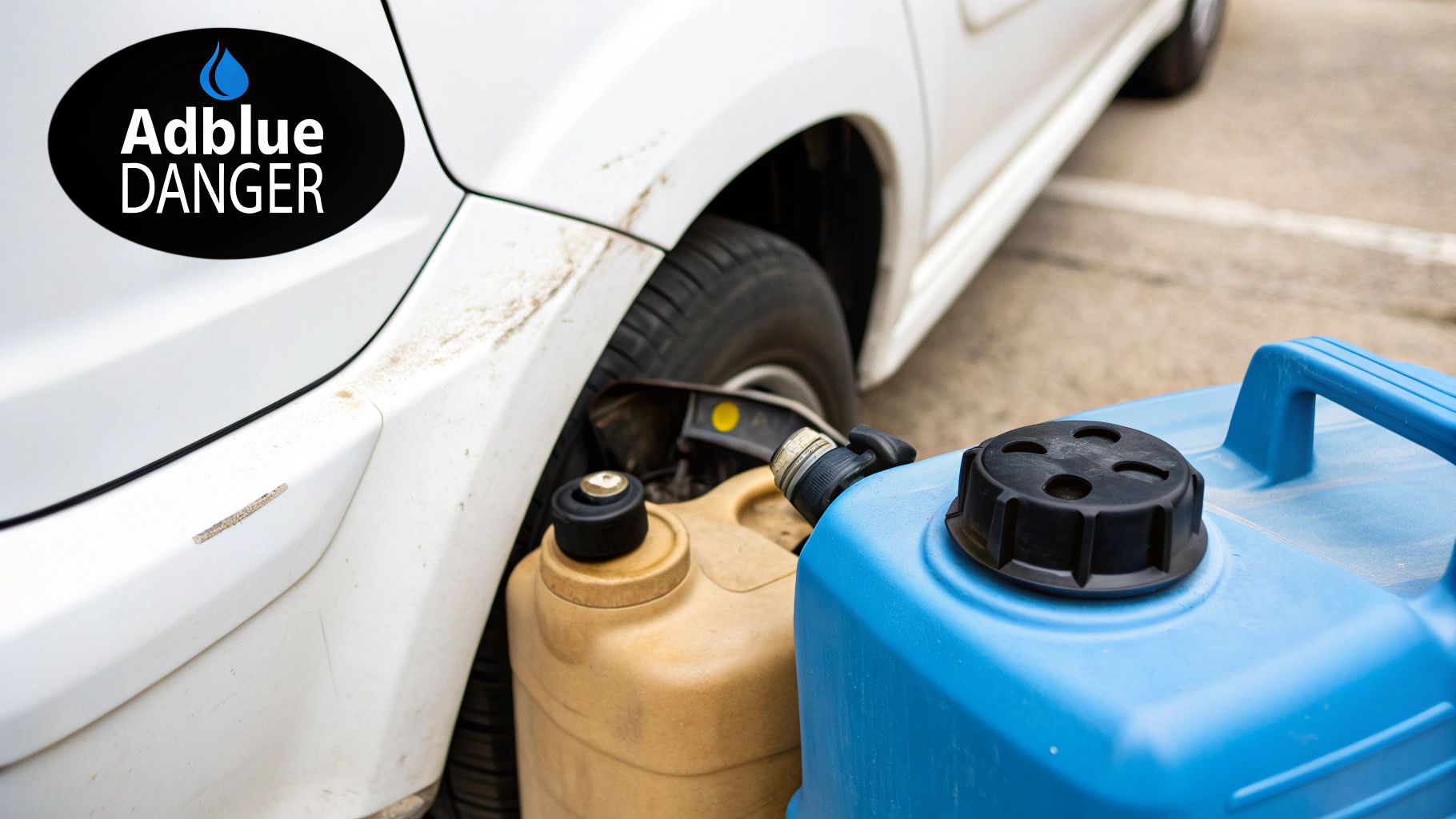
Putting petrol in a diesel car is the classic misfuelling mistake we all know about. But a newer, far more destructive error is becoming alarmingly common: pouring AdBlue into your diesel tank.
This isn't your typical wrong-fuel scenario. It's a chemical contamination with uniquely catastrophic consequences for modern diesel engines.
AdBlue isn't a fuel additive at all. It’s a solution of urea and de-ionised water, designed to be injected into the exhaust system to cut harmful emissions. The problem is, its chemical makeup is highly corrosive to many of the seals, plastics, and sensitive metal components inside your car’s fuel system.
When you pour AdBlue into the diesel tank, it sinks straight to the bottom because it’s denser than diesel. The moment you turn the ignition, the fuel pump will suck this corrosive cocktail directly into the most expensive parts of your engine.
The Crystal Clear Danger of AdBlue
The real damage kicks in when the AdBlue starts to crystallise. As the water in the solution evaporates, the urea forms sharp, abrasive crystals that can wreck the high-pressure fuel pump and injectors in the blink of an eye.
The end result is often a complete failure of the entire fuel system. Repairs are rarely simple and almost always mean replacing multiple high-value components, with costs frequently running into several thousands of pounds.
To get the full picture on this specific nightmare, you can read our in-depth article on what to do if you've put AdBlue in your diesel tank.
The advice for AdBlue contamination is stark and non-negotiable: DO NOT START THE ENGINE. Not even for a second. The damage begins almost instantly, and keeping the engine off is the only way to prevent a minor slip-up from becoming a financial disaster.
How a Specialist Can Save Your Engine
Unlike a simple petrol-in-diesel mix-up, AdBlue contamination demands a much more meticulous cleaning process. This is where a specialist mobile fuel drain service is essential, as they have the right gear to handle this specific challenge.
Here’s what the process involves:
Complete System Drain: The technician has to drain the entire tank, making sure every last drop of the AdBlue and contaminated diesel is gone.
Thorough System Flush: Next, they'll flush the fuel lines, pump, and filter housings with a special cleaning solution. This is vital to dissolve any urea crystals that might have already started to form.
Component Check: A visual inspection of any accessible parts is usually carried out to spot any early signs of corrosion or damage before it gets worse.
By calling for immediate professional help, you keep the problem contained within the tank. This allows for a full, on-site recovery and helps you avoid the immense cost of replacing your engine's entire fuel injection system.
Practical Tips to Prevent Misfuelling Your Car
Let's be honest, the best way to handle putting the wrong fuel in your car is to make sure it never happens in the first place. A simple moment of distraction can catch out even the most experienced driver, but building a few solid habits into your refuelling routine can save you a world of stress, time, and money. It really all boils down to being present for the two minutes you're at the pump.
Before you even grab the nozzle, just take a second. Consciously read the label on the pump and glance at the text on your fuel filler cap. This simple double-check costs nothing but is hands-down the most effective way to prevent a misfuelling disaster. It’s especially critical when you’re driving a car that isn't yours—like a hire car or a new company vehicle—where your usual muscle memory can easily lead you astray.
Creating Mental and Physical Barriers
Beyond just paying more attention, there are a few physical tools and mental tricks you can use to put an extra barrier between you and a costly mistake. These are great if you often find yourself refuelling when you're tired, stressed, or just have a lot on your mind.
Think about trying these simple but surprisingly effective strategies:
Kill the Distractions: For the few minutes you're filling up, get off your phone. Pause the conversation with your passenger. Just focus on the task at hand.
Colour-Code Your Cap: A brightly coloured, fuel-specific sticker right on your fuel flap (like a bold green "DIESEL ONLY" sticker) can give your brain a powerful visual jolt right when it needs it.
Get a Misfuelling Prevention Device: For diesel cars, you can buy a special replacement filler cap that physically blocks the narrower unleaded petrol nozzle, making it impossible to insert.
Building a consistent routine is your strongest defence against putting the wrong fuel in your car. Whether it's always checking the nozzle colour or simply saying the fuel type out loud before you squeeze the trigger, these small rituals can stop a very expensive mistake in its tracks.
Ultimately, preventing a misfuelling incident comes down to one thing: switching off autopilot for the short time it takes to refuel. By combining mindful checks with a few clever tools, you can dramatically cut your chances of ever needing to make that dreaded call for a fuel drain.
Your Top Questions About Misfuelling Answered
It's completely normal to have a head full of questions after putting the wrong fuel in your car. Once the initial panic subsides, the practical worries start to creep in. Let's tackle some of the most common concerns we hear from drivers every day to help you get a clearer picture of what's next.
How Much Is This Going To Cost Me?
Unsurprisingly, this is the first thing on everyone's mind. While the exact price can shift based on your location and the type of vehicle, a specialist mobile service is a world away from the prices you'd see at a main dealer.
Generally, you can expect the cost for a standard roadside fuel drain to start from around £150-£200. It’s a sting you weren't expecting, for sure, but it’s a lot less painful than the alternative.
Will My Insurance Cover This?
This is another huge question, but the answer is often a frustrating one: probably not. Most standard car insurance policies simply don't cover misfuelling incidents because they class it as driver error.
Some fully comprehensive policies might offer misfuelling cover as an optional add-on, but it's far from guaranteed. You’ll need to dig out your policy documents and check the small print to be certain. For the vast majority of drivers, calling a dedicated fuel drain service is the quickest, simplest, and most direct solution.
The entire on-site process is surprisingly efficient. Once a technician arrives, draining the tank, flushing the system, and getting you ready to go again typically takes between 60 and 90 minutes, minimising disruption to your day.
That sort of rapid, on-the-spot fix is a far cry from waiting for a recovery truck to tow you to a garage, which could easily leave you without your car for a day or more.
If you've made a mistake at the pump, don't panic and don't start the engine. Call the experts at Misfuelled Car Fix for immediate, 24/7 assistance across England. Find out more at https://www.misfuelledcarfix.co.uk.