Adblue in Diesel Tank: What to Do to Prevent Damage (adblue in diesel tank)

Right, so you’ve just put the blue AdBlue nozzle into your diesel tank. That sinking feeling is horrible, but what you do in the next 60 seconds is absolutely critical.
The single most important rule is this: DO NOT start the engine. Don’t even put the key in the ignition or press the start button. It’s a simple action, but it makes the difference between a manageable problem and a catastrophic repair bill. AdBlue isn't a fuel additive; it's a corrosive urea solution that can completely wreck your engine's fuel system.
Why Is AdBlue in a Diesel Tank Such a Big Deal?
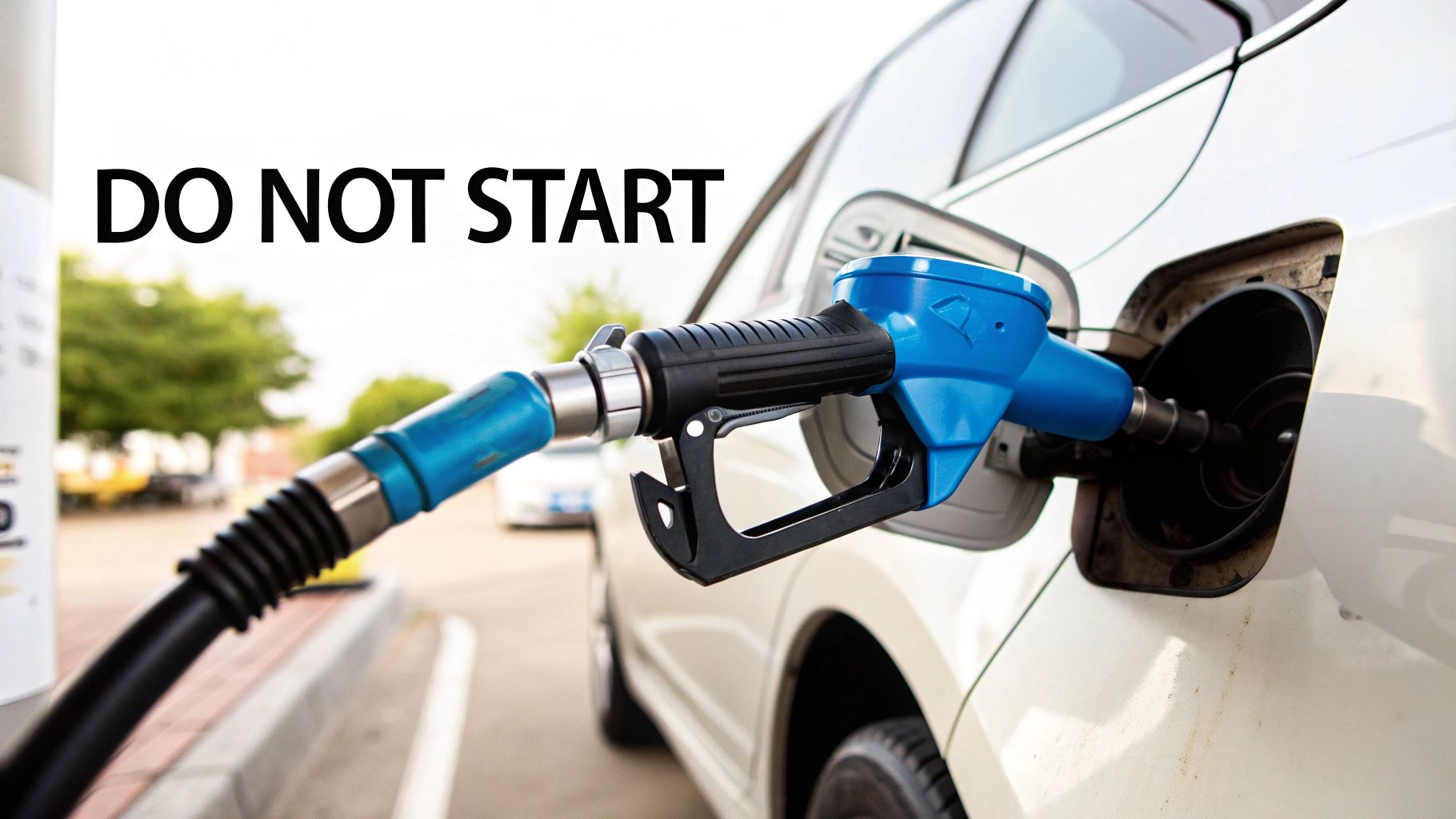
Realising you've used the wrong nozzle at the petrol station is a nightmare scenario for any diesel driver. While it feels like you're the only one this could happen to, it’s an increasingly common slip-up.
In fact, misfuelling with AdBlue now accounts for a staggering 22% of all misfuelling incidents in the UK. We’ve seen this figure surge by 30% since the expansion of Ultra Low Emission Zones (ULEZ), which has pushed more and more drivers into modern diesel vehicles equipped with AdBlue systems.
To understand the urgency, you need to know what's happening inside your fuel tank. Unlike petrol and diesel which might mix to some extent, AdBlue behaves very differently.
Your Immediate Dos and Don'ts Checklist
The moment of realisation is stressful, so here’s a quick-glance table to guide your immediate actions. Follow this, and you've already won half the battle.
What You Must Do | What You Must Avoid |
|---|---|
Take the key out of the ignition immediately. | DO NOT start the engine. Not even for a second. |
Tell the petrol station staff what has happened. | DO NOT turn the ignition on to check the dash or radio. |
Put the car in neutral. | DO NOT try to "dilute" it by adding more diesel. |
Ask for help to push the car to a safe place. | DO NOT attempt to drain the tank yourself. |
Call a professional fuel drain service right away. | DO NOT try to drive the car, even for a few feet. |
Sticking to the 'dos' and avoiding the 'don'ts' contains the problem and prevents a simple mistake from turning into a four-figure repair bill.
The Chemical Reaction Wreaking Havoc in Your Tank
AdBlue is essentially a mix of urea and de-ionised water. Crucially, it's denser than diesel. This means it doesn't just float on top or mix in; it sinks straight to the bottom of the tank. And where is your fuel pump's intake pipe? Right at the bottom.
This creates an instant problem. The moment you turn the key, your fuel pump primes itself by sucking up liquid from the tank. With AdBlue sitting at the bottom, it will be the very first thing to get pulled into your fuel lines, completely bypassing the diesel fuel it needs.
The most destructive feature of AdBlue contamination is its ability to crystallise. As the water in the solution evaporates, the urea forms hard, sharp crystals. These crystals will clog fuel filters, injectors, and pumps, leading to irreversible damage.
From Corrosion to Catastrophic Failure
Once it's in the fuel system, the corrosive nature of the AdBlue solution starts attacking sensitive metal and plastic components. Unlike diesel, AdBlue has zero lubricating properties. This is a disaster for a high-pressure fuel pump, which relies on the oiliness of diesel to function, causing its internal parts to grind against each other.
The contamination spreads rapidly to other critical parts:
Fuel Lines: The corrosive solution starts eating away at the inside of the fuel lines.
Injectors: The tiny, precision-engineered nozzles in your fuel injectors get blocked solid by the forming urea crystals.
The SCR System: Ironically, the very system AdBlue is meant for can be damaged if this contaminated fluid ever reaches it.
Putting AdBlue in the diesel tank introduces a corrosive, crystal-forming liquid into a high-precision system designed only for diesel. To get a better handle on its intended function, our guide offers more detail on what AdBlue is and how it works.
Starting the engine accelerates this damage exponentially, turning a correctable mistake into a repair bill that can easily run into thousands of pounds.
Spotting the Telltale Signs of Contamination
If you didn't catch the mistake at the pump, your car will waste no time letting you know something is seriously wrong. The symptoms of AdBlue contamination can show up incredibly fast, and knowing what to look for is the key to preventing a mechanical catastrophe.
The severity of the signs all boils down to one crucial question: have you started the engine?
Even before you turn the key, some modern cars are smart enough to sound the alarm. Onboard sensors can sometimes detect a problem with the fuel's makeup, triggering instant warnings on your dashboard. You might see the engine management light (EML) or the diesel particulate filter (DPF) warning pop up as soon as you switch the ignition to the 'accessory' position.
This is your first, and best, chance to stop everything.
What Happens When You Turn the Key
The real trouble begins the moment the engine fires up. AdBlue is denser than diesel, so it sinks straight to the bottom of the tank, meaning it's the first thing the fuel pump sucks up. The first few seconds might feel completely normal, but within minutes, you'll experience a rapid and unmistakable drop in performance.
A classic scenario we see all the time is a driver pulling away from the petrol station, only for the car to suddenly lose all power. It will start to judder and struggle to accelerate as the corrosive AdBlue solution gets pumped through the fuel lines and injectors, starving the engine of proper fuel and, crucially, lubrication.
Do not try to 'drive through it', hoping the problem will clear itself. The symptoms will only get worse, and keeping the engine running is guaranteed to increase the extent—and the cost—of the damage. Pull over as soon as it's safe to do so.
The engine will likely run erratically, misfire, and then cut out completely, refusing to restart. This isn't just a temporary glitch; it's the fuel system going into meltdown.
Visual and Audible Warnings
Beyond the dashboard lights and a gutless engine, there are other obvious clues that you've got a contamination problem. You might notice:
Excessive white smoke: As the water-based AdBlue solution gets vaporised in the hot engine, it can produce thick clouds of white smoke from the exhaust. This is a dead giveaway that something other than diesel is being burned.
Engine 'knocking': Loud, unusual noises from under the bonnet are a cry for help. It's the sound of metal components grinding together without the lubrication they desperately need.
The image below shows a typical container of AdBlue (also known as Diesel Exhaust Fluid or DEF), highlighting the distinctive blue branding that's designed to stop mix-ups from happening.
From the blue cap on your car to the blue nozzle at the pump, these visual cues are there for a reason. If you see these symptoms right after a fill-up, AdBlue contamination is almost certainly the culprit. Acting fast and calling a professional fuel drain service is the only way to limit the damage.
Your Roadside Emergency Action Plan
Okay, that sinking feeling has hit. You've just realised you've put AdBlue in your diesel tank. The first thing to do is take a breath. Panic is your enemy right now; a clear head is your best friend. What you do in the next few minutes is critical.
The absolute priority is safety – for you, your passengers, and everyone else on the road.
If you’re still at the pump, fantastic. Leave the car exactly where it is. Don't be tempted to move it, not even a few feet to a parking bay. Go and tell the petrol station staff what’s happened. They’ve seen this before and can help make the area safe.
If you’ve already driven off and the car is starting to act up – maybe losing power or stalling – your job is to pull over as soon as it's safe to do so. Indicate early, slow down smoothly, and get as far onto the verge or hard shoulder as you can. Stick your hazard lights on straight away.
Do Not Touch the Ignition
This is the golden rule, the one piece of advice that can save you thousands. Do not start the engine.
Honestly, don’t even turn the key to put the radio on or check the dash. The second you turn on the ignition, many modern cars prime the fuel pump. That single action starts sucking the corrosive AdBlue mixture from the tank and sends it hurtling towards the most delicate parts of your engine.
Keeping the ignition completely off contains the problem in the fuel tank. That makes the fix simpler, faster, and a whole lot cheaper.
This flowchart shows you exactly what happens if the engine is started after the AdBlue has gone in.
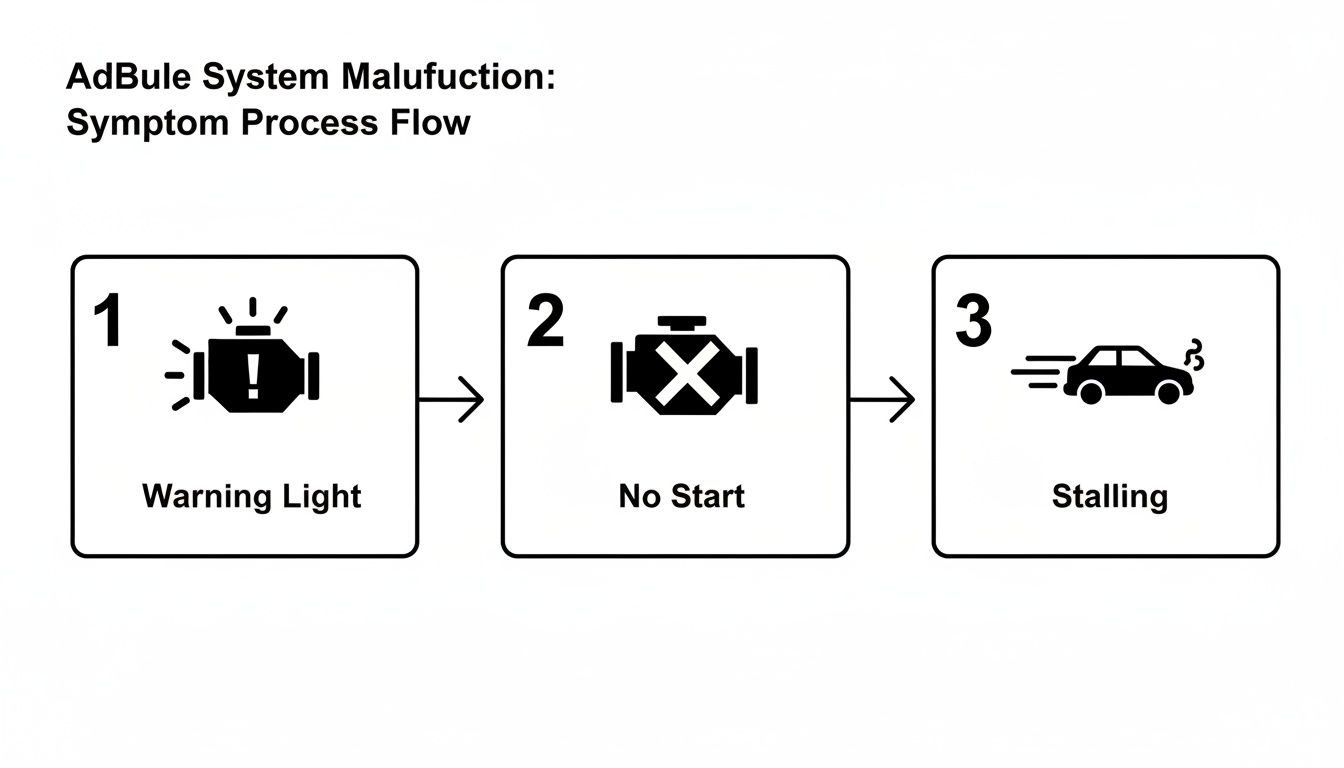
As you can see, it escalates very quickly from a simple warning light to a car that won't run at all.
Contact a Specialist Fuel Drain Service
Your next move is to call for professional help. Don’t just phone your usual breakdown service, as many basic policies simply don't cover misfuelling. You need a mobile fuel drain specialist who has the right kit to handle this specific problem safely, wherever you are.
When you make the call, try to have these details ready. It’ll speed everything up:* Your exact location (a postcode, road name, or the petrol station’s address).* The make, model, and registration of your car.* A rough idea of how much AdBlue went in and how much diesel is in the tank.* And crucially, tell them whether the engine has been started or not.
This information lets the technician know exactly what they’re dealing with and ensures they turn up with the correct gear. They’ll handle everything, from safely pumping out the contaminated fuel to flushing the system clean.
Because of the hazardous materials involved, this is a job that should always be left to the experts. Our guide explains more about how to drain a fuel tank safely. Following these organised steps will help resolve a stressful situation properly, turning a simple mistake back into just that—and not a major mechanical disaster.
What Happens During a Professional Fuel Drain?
Seeing that mobile recovery van pull up is a huge relief. You can finally take a breath, but knowing what the technician is about to do can calm your nerves even more. A professional fuel drain isn't just a quick siphon; it's a careful, methodical process designed to get every trace of that destructive AdBlue-diesel mix out of your car and prevent any lasting harm.
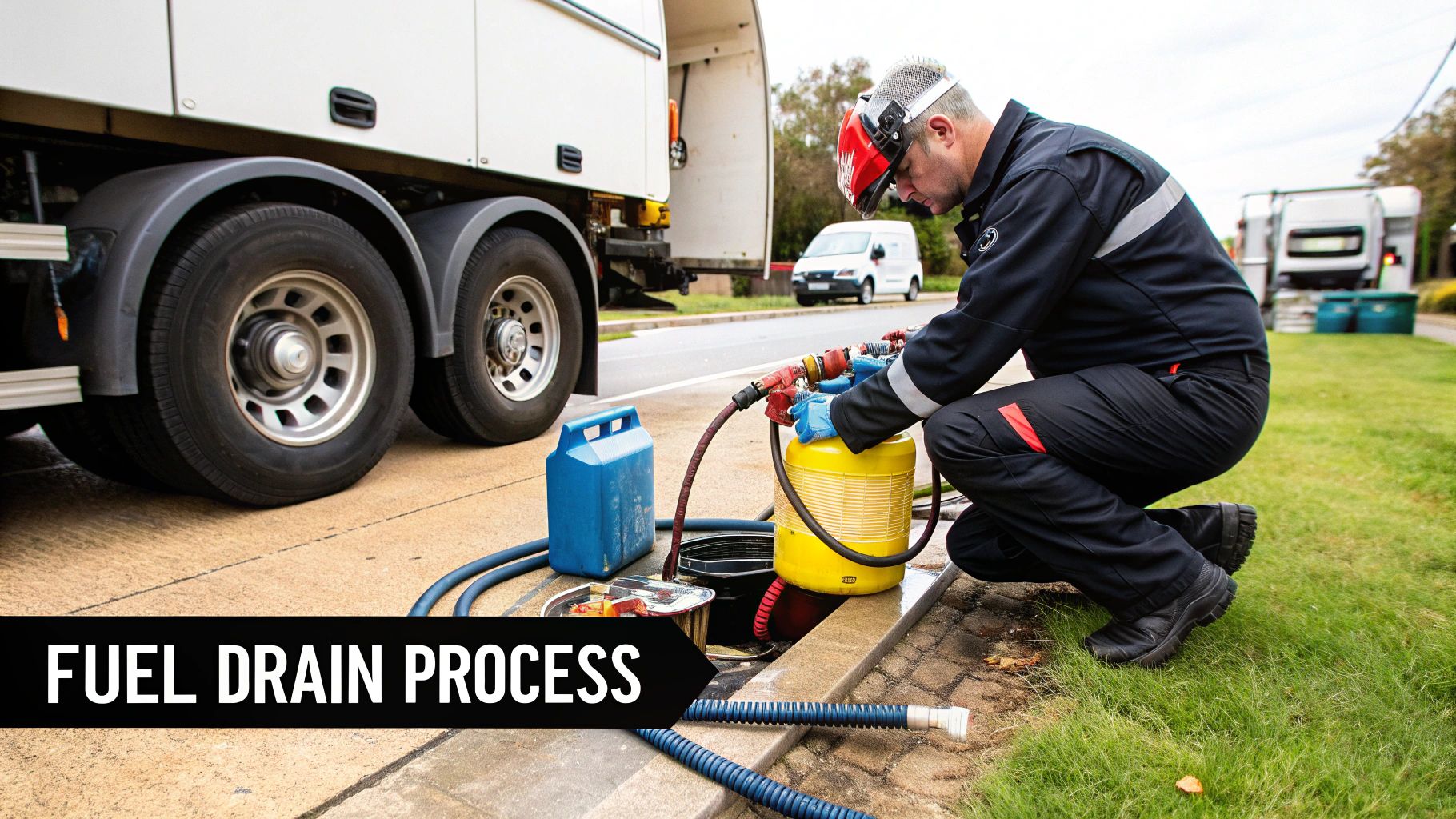
First things first, they'll make the area safe. The technician will check where your car is, secure it, and set up their specialised equipment to eliminate any risk of spills or sparks. Then, they'll get access to your fuel tank, which might be through the filler neck or sometimes by temporarily removing the fuel sender unit under the back seat.
The Draining and Flushing Stages
Using industry-approved pumps and suction gear, the technician will drain the whole contaminated mixture from your tank. This equipment is specifically built for handling hazardous liquids safely. They need to get every last drop out to make sure no residual AdBlue is left sloshing around at the bottom, ready to crystallise and cause trouble later on.
Once the tank is bone dry, the most crucial part of the job begins: the flush. This is non-negotiable. The technician will then pump clean diesel through the fuel lines, filter housing, and fuel pump to dislodge and wash out any of that gritty, crystalline residue that may have already formed.
This isn't just about fixing a simple mistake. It's about protecting your car's complex and very expensive fuel system. A thorough flush is the only way to be absolutely certain that all traces of the corrosive AdBlue solution have been purged before fresh fuel goes in.
Environmental Disposal and Final Checks
That contaminated AdBlue-diesel cocktail can't just be poured down a drain. Any reputable service will pump the waste into secure, legally compliant containers. It's then taken to a licensed disposal facility, ensuring the whole job is handled in an environmentally responsible way from start to finish.
This mistake is common, but it's part of a wider picture of AdBlue-related safety concerns. Research has shown that a shocking one-third of all on-road breakdowns reported by haulage companies were linked to AdBlue system problems, with almost half of those incidents compromising safety.
Finally, with the system flushed and the contaminated fuel safely stored away, the technician will add a small amount of clean, fresh diesel to your tank. They'll then ask you to start the engine, listening carefully to make sure everything is running as it should before giving you the all-clear to get back on your way.
If you want to know more about what to expect, take a look at our essential guide to misfuel recovery services nationwide. A professional, step-by-step approach like this is by far the fastest and safest way to sort out an adblue in diesel tank disaster.
Practical Tips to Avoid Another AdBlue Disaster
That sinking feeling of getting it wrong at the pump is something you’ll want to avoid ever repeating. The good news is, it’s entirely preventable. All it takes is building a few simple habits to snap you out of autopilot mode, especially when you’re tired, in a rush, or driving a car that isn't your own.
Prevention really starts with noticing the very deliberate clues that car makers and fuel companies have already put in place. The most obvious one is colour. The AdBlue filler cap is almost always a bright, unmistakable blue, and so is the nozzle on the AdBlue pump. This isn't just for decoration; it’s a bright, clear visual warning designed to make you stop and think.
There’s also a physical difference. The standard AdBlue nozzle is deliberately designed to be smaller than a diesel nozzle, which should stop it from fitting properly into the diesel filler neck. But let’s be honest, a tired or distracted driver can sometimes manage to jam it in anyway, so you can’t rely on that alone to save you.
Your Two-Second Forecourt Checklist
Developing a quick mental checklist is the single most effective way to protect your engine. It takes literally seconds but can save you hundreds, if not thousands, of pounds in repairs. Before you even lift the nozzle from the pump, run through these simple checks.
Cap Colour Check: Open your car’s filler flap and actively look. See the blue cap? That’s for AdBlue. The black or green one is for diesel. Simple.
Nozzle Colour Check: Now look at the pump. Your job is to match the cap to the nozzle. Blue nozzle for the blue cap, always.
Read the Pump Label: Actually read the label on the pump out loud. Saying "Diesel" or "AdBlue" as you pick it up is a fantastic way to break that mental autopilot.
This little three-step routine forces a moment of mindfulness and stops you from rushing. It's especially useful if you often switch between different cars for work or family, where the filler caps might be in different places.
The golden rule is incredibly simple: never put anything from a blue nozzle into a black or green filler hole. Making this a non-negotiable habit is the best way to ensure you never have a repeat disaster.
Other Real-World Prevention Habits
Beyond the immediate checks you make at the pump, a couple of other small changes can make a massive difference in reducing the risk of putting AdBlue in the diesel tank again.
For starters, try to cut out distractions while you’re filling up. It’s so easy to stay on a phone call, finish listening to a podcast, or reply to a text. But this is precisely when your brain switches off and mistakes happen. Just giving the task your full, undivided attention for those two minutes makes a world of difference.
Finally, think about where you get your AdBlue from. While using the dispenser at the pump is handy, lots of drivers find it much safer to buy AdBlue in sealed 10-litre containers from a motor factors or petrol station shop. These usually come with their own dedicated spout, turning the top-up into a very deliberate, separate task from filling with diesel. Creating that physical separation can be a powerful psychological barrier against making a costly mistake. By adopting these practical, real-world habits, you can make this stressful incident a one-time thing.
Answering Your Top Questions About AdBlue Misfuelling
Even after getting the facts straight, it's natural to have a head full of questions when you're staring at an AdBlue nozzle and a diesel tank. Once the initial shock wears off, the practical worries start to set in.
Let’s tackle some of the most common concerns we hear from UK drivers caught in this stressful spot.
How Much Does It Cost to Fix AdBlue in a Diesel Tank?
This is always the first question, and the answer hinges entirely on what you do next. By far the cheapest and best way out of this mess is to call for a professional mobile fuel drain.
A specialist service like ours will typically cost a few hundred pounds. Compare that to what happens if you start the engine. The moment that contaminated mix gets sucked into your fuel system, the bill from a main dealer can easily spiral into thousands. Components like the high-pressure fuel pump, injectors, and the SCR system itself are incredibly expensive to replace.
Acting fast and getting a drain is the single best thing you can do for your wallet.
Can I Just Top Up with Diesel to Dilute the AdBlue?
Absolutely not. This is a dangerous myth and trying it will only make things a whole lot worse. AdBlue is not like petrol; it doesn’t mix with diesel at all.
Because it's denser, it sinks straight to the bottom of the tank—right where your fuel pump pickup is waiting to suck it up. Piling more diesel on top just increases the total volume of contaminated liquid that has to be drained and disposed of, which could even bump up the cost of the job.
The only proper solution is a complete drain and system flush. Trying to dilute AdBlue is a guaranteed way to cause severe, expensive damage the second you turn the key.
Does My Breakdown Cover Include AdBlue Misfuelling?
You’ll need to check the small print of your policy, but standard breakdown cover often excludes misfuelling. It’s usually classified as driver error, so it's not covered by a basic plan.
Some of the higher-tier, premium policies might offer it as an add-on, but this can come with a hefty excess fee. Worse still, making a claim for misfuelling could hit your no-claims bonus later on.
Honestly, opting for a specialist fuel drain service is nearly always the faster, more direct, and more affordable route. We are geared up specifically for this job, meaning no delays waiting for the right technician with the right kit to get to you.
How Long Does a Mobile Fuel Drain Take?
One of the biggest advantages of a mobile service is just how quick and painless we can make the whole process. It's all designed to get you sorted with minimal fuss.
From the moment you call us, a technician can usually be with you in 60 to 90 minutes, depending on your location and what the traffic is doing. Once on site, the job itself—draining the tank, flushing the lines, and getting the car safe—is a methodical process that usually takes about an hour.
From that moment of panic to being safely back on your way, the whole incident can often be wrapped up in under two hours.
If you've put AdBlue in your diesel tank, remember: don't panic and don't start the engine. Contact Misfuelled Car Fix right away for a fast, professional, and affordable 24/7 mobile fuel drain service. Get expert help now by visiting https://www.misfuelledcarfix.co.uk.