


What Happens If Put Petrol in Diesel Car A UK Guide
- Misfuelled Car Fixer

- Feb 3
- 13 min read
Updated: Feb 19
24/7 Hotline Nationwide: 0800 999 1182
National Wrong Fuel Rescue: https://www.misfuelledcarfix.co.uk
If you found this page, we cover you in England!
Book Online:
It’s a heart-sinking moment at the pump: you’ve just put petrol in your diesel car. This simple mistake can unleash a torrent of expensive and severe damage inside your engine. The core of the problem is that petrol acts like a solvent, stripping away the vital lubrication that diesel provides and causing critical metal parts to grind against each other. This friction can quickly destroy the high-pressure fuel pump and injectors, sending a shower of metal fragments through the entire system.
What Happens if Put Petrol in Diesel Car?
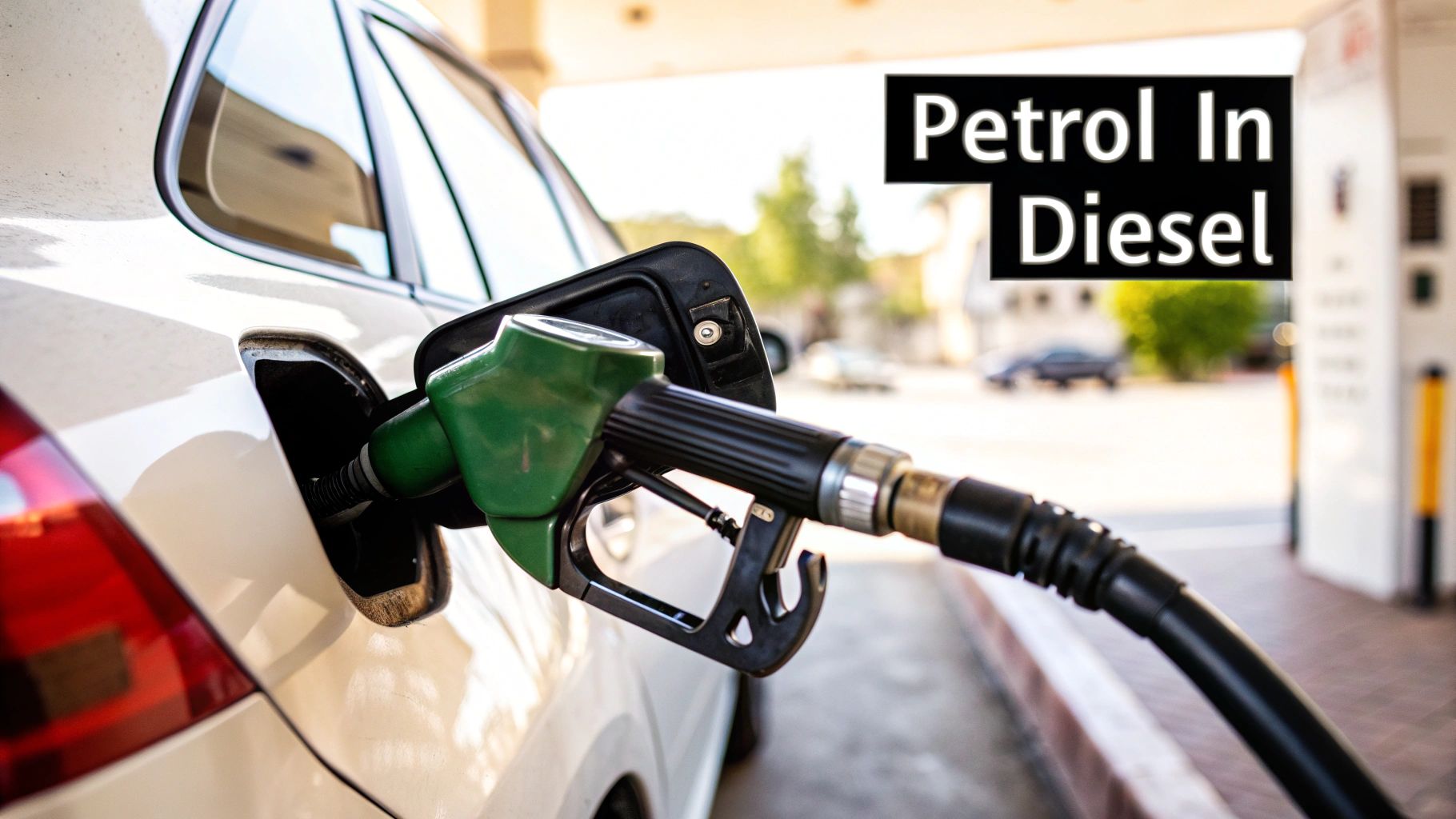
To really get your head around what happens when you put petrol in a diesel car, you need to understand one key difference between the two fuels. Diesel isn’t just something that burns; it's also an oily lubricant that your engine’s complex fuel system absolutely depends on to stay healthy.
Modern diesel engines, especially the common rail systems found in most cars today, are built with incredibly fine tolerances. The fuel pump and injectors work under massive pressure, and they rely on that oily film from the diesel to keep everything moving without friction and wear.
The Lubrication Meltdown
When you introduce petrol into the mix, it acts like a degreaser. It immediately dissolves that protective, oily layer. Unlike diesel, petrol is a solvent, not a lubricant. Without the diesel’s oiliness, the precision-engineered metal components in the fuel pump and injectors start rubbing directly against each other.
This metal-on-metal friction creates a huge amount of heat and starts to wear things down catastrophically fast. It generates tiny metal shavings—what we in the trade call 'swarf'—which are then pumped right through the entire fuel system, essentially acting like liquid sandpaper.
The most critical and immediate damage from petrol in a diesel engine is the total loss of lubrication. This one problem kicks off a destructive domino effect, starting with the fuel pump and ending with a repair bill that can run into the thousands.
The Vicious Cycle of Damage
That initial lack of lubrication triggers a nasty chain reaction. Seeing how quickly things go wrong makes it crystal clear why you have to act immediately and, most importantly, not start the engine.
Here's how the damage typically unfolds:
Fuel Pump Destruction: The high-pressure fuel pump is nearly always the first casualty. Without lubrication, it grinds itself to pieces, firing tiny metal particles down the fuel lines.
Injector Blockage: These metal fragments make their way to the fuel injectors, where they clog the incredibly fine nozzles and cause damage that’s usually impossible to repair.
Total System Contamination: The swarf doesn't stop there. It spreads through the fuel lines, the fuel rail, and even finds its way back into the fuel tank, contaminating every single component it touches.
Engine Combustion Chaos: On top of all that, petrol ignites differently from diesel. If you drive the car, this mismatch in combustion timing can cause rough running, loud knocking noises, and potentially serious internal engine damage.
Because the contamination is so rapid and widespread, the only proper fix is to have a professional drain and flush the entire fuel system. Just topping it up with diesel won't solve anything; it will only circulate the contamination further and make the damage much, much worse.
Immediate Actions After Putting Petrol in a Diesel Car
If you find yourself in this situation, what you do in the next few minutes is absolutely critical. To make it simple, here’s a quick rundown of the problem and the immediate steps you must take to prevent a small mistake from turning into a financial disaster.
Problem Caused by Petrol | Why It's Damaging | What You Must Do Immediately |
|---|---|---|
Loss of Lubrication | Petrol strips the oily film from diesel, causing metal parts to grind together. | DO NOT start the engine. Don't even turn the key to the 'on' position. |
Fuel Pump Failure | The high-pressure pump quickly wears out, creating metal shavings (swarf). | Call for professional help. A misfuelling specialist is needed. |
System-Wide Contamination | Metal particles spread through fuel lines, injectors, and the fuel filter. | Put the car in neutral and push it to a safe place if you're at the pump. |
Incorrect Combustion | Petrol ignites at the wrong time in a diesel engine, causing knocking and stress. | Inform the petrol station staff so they can cordon off the pump. |
Following these steps won't reverse the mistake, but it will stop the damage from escalating. Keeping the contaminated fuel isolated in the tank is the best-case scenario a technician can hope for.
Recognising the Telltale Symptoms of Misfuelling
If you’ve driven off the forecourt after filling up with the wrong fuel, it won’t take long for your car to let you know something is seriously wrong. The first warning signs can be quite alarming, but knowing what they are is the first step to preventing a minor slip-up from becoming a catastrophic failure. Think of these symptoms as your engine's cry for help.
Often, the very first and most obvious sign is a loud, metallic knocking or rattling sound from the engine. This isn't just a minor niggle; it's the sound of petrol igniting too early under the high-compression conditions of a diesel engine. This process, known as pre-ignition, puts an incredible amount of stress on internal parts and is a dead giveaway that the combustion cycle is dangerously out of whack.
Obvious Signs from the Exhaust and Engine
Soon after the knocking starts, other telltale signs will likely appear, all but confirming a misfuelling mistake. Your car’s performance will quickly deteriorate, making it not just difficult but outright unsafe to keep driving.
Be on the lookout for these clear indicators:
Excessive Smoke: A classic symptom is thick white or bluish smoke billowing from the exhaust. This is the direct result of unburnt petrol and a struggling engine desperately trying to process the wrong fuel.
Sudden Loss of Power: The car will feel sluggish, almost as if it's being held back. Acceleration will become a real chore, and the engine will struggle to hold a steady speed as the fuel pump is starved of its essential lubrication.
Violent Juddering: The vehicle might start to shudder or jerk uncontrollably, particularly when you try to accelerate. This is caused by the chaotic, unstable combustion of the petrol-diesel mix.
If you notice any combination of these symptoms—loud knocking, heavy smoke, and a sudden drop in power—the cause is almost certainly misfuelling. Your immediate priority has to be pulling over to a safe spot and switching off the engine straight away.
If you continue to drive, the engine will probably cut out completely. This is its final, desperate act of self-preservation as the fuel pump seizes up or the injectors become clogged with tiny metal fragments. Every second the engine keeps running dramatically increases the damage and the final repair bill. For a deeper dive into these warning signs, you can learn more about the top symptoms of petrol in a diesel car in our detailed guide.
Your Immediate Step-by-Step Action Plan
That sinking feeling when you realise you've put petrol in a diesel car is horrible. It can spark instant panic, but a calm, methodical response is your best defence against a truly eye-watering repair bill.
What you do in the next few minutes is absolutely critical.
The single most important rule is this: do not start the engine. Seriously. Don't even turn the key to the 'on' position to listen to the radio.
If you haven't started the car, the contaminated fuel is just sitting in the tank. This makes the problem much, much easier and cheaper to fix. Putting the key in the ignition or pressing the start button can prime the fuel pump, and that's the moment the damaging petrol starts its journey towards your engine.
First Moves at the Petrol Station
If you’re still on the forecourt, your immediate priority is safety and damage limitation.
Keep the Engine Off: I know I’ve already said it, but this can't be stressed enough. Starting the engine is what turns a simple mistake into a potential catastrophe.
Put the Car in Neutral: If it’s safe, pop the car into neutral and release the handbrake.
Move to a Safe Place: Ask someone for a hand to push the vehicle to a safe parking spot, well away from the pumps.
Inform the Staff: Let the petrol station attendants know what’s happened. They’ll need to close the pump and will appreciate being kept in the loop.
Starting the engine will quickly lead to some very unhappy noises and symptoms, like the ones shown below.
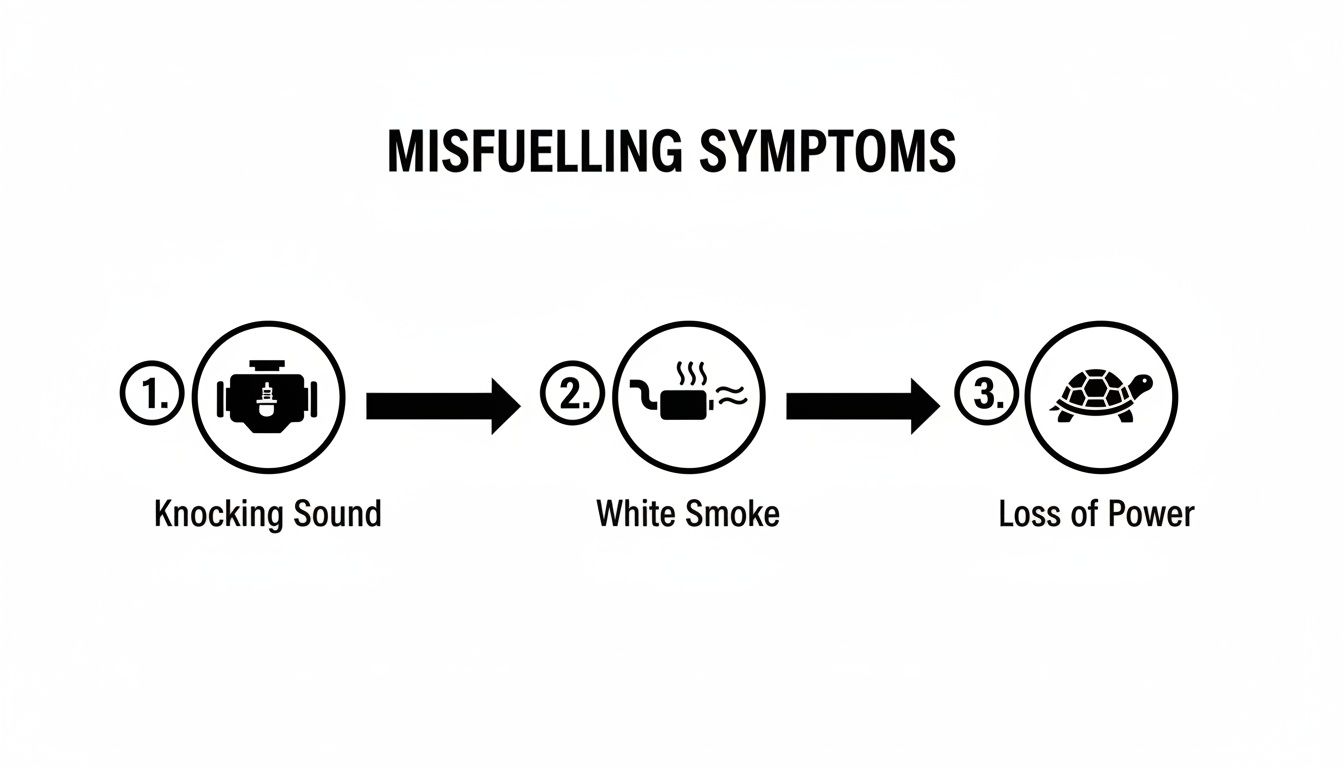
Each of these signs—from the metallic clatter of engine knock to a sudden loss of power—is a clear signal that the damaging fuel mixture is already circulating where it shouldn't be.
If You’re Already Driving
Maybe you only realised your mistake after pulling away from the station. The moment you notice any of those nasty symptoms—engine knocking, the car juddering, or a sudden lack of power—you must act fast.
Your only priority is to pull over to a safe location as soon as you possibly can and turn the engine off immediately. Every second you continue to drive, you’re causing more harm, grinding down vital components with every revolution.
Once you’re safely stopped, do not be tempted to restart the car for any reason.
The next and final step is to call for professional help. A standard breakdown service often isn't equipped for this specific job. You need to contact a dedicated mobile fuel drain service. These specialists can come directly to you, whether you're at the roadside or still at the petrol station. They have the right tools and expertise to safely drain the contaminated fuel, flush the entire system, and stop a costly mistake from turning into a complete financial disaster.
The Professional Fuel Drain and Recovery Process
Once you've made that call to a specialist service, you can take a deep breath. A trained technician is on their way with all the right gear to sort out the mess without causing any more damage. This isn't a job for your average garage; it demands certified, explosion-proof equipment and a proper understanding of modern fuel systems. The whole thing is methodical, safe, and designed to get you back on the road with minimum fuss.
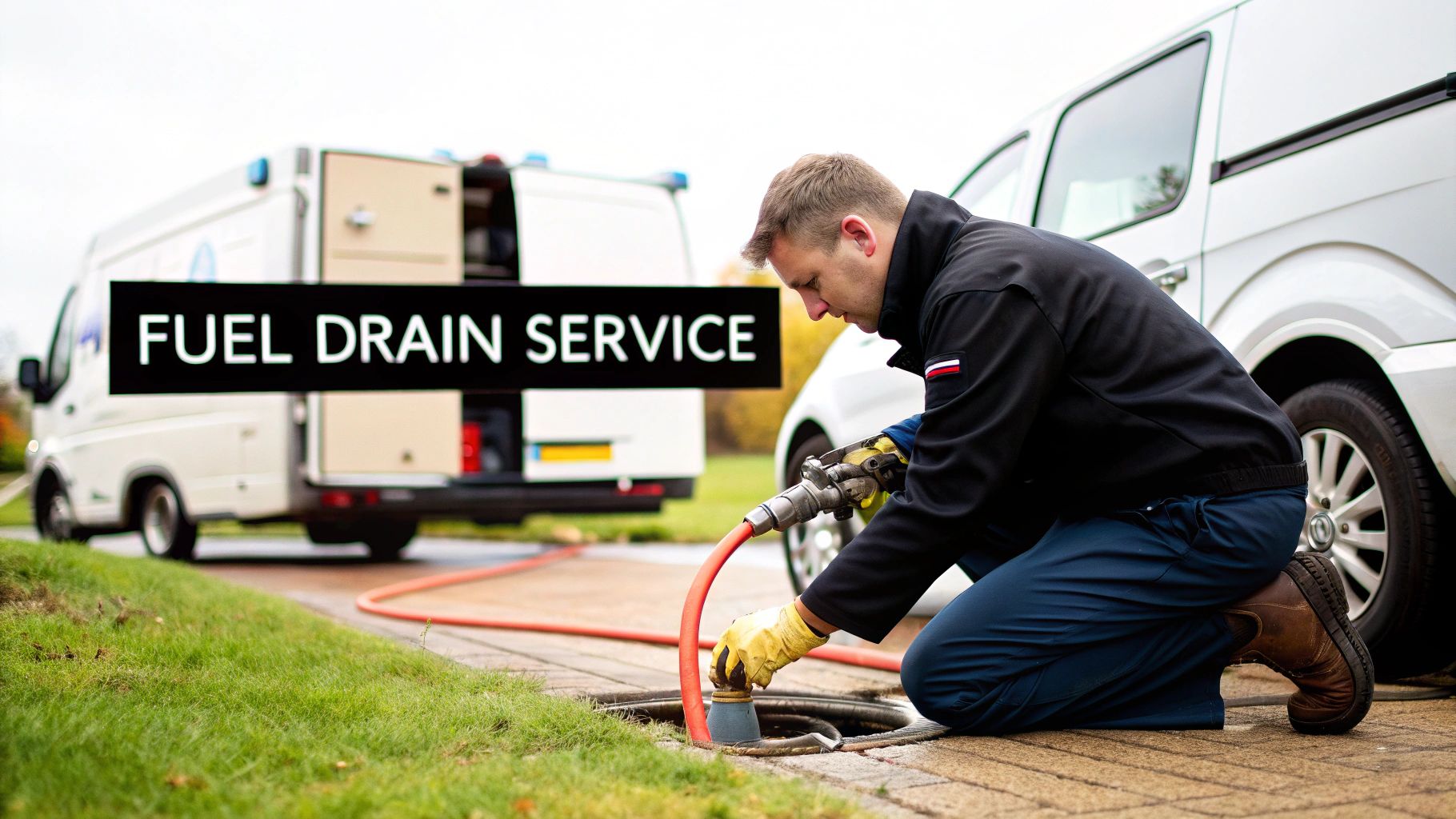
The first and most important step is to get every last drop of that contaminated fuel mix out of the tank. The technician will access your fuel tank, usually through the sender unit under the back seats, and use a high-powered, specialised pump to suck out the wrong fuel. They handle this with extreme care, making sure there are no spills and managing the flammable petrol fumes safely. The removed fuel then goes into a secure, sealed container to be disposed of responsibly.
Flushing the Entire System Clean
Just draining the tank isn’t the end of the story, especially if you’ve turned the ignition on. That damaging petrol has likely already made its way into the fuel lines, filter, and pump. This means the next stage is a full system flush.
The technician will work through the fuel pathways, cleaning them out with fresh, clean diesel. This usually involves:
Flushing the Fuel Lines: Clean diesel is pushed right through from the tank to the engine. This washes out any lingering petrol and, critically, any tiny metal shavings that might have been created by the lack of lubrication.
Cleaning the Fuel Filter Housing: The fuel filter itself is often taken out and its housing cleaned to make sure no bad fuel is hiding in there.
Priming the High-Pressure Pump: Before even thinking about starting the engine, the pump and injectors are carefully primed with clean diesel to get that vital lubrication back where it belongs.
Honestly, this flushing process is probably the most crucial part of the whole job. It guarantees that the solvent-like petrol is completely gone from every component, stopping any further damage in its tracks. If you're curious about the nitty-gritty of this procedure, our guide explains more about how to drain a fuel tank safely.
A professional fuel drain isn't just about emptying the tank; it’s a full system decontamination. The goal is to remove every trace of petrol and metallic debris to restore the protective, lubricating environment your diesel engine needs to survive.
Final Checks and Getting You Moving
With the system sparkling clean, the technician will add a decent amount of fresh, correct diesel to your tank. They'll then start the engine and run a few checks, letting it tick over for several minutes to ensure everything is running as it should. They’ll be listening for any odd noises and keeping an eye out for warning lights, making absolutely sure the car is happy before giving you the all-clear.
This whole careful, step-by-step process typically takes around 60 to 90 minutes from the moment they arrive. It turns what feels like a potential disaster into a manageable hiccup in your day.
Counting the Cost: The Financial Reality of Misfuelling
Let's get straight to it. The question rattling around your head right now is almost certainly, "How much is this going to set me back?" The financial fallout from putting petrol in a diesel car can swing wildly, and it all hinges on one simple, critical action: whether or not you started the engine.
If you caught the mistake right there at the pump and didn't so much as turn the key, you can breathe a little easier. The fix is relatively straightforward and won't break the bank. Getting a specialist mobile fuel drain service out to you is your best and most cost-effective move. You’re typically looking at a few hundred pounds for a rapid, roadside solution that stops any damage before it even starts.
When Driving Turns a Mistake into a Disaster
Things get a lot more serious—and expensive—if you've driven the car. The moment that contaminated fuel gets pulled from the tank, it starts its destructive journey through the high-pressure fuel pump and injectors. Replacing these parts isn't just a quick fix; it's major mechanical surgery.
A new high-pressure fuel pump alone can easily cost over £1,000. Then you have the injectors, which can add another £1,000 to £2,000 to the bill, sometimes more, depending on your car's make and model. Factor in the labour costs and the vital need to flush every last drop of contaminated fuel from the system, and the final invoice can quickly skyrocket into the thousands.
The difference is stark. A simple fuel drain might be a few hundred quid, but driving away can land you with repair bills topping £4,000. This makes taking immediate action not just the safest option, but by far the most sensible one for your wallet.
Will My Insurance Cover This?
Here’s where a lot of drivers get a nasty shock. The hard truth is that most standard UK car insurance policies do not cover misfuelling. Insurers almost always class it as driver error or negligence, which means the financial burden falls squarely on you.
Some top-tier breakdown policies might offer cover as an optional extra, but you’ll need to dig out your policy documents and check the fine print. Honestly, relying on insurance is often a dead end. This just reinforces how important it is to prevent the damage in the first place by not starting the engine. You can get a more detailed look at the costs associated with putting the wrong fuel in your car to see how the expenses can stack up. Calling a specialist directly is, without a doubt, the cheapest, fastest, and most reliable way out of this mess.
How to Avoid Making the Same Mistake Again
Right, so you’ve dealt with the stress and the unexpected bill of a misfuelling incident. You definitely don't want a repeat performance. The good news is, avoiding it is actually pretty simple. It all comes down to breaking that "autopilot" mode we all slip into at the petrol station.
The single best defence? Just take a moment to look. Before you even grab the pump handle, pause. Read the label on the pump and check the colour. Diesel handles are almost always black, while unleaded petrol is green. That two-second glance can literally save you thousands of pounds.
It's also worth remembering why this mistake happens so often. The nozzle for a diesel pump is physically bigger than a petrol one, so it won’t fit into a modern petrol car. But the slimmer petrol nozzle slips into a diesel car's wider filler neck with no trouble at all. That’s precisely why putting petrol in a diesel car is the most common fuelling blunder.
Simple Habits That Make All the Difference
Building a solid routine is your best bet for making sure this is a one-time error.
Double-Check at Both Ends: Always glance at the fuel grade on the pump trigger, and then check the label inside your car's fuel flap before you start filling.
Ditch the Distractions: We’re all busy, but try to avoid chatting on the phone or getting sidetracked by kids or passengers while you’re at the pump. It only takes a minute, so give it your full attention.
Leave Yourself a Note: Some drivers find a diesel-only sticker placed right inside the fuel flap is a great final reminder before the nozzle goes in.
With millions of diesel cars and vans still on UK roads, the chances of a mix-up are always there, especially when you're in a rush or driving a car you’re not used to. You can see just how many are out there by looking at the government's data on vehicle types in England.
For anyone managing a fleet of vehicles, prevention is everything. Rolling out mandatory driver training on fuel types and putting big, clear 'DIESEL ONLY' signs on all your commercial vehicles are basic but essential steps to manage this risk.
A Small Investment for Total Peace of Mind
If you want to make it virtually impossible to misfuel again, you can fit a special device to your vehicle. These clever gadgets replace your standard fuel cap and are designed to physically block a smaller, incorrect petrol nozzle from ever going into your diesel tank. It's a simple, one-off purchase that completely removes the risk.
Your Misfuelling Questions Answered
It's a moment of panic, but don't worry. We've heard every question in the book when it comes to putting the wrong fuel in a car. Here are some clear, straight-to-the-point answers to the most common queries we get from drivers on the roadside.
I Only Put a Few Litres of Petrol in My Diesel Car. Is It Really That Bad?
Yes, it is. It’s one of the biggest misconceptions we see, and it can be a very costly one.
There is no ‘safe’ amount of petrol you can add to a diesel tank. Even a tiny bit of contamination is enough to start causing trouble. Just one percent petrol in your tank is enough to strip away the essential lubricating film that your high-pressure fuel pump and injectors rely on to function. Without that lubrication, you’re looking at metal grinding on metal.
The only safe and correct solution, no matter how little you think you’ve put in, is a professional drain and flush. Anything less is a gamble with your car's most expensive components.
The most critical mistake is underestimating the damage a small amount of petrol can do. Always assume any level of contamination requires a full fuel drain to prevent expensive, long-term component failure.
What If I’ve Already Started the Engine?
Okay, the first thing is to pull over as soon as it's safe to do so and switch off the engine immediately. Every second the engine runs, that damaging petrol-diesel mix gets pumped further into the fuel lines, injectors, and beyond.
The more it circulates, the higher the chance of serious, wallet-denting damage.
Once you’re safely stopped, do not be tempted to restart it for any reason. Your very next step should be to call a misfuel recovery specialist. We have the right gear and the know-how to handle situations where the engine has been running, and our priority is to minimise any further harm.
Will My Car Insurance Cover a Fuel Drain?
This is a tricky one, and it really depends on the fine print of your policy. The honest answer is that most standard UK car insurance policies see misfuelling as driver error, and therefore will not cover the cost.
Some of the more premium breakdown services might include it as an add-on, but you'll often find it's a slower and more expensive route than just calling a dedicated service directly. For the vast majority of drivers, getting in touch with a specialist is the quickest and most cost-effective way to get the problem sorted.
If you've put the wrong fuel in your car, don't panic. Misfuelled Car Fix offers a 24/7 mobile fuel drain service across England. Our technicians will safely drain, flush, and get you back on the road quickly. Call us now at 0800 999 1182 or book our mobile fuel drain service online.
Comments