


What Happens If Put Petrol in Diesel Car: Quick Guide to Avoid Damage
- Misfuelled Car Fixer

- Feb 2
- 17 min read
24/7 Hotline Nationwide: 0800 999 1182
National Wrong Fuel Rescue: https://www.misfuelledcarfix.co.uk
If you found this page, we cover you in England!
It's a sinking feeling every driver dreads. You put the nozzle back, glance down, and realise your mistake. That simple mix-up at the pump—putting petrol in a diesel car—causes serious and almost immediate mechanical damage.
What happens if put petrol in diesel car? The heart of the problem is lubrication. Think of diesel fuel as being slightly oily. It’s not just for combustion; it also lubricates the incredibly precise, high-pressure fuel pump and injectors. These parts are engineered with microscopic tolerances and absolutely depend on that oiliness to function without grinding themselves to pieces. Your quick thinking in this moment is the key to preventing a repair bill that could easily spiral into thousands of pounds.
The Critical Mistake Explained | What Happens if Put Petrol in Diesel Car
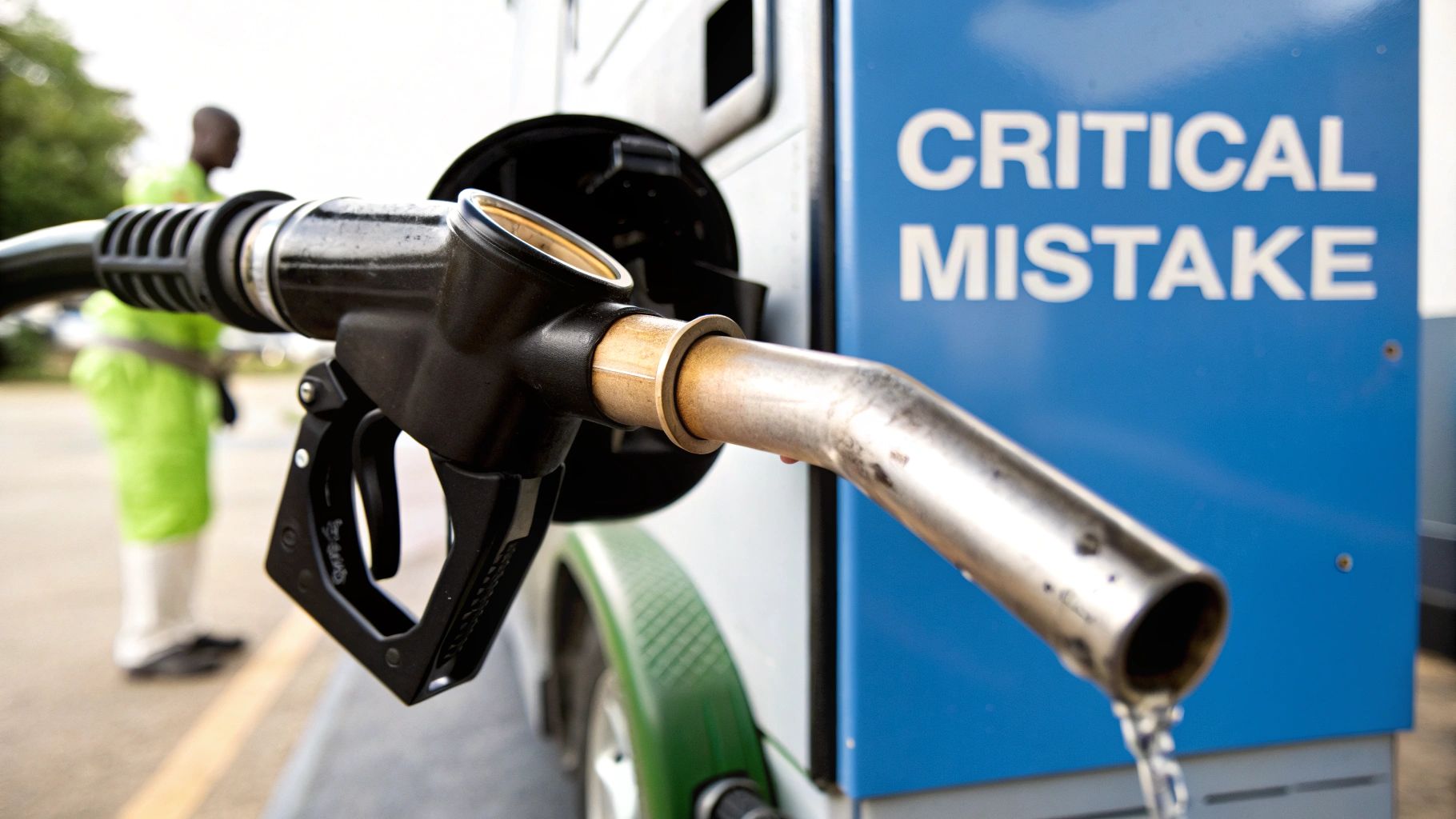
To really understand the damage, you have to appreciate just how different these two fuels are. Diesel is an oily, slow-burning substance that plays a dual role: powering your engine and keeping its most sensitive fuel system components running smoothly.
Petrol, on the other hand, is the polar opposite. It’s a solvent. It acts more like a degreaser or a powerful cleaning agent. The moment it enters a diesel system, it starts dissolving that essential lubricating film from all the parts it touches, especially the high-pressure fuel pump and injectors.
The Chain Reaction of Damage
Without that protective oily layer, these finely-tuned parts start to wear at a terrifying rate. The friction creates tiny metal particles—what mechanics call swarf—which are then pumped through the entire fuel system. This swarm of metallic debris is catastrophic, contaminating everything from the fuel lines and filter to the injectors. It's the main reason why even a small amount of petrol is so destructive.
"The biggest problem is loss of lubrication. Modern high-pressure fuel pumps are lubricated by the fuel itself. When you introduce petrol, it's like washing those parts with a solvent. The subsequent damage can be extensive and very expensive to rectify."
Even before this metal-on-metal wear gets too bad, the engine's combustion cycle is thrown into chaos. Petrol is far more volatile and ignites too early under the immense compression of a diesel engine. This leads to that awful engine knock, misfires, and a dramatic loss of power.
The table below breaks down the main ways petrol wreaks havoc on your diesel engine. It shows how one simple slip-up can trigger a cascade of complex mechanical failures.
Core Problems From Petrol in a Diesel Engine
Problem Area | What Happens Inside Your Engine | The Consequence for Your Car |
|---|---|---|
Lubrication Failure | Petrol strips the oily film from the fuel pump and injectors. | Causes metal-on-metal grinding, leading to rapid wear and tear. |
Fuel System Contamination | Tiny metal shavings (swarf) from worn parts enter the fuel lines. | Can block the fuel filter, injectors, and damage the entire system. |
Incorrect Combustion | Petrol detonates too early under high compression. | Results in a loud knocking sound, rough running, and severe power loss. |
Component Damage | Seals and rubber hoses can be damaged by the solvent properties of petrol. | Can lead to fuel leaks and requires replacement of affected parts. |
Ultimately, every one of these issues stems from that initial loss of lubrication. It’s a domino effect that can quickly turn an easy-to-fix problem into an engine-destroying disaster if you turn the key.
Why Petrol and Diesel Engines Can Never Mix
To get your head around the damage putting petrol in a diesel car causes, you first need to understand that these two fuels aren't just a bit different – they're polar opposites in how they work. It’s less like mixing apple and orange juice and much more like pouring paint stripper into a bottle of engine oil. The result is just as destructive as it sounds.
Diesel fuel is a thick, oily substance designed to do two jobs at once. It’s obviously the fuel source, but just as importantly, it lubricates all the incredibly precise, high-pressure parts of your fuel system, like the pump and injectors. This oiliness is non-negotiable; it creates a vital protective film over moving parts that are grinding against each other under immense pressure.
Petrol, on the other hand, is a thin, watery liquid that acts as a powerful solvent. Its job is to evaporate easily so it can be ignited by a spark plug. When you introduce this solvent into a system that’s depending on a lubricating oil, it immediately starts to wash away that protective film.
Lubrication and Compression: A Tale of Two Engines
The fundamental difference comes down to how each engine makes its bang. A diesel engine works through compression ignition. It squeezes air in the cylinder so tightly that it gets incredibly hot—hot enough to instantly ignite the diesel fuel the second it's injected. No spark plug needed.
This process demands that the fuel is delivered at astronomical pressures, sometimes hitting over 30,000 PSI. The parts handling this immense pressure, especially the common rail fuel pump, rely entirely on the diesel fuel itself to stay lubricated.
A Diesel Engine: Squeezes air to create intense heat, then injects fuel for a spontaneous explosion. It’s built for extreme pressure and needs its fuel to be oily.
A Petrol Engine: Mixes fuel and air, gives it a gentle squeeze, then uses a spark plug to set it off. It’s a completely different, lower-pressure world.
When petrol gets into a diesel system, this delicate balance is shattered. The solvent strips the lubrication, causing metal parts to grind directly against each other. This friction instantly creates tiny metal shavings—we call it swarf—which are then pumped at high pressure through your entire fuel system.
The real catastrophic damage from misfuelling comes from this total loss of lubrication. The high-pressure fuel pump essentially starts to eat itself, sending a destructive wave of metal filings through the fuel lines, filter, and injectors, leading to total system failure.
Unleashing Combustion Chaos
On top of the lubrication failure, petrol’s chemical makeup causes absolute chaos in the diesel combustion cycle. Petrol is far more volatile than diesel, meaning it ignites much, much more easily.
Introduce that into a diesel engine's high-compression chamber, and the petrol detonates uncontrollably, and way too early. This premature explosion is like a sledgehammer blow, fighting against the piston as it’s still trying to travel upwards. This is exactly where that loud, metallic knocking or clattering noise comes from if you start the engine after misfuelling.
This uncontrolled detonation puts enormous stress on the engine’s internals, including:
Pistons and Connecting Rods: They get hit with extreme pressure and heat they were never designed for.
Cylinder Head Gaskets: The violent pressure spikes can easily cause them to fail.
Injectors: Their tiny nozzles can get clogged with metal swarf or damaged by the violent combustion.
Ultimately, the one-two punch of lubrication loss and combustion chaos creates a perfect storm of mechanical failure. The engine isn’t just running badly; its most critical and expensive parts are actively being destroyed from the inside. This is why the single most important rule is to never, ever start the engine.
Recognising the Warning Signs of Misfuelling
Whether you catch the mistake at the pump or it only dawns on you after you've driven away, your car is going to start sending out some very clear distress signals. It’s vital to understand what these symptoms mean because each one is a direct cry for help from your engine, signalling that serious damage is happening right now. Acting fast can be the difference between a simple roadside fuel drain and a catastrophic engine failure.
The signs of putting petrol in a diesel car aren't subtle. They are the audible and visible results of the mechanical chaos unfolding inside your engine as the wrong fuel gets pumped through its veins.
Loud Engine Knocking and Clattering
One of the first and most alarming signs is a loud, metallic knocking sound coming from under the bonnet. It's often described as a harsh clattering that gets noticeably worse when you try to accelerate. This isn't just some random noise; it's the sound of your engine literally fighting itself.
Diesel engines rely on high compression to ignite fuel, not a spark plug. Petrol is far more volatile and ignites way too early under this intense pressure, creating what is essentially a small, uncontrolled explosion that slams against the piston as it's still moving upwards.
This premature detonation, often called 'engine knock', is like hitting the piston head with a sledgehammer on every single stroke. It puts immense stress on all the engine’s internal parts, from the pistons and connecting rods to the crankshaft bearings.
Sudden Loss of Power and Jerky Performance
You will almost certainly feel a dramatic and sudden drop in engine power. The car may feel sluggish and heavy, struggle to pick up speed, or even respond with violent, jerky movements when you press the accelerator. This happens for two key reasons:
Inefficient Combustion: The petrol just isn't burning properly in the diesel cycle, which means the engine can't generate the power it’s supposed to.
Lubrication Failure: The high-pressure fuel pump is being starved of the lubrication it needs from the naturally oily diesel fuel. This causes it to fail, struggling to deliver fuel at the correct pressure.
This nasty combination makes driving difficult and dangerous, as the car's behaviour becomes completely unpredictable.
Excessive Smoke from the Exhaust
Another tell-tale sign is a significant amount of smoke pouring from your exhaust pipe. This smoke is usually white or a light grey colour and is the result of unburnt fuel passing straight through the engine and into the hot exhaust system.
Because petrol doesn't burn in the same way as diesel, a lot of it ends up being vaporised by the intense heat of the exhaust rather than being properly combusted in the cylinders. This creates a thick, acrid smoke that’s a clear visual indicator of a serious problem.
Difficulty Starting or Complete Engine Cut-Out
If you haven't driven far, you might find the engine is extremely difficult to start. It may turn over and over but just refuse to fire up. If you did manage to get started and drive away, it will very likely shudder, stall, and cut out completely within a very short distance.
This is the engine's final defence mechanism. Once the concentration of petrol in the fuel lines gets too high, the engine can no longer sustain combustion at all and will simply shut down to protect itself. For a more detailed breakdown of these indicators, you can learn more about wrong fuel in car symptoms and what they mean for your vehicle. Each sign points to the same urgent conclusion: you must stop the engine immediately to prevent further, irreversible damage.
Your Immediate Action Plan: What to Do and Not Do
That sinking feeling is unmistakable. You’ve just put petrol in your diesel car. In these first few moments, panic is your worst enemy, but quick, calm action is your best friend. What you do right now will directly decide whether this is a simple inconvenience or a wallet-emptying disaster.
The most important rule is the simplest one, and it can't be said enough.
Do not start the engine.
Don't even turn the key to let the radio come on. In most modern cars, just turning the ignition to the 'accessory' position is enough to prime the fuel pump. That single action starts circulating the contaminated fuel, sending that destructive, solvent-like petrol towards the most sensitive and expensive parts of your diesel system.
The Golden Rule: Do Not Turn The Key
Your best defence against catastrophic engine failure is to methodically follow the right steps. Trying a quick fix or just hoping for the best is the fastest way to cause thousands of pounds in damage. Instead, take a deep breath and run through this emergency checklist.
Misfuelling Emergency Checklist
This table lays out the crucial do's and don'ts. Following this simple advice can be the difference between a straightforward fuel drain and a complete engine overhaul.
Do This Immediately | Never Do This Under Any Circumstances |
|---|---|
Stay Put - If you haven't started the engine, don't. If you have, pull over safely and switch it off immediately. | Don't Start the Engine - Not even for a second. This is the single biggest mistake you can make. |
Tell the Forecourt Staff - They've seen this before and can help by cordoning off the pump. | Don't Try to "Top Up" - Adding more diesel to "dilute" the petrol is a myth. It just forces the damaging mix deeper into the system. |
Put the Car in Neutral - This is the only safe way to prepare the car to be moved without the engine. | Don't Attempt a DIY Drain - Siphoning fuel is incredibly dangerous due to fire risk and toxic fumes. It's a job for pros. |
Push to a Safe Place - Get help moving your vehicle to a parking bay, away from the pumps. | Don't Keep Driving - If you've already driven off, don't try to "limp home." Every metre causes more damage. |
Call a Professional - Your first and most important call should be to a specialist misfuelling service. | Don't Ignore Warning Signs - Knocking noises, smoke, or power loss are your engine's cries for help. Stop immediately. |
By sticking to these clear steps, you contain the problem within the fuel tank, where it can be easily and affordably fixed.
This flowchart gives you a quick visual guide for what to do if you’ve already started the engine and are noticing problems.
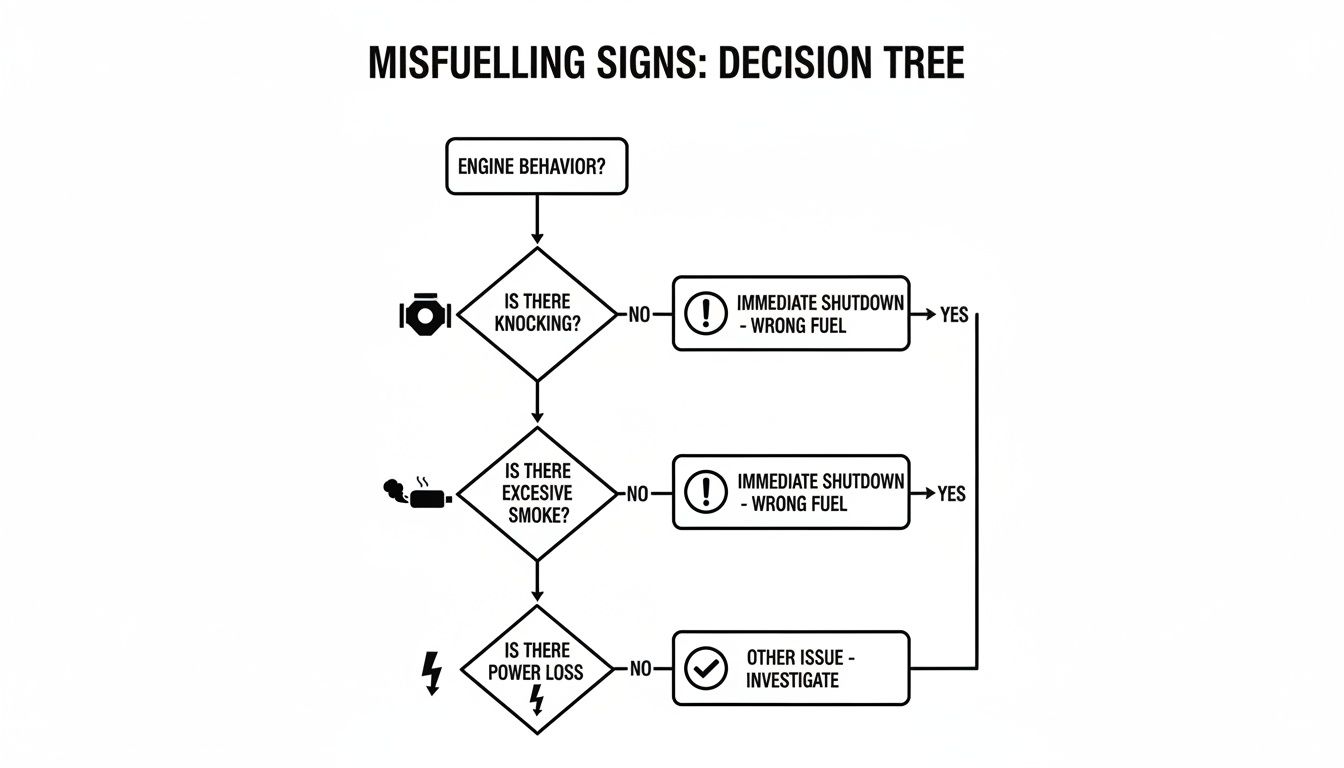
Each of those signs—the knocking, the smoke, the loss of power—is a clear signal that the petrol is circulating and actively destroying components. This reinforces just how vital it is to turn the engine off right away.
Critical Mistakes to Avoid at All Costs
Knowing what not to do is just as important as knowing what to do. Attempting a DIY fix is a shortcut to making a bad situation much, much worse. It can also be extremely dangerous.
The single biggest mistake a driver can make after misfuelling is starting the engine. It turns a recoverable situation that requires a simple fuel drain into a potential engine-destroying event costing thousands.
Whatever you do, never attempt the following:
Do Not Attempt a DIY Drain: Siphoning fuel yourself is incredibly hazardous. Petrol is highly flammable and its fumes are toxic. A single spark from static electricity could ignite the vapours. To understand why professional equipment is non-negotiable, check out our safety guide on how to drain a petrol tank.
Do Not Rely on "Topping Up": The idea that you can dilute the problem away by adding more diesel is a dangerous myth. Even a small amount of petrol (as little as 5%) is enough to strip away lubrication and cause severe wear to the fuel pump and injectors.
Do Not Keep Driving: If you've already driven off, don't try to "make it home." Every second that engine is running, more damage is being done. Pull over safely and call for help.
By staying calm and following these clear do's and don'ts, you give your vehicle the best possible chance of escaping this common mistake with minimal fuss and cost. Your immediate priority is simple: stop that contaminated fuel from moving any further into the system.
Understanding the Repair Process and Potential Costs
That sinking feeling when you realise you’ve put petrol in a diesel car is bad enough, but the fear of a massive repair bill can make it a whole lot worse. The good news? It’s not always a financial catastrophe. The final cost really boils down to one single, critical factor: whether or not you started the engine.
What you do in those first few minutes directly dictates how simple—or how painfully expensive—the fix will be. A mistake caught at the pump can often be sorted at the roadside in under an hour. Drive away, however, and you could be looking at a major mechanical overhaul in a specialist workshop. Understanding the difference will show you exactly why calling for help immediately is always the cheapest option in the long run.
Tier 1 Damage: The Best-Case Scenario
If you spotted your mistake on the forecourt and haven’t so much as touched the ignition, you’re in the best possible position. You can breathe a sigh of relief. The contaminated fuel is sitting harmlessly in the tank, right where a specialist can get to it. In this situation, the fix is straightforward and relatively painless on the wallet.
A mobile technician will perform a professional fuel drain right where you are. This involves a few key steps:
Safely Draining the Tank: Using specialist, approved pumping equipment, the technician will drain the entire petrol and diesel mixture from your fuel tank.
Flushing the System: They’ll then circulate a small amount of clean diesel through the fuel lines to wash out any tiny bit of petrol that might have seeped in, even without the engine running.
Adding Fresh Diesel: Once the system is clean, they'll add enough fresh, correct diesel to get the engine started and see you safely to the next petrol station to fill up properly.
This whole process is usually done and dusted at the roadside in under an hour. The cost for a professional mobile fuel drain in the UK typically falls between £200 and £350. It’s a small price to pay to avoid thousands of pounds in potential engine damage.
Tier 2 Damage: When the Engine Has Run
The moment you turn the key, the situation gets much more serious. Starting the engine primes the fuel pump, which immediately starts circulating the damaging petrol-diesel mix through the entire fuel system. Petrol acts as a powerful solvent, and it gets to work instantly, stripping the vital lubrication from your high-pressure fuel pump and injectors.
If you’ve driven the car, even for a few hundred yards, the potential for damage shoots up exponentially. The costs start to climb because the repair is no longer a simple drain. It’s now a far more intensive job that involves a deep system flush and, quite possibly, replacing parts that have already been damaged. The price can start from around £500 for a comprehensive flush but can quickly rise depending on what needs to be replaced.
Tier 3 Damage: Catastrophic Failure
This is the scenario every driver dreads. If you’ve driven the car until it juddered to a halt, it’s a sign that significant mechanical damage has almost certainly happened. The lack of lubrication will have caused the delicate metal parts inside the fuel pump to grind themselves to pieces, sending a fine metallic dust (known as swarf) through the entire fuel system.
At this point, a flush just won’t cut it. The repair will likely involve replacing multiple major, and very expensive, components.
New Fuel Pump: A modern high-pressure common rail pump can cost £1,000 or more.
New Fuel Injectors: A full set of injectors can run anywhere from £800 to over £2,000.
Fuel Lines and Filter: These will all need replacing to get rid of the metal contamination, adding several hundred more pounds to the bill.
Labour Costs: This is a big workshop job that takes hours of skilled labour, which will also add significantly to the total.
In a Tier 3 situation, the final repair bill can easily soar past £3,000 to £5,000, which can sometimes be more than an older car is even worth. For a more detailed look at these figures, our guide covers the wrong fuel in car cost in much greater detail.
Will My Insurance Cover Misfuelling Costs?
Unfortunately, the answer is usually no. Most standard car insurance policies won't cover misfuelling because it's typically classed as driver error. This means you are generally responsible for footing the repair bill yourself. Some higher-tier comprehensive policies might offer misfuelling cover as an add-on, but you’ll need to check your policy documents very carefully to be sure.
Even if you do have cover, the cost of a Tier 1 roadside fuel drain is often less than your policy excess anyway. This makes calling a specialist mobile service like Misfuelled Car Fix not only the fastest solution but also the most financially sensible one. You get back on the road quickly and avoid making an insurance claim that could hike up your future premiums and affect your no-claims bonus.
How to Prevent Misfuelling in the Future
After the stress and expense of dealing with a misfuelled car, the last thing you want is a repeat performance. The good news is that stopping it from happening again is surprisingly straightforward. By building a few key habits and using some clever, low-cost tools, you can make sure this costly mistake remains a one-time event.
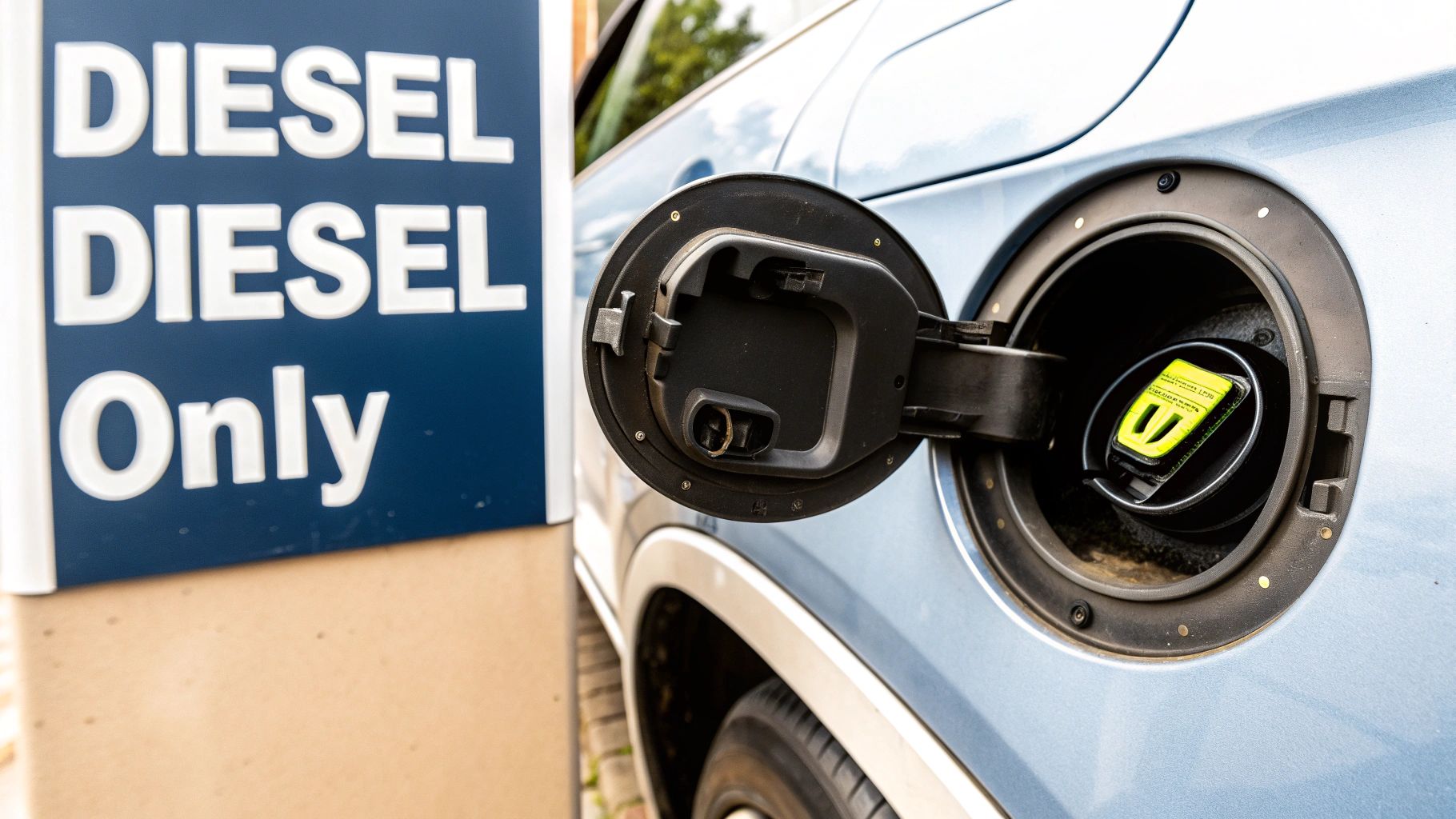
Most of the time, misfuelling boils down to simple distraction or a momentary lapse in concentration. Life gets busy, and it's all too easy to slip into autopilot at the petrol station. The trick is to build a routine that forces you to pause and check before you even think about picking up the pump.
Developing these simple habits can slash your risk of making the same mistake twice.
Simple Habits for Safe Fuelling
The most powerful prevention methods don’t cost a penny. All they ask for is a little bit of mindfulness every time you stop to fill up.
Double-Check the Nozzle Colour: In the UK, diesel pump handles are almost always black, while petrol is green. This is your first and best visual clue. Make a point of consciously checking the colour before you put the nozzle anywhere near your car.
Avoid Distractions: One of the biggest culprits is the mobile phone. Firing off a quick text or finishing a call can easily shatter your concentration. Make a hard and fast rule: phone stays in your pocket until you're done fuelling.
Read the Pump Label: Take one extra second to read the label on the pump itself. Confirm that it says 'DIESEL' before you squeeze the trigger. It’s a tiny check that can save you a world of pain.
These small tweaks to your routine create a powerful mental checklist. Before long, they become second nature, making it much harder to accidentally grab the wrong fuel, even when you're tired or in a rush.
A momentary lapse in concentration is the number one cause of misfuelling. Creating a consistent, distraction-free routine at the pump is the single most effective way to prevent putting petrol in a diesel car.
Physical Reminders and Prevention Devices
For an extra layer of security, especially if you share the car with family or manage a fleet of company vehicles, physical aids can make misfuelling almost impossible.
A simple but surprisingly effective trick is to pop a bright, clear 'DIESEL' sticker on the inside of your fuel flap. It’s the last thing you see before you insert the nozzle, acting as a final, unmissable reminder. They're cheap, easy to find online, and offer brilliant peace of mind.
For a more robust, foolproof solution, you can invest in a misfuelling prevention device. These are specially designed replacement fuel caps or inserts that physically block the wrong nozzle from ever going in.
How They Work: A standard petrol nozzle is narrower than a diesel nozzle. These devices have a clever mechanism that will only open when the wider diesel nozzle is inserted.
The Blockade: If you try to slot the thinner petrol nozzle in, it simply won't open the gate, physically stopping you from filling up.
Peace of Mind: This makes the mistake impossible, which is perfect for fleet managers who need to protect their vehicles from driver error across the board.
By combining mindful habits with simple physical reminders or devices, you create a powerful defence system. These proactive steps will ensure that the sinking feeling of realising you’ve put petrol in a diesel car is something you'll never have to experience again.
Your Top Questions About Misfuelling Answered
Even after the initial panic, it’s completely normal to have a head full of questions. Once you know what to do (and what not to do), the practical worries start to kick in. Let's clear up some of the most common concerns we hear from drivers every single day.
How Much Petrol Does It Take to Wreck a Diesel Engine?
This is a question we get all the time, often from drivers hoping a small splash won't matter. Unfortunately, there’s no such thing as a "safe" amount of petrol in a diesel tank. Modern diesel engines are precision-engineered machines, and they are incredibly sensitive.
Even a small contamination—as little as 5% of your tank's total volume—is enough to start stripping away the vital lubricating properties of the diesel. This immediately puts incredibly expensive parts like your high-pressure fuel pump and injectors at risk. That's why the only sensible move, regardless of how little you think you’ve put in, is to call for a professional fuel drain.
Will My Insurance Pay for a Misfuelling Mistake?
This is a real grey area, and the honest answer is that it all comes down to the small print in your policy. Most standard car insurance plans simply don't cover misfuelling. They tend to classify it as driver error rather than a genuine accident.
Some of the more premium, fully comprehensive policies might include misfuelling cover, sometimes as an optional add-on, but you’ll need to check your documents to be sure.
It's also worth remembering that the cost of a professional roadside fuel drain is often less than the insurance excess you’d have to pay anyway. This makes calling a specialist the faster and more affordable solution in most situations.
How Long Does a Roadside Fuel Drain Actually Take?
You’ll probably be surprised at how quick and efficient a professional fuel drain is. The whole process is designed to cause as little disruption to your day as possible and get you moving again.
From the moment our technician arrives at your location, the entire job usually takes between 45 and 60 minutes. This isn't just a quick siphon; the process includes:
Safely draining every drop of contaminated fuel from the tank.
Flushing the entire fuel system to get rid of any nasty residue.
Adding a fresh supply of the correct, clean diesel.
Starting the car and making sure it's running smoothly before we leave.
If you've put the wrong fuel in your car, don't panic and don't start the engine. Call the experts at Misfuelled Car Fix on our 24/7 freephone line. Our mobile technicians will come directly to you, wherever you are in England, and get you safely back on the road. Visit us at https://www.misfuelledcarfix.co.uk for immediate assistance.


Comments