How to Drain a Petrol Tank The UK Driver's Safety Guide
- Misfuelled Car Fixer

- Jan 23
- 16 min read
It’s that sinking feeling every driver dreads. You’re at the pump, you hang up the nozzle, and then you see it – the green handle, not the black one. If you’ve just put the wrong fuel in your car, the first thing to do is take a deep breath. What you do in the next five minutes is absolutely critical.
The single most important rule is non-negotiable: DO NOT start the engine. Seriously. Don't even turn the key to listen to the radio. Just keeping the ignition off is what separates a minor inconvenience from a major financial headache.
Turning Panic into a Plan After Misfuelling
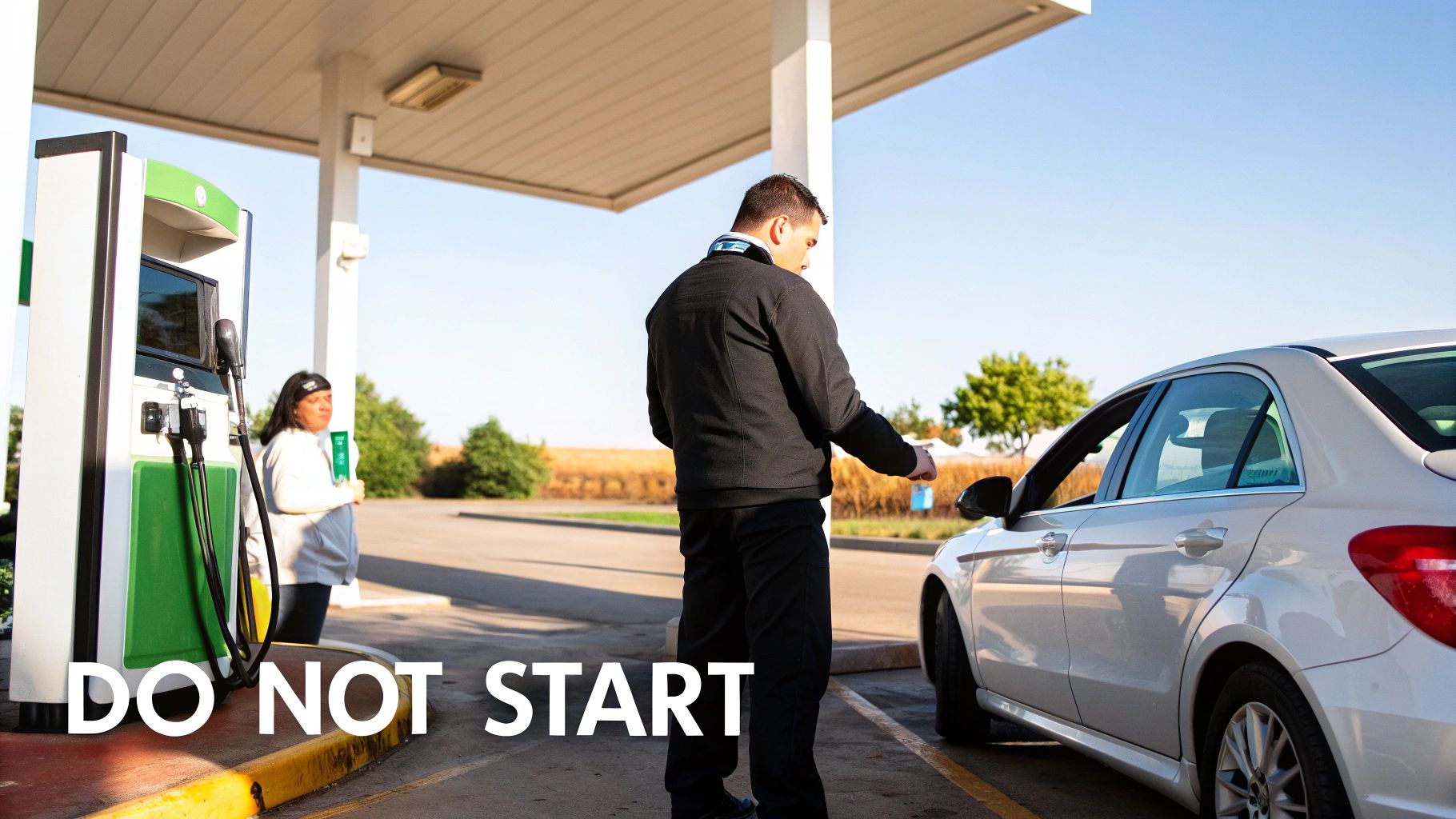
That moment of realisation is awful, but panicking won't help. Your priority has instantly shifted from filling your tank to protecting your engine.
Modern engines are incredibly precise bits of kit with almost zero tolerance for the wrong fuel. Petrol in a diesel engine, for instance, is a disaster waiting to happen. It acts as a powerful solvent, not a lubricant, stripping the protective oily film from critical parts like the fuel pump and injectors. This causes damaging metal-on-metal friction that can quickly lead to catastrophic failure.
Key Takeaway: The damage from misfuelling doesn't happen when the wrong fuel goes in the tank. It happens the second that fuel gets pumped into the engine. By leaving the key in your pocket, you contain the problem entirely within the tank, making it a simple draining job.
Your Immediate Action Checklist
If you find yourself in this spot, resist the urge to "see what happens." Instead, just follow these calm, methodical steps.
Leave the Engine Off: I can't stress this enough. Don't start the car. Don't even put the key in the ignition. Many modern cars prime the fuel pump as soon as you turn the key, and that's all it takes to start circulating the contaminated fuel.
Tell the Petrol Station Staff: Pop into the kiosk and let the staff know what's happened. Trust me, they've seen it all before. They can help by putting cones around the pump so no one else uses it.
Move Your Vehicle Safely: Your car is now an obstacle. Put it in neutral and, if it’s safe, ask someone for a hand to push it to a parking bay, well away from the pumps and other cars. Never try this on your own on a busy forecourt.
Understanding the Scenarios
The severity of your situation hinges entirely on one thing: whether or not you started the engine. For those who've put petrol in a diesel car, the consequences of driving off are particularly grim. If you want to dig deeper into that specific nightmare, our guide on what happens when you put petrol in a diesel car explains it all in detail.
To make it crystal clear, let's break down the two main scenarios you could be facing.
This quick reference table shows you exactly where you stand and what to do next.
Wrong Fuel Scenario Quick Action Guide
Scenario | Engine Status | Damage Risk | Your Immediate Action |
|---|---|---|---|
Best Case | Not Started | Very Low | Do not start. Push vehicle to a safe spot. Call for a fuel drain. |
Worst Case | Started & Driven | High to Severe | Pull over safely as soon as possible. Call for recovery and fuel drain. |
As you can see, the outcome is worlds apart.
If you haven't started the engine, a professional fuel drain is a 100% effective solution. A mobile technician can come to wherever you are, drain the contaminated fuel from the tank, flush the system, and have you back on your way with no lasting damage. If you have started the car, however, the game changes, and the next steps are far more urgent.
So, you’re standing there, jerry can in hand, wondering if you can just siphon the tank yourself and save a few quid. Before you even think about starting, let's have an honest chat about the massive risks you’re taking on. Trying to drain your own fuel tank might look simple on a YouTube video, but in the real world, it's a job packed with hidden dangers that can turn a simple mistake into a catastrophe.
The biggest and most immediate danger is fire. Petrol is ridiculously volatile, and its fumes are incredibly flammable. It only takes one tiny spark—from static electricity off your clothes, a metal tool hitting the concrete, or the click of a battery terminal—to ignite those fumes with explosive force. In an enclosed space like a garage, those invisible vapours can build up to dangerous levels in minutes.
Modern Cars Present Modern Problems
The days of just sticking a hose in the tank and having a quick suck are long gone. Today's cars are far more complex, and that intricacy makes a DIY fuel drain not just difficult, but genuinely hazardous.
Anti-Siphon Devices: Almost every modern car has an anti-siphon mesh or a special valve built into the fuel filler neck. It's a security feature to stop fuel thieves, but it also means your simple siphon hose is never going to get anywhere near the fuel in the tank.
Intricate Fuel Systems: The fuel pump is usually located right inside the tank itself, and the fuel lines are pressurised and tricky to access without specialist kit. If you damage one of these parts, you could cause a serious leak or end up with a repair bill that makes the cost of a professional call-out look like pocket change.
Sensitive Electronics: Fiddling around with your car's battery or the fuel pump wiring can easily scramble the ECU (Engine Control Unit) and other sensitive electronics. You could end up creating a whole new set of electrical problems to solve.
It's also worth remembering that contaminated fuel is legally classified as hazardous waste. A professional service doesn't just get the fuel out safely; they handle the legal and environmentally sound disposal, a crucial step that’s almost always forgotten in a DIY attempt.
Health Hazards and Environmental Responsibility
Looking beyond the fire risk, getting up close and personal with petrol is just bad for your health. Direct skin contact can cause nasty irritation and rashes. Breathing in the fumes will leave you feeling dizzy with headaches and can cause serious respiratory problems. And if you accidentally swallow any, that's a medical emergency.
Then you've got to figure out what on earth to do with 50-60 litres of contaminated fuel. You can't just pour it down the drain or stick it out with the bins—that's illegal and causes severe environmental damage. You’d be legally responsible for getting that hazardous waste to a designated council facility, which is a messy and complicated job in itself. If you want to see how the pros handle this, have a look at our essential guide to misfuel recovery services.
Weighing the Real Costs
When you really add it all up, the choice becomes pretty clear. A professional fuel drain technician turns up with all the right gear—specialist pumps to get past anti-siphon devices, equipment to manage flammable fumes, and the right containers to hold every drop of contaminated fuel safely.
DIY vs Professional: A Reality Check
Consideration | DIY Attempt | Professional Service |
|---|---|---|
Safety Risk | Extremely High (fire, health) | Very Low (trained & insured) |
Equipment Cost | Siphon pump, approved containers, PPE | All specialist equipment included |
Success Rate | Low (anti-siphon, complex systems) | Guaranteed |
Waste Disposal | Your legal responsibility | Handled professionally |
Time Taken | Hours, with no guarantee | Typically under an hour |
At the end of the day, learning how to drain a petrol tank safely really means learning when to pick up the phone and call an expert. The relatively small cost of a professional service buys you safety, speed, and absolute peace of mind, making sure the job is done right without risking yourself, your car, or the environment.
How to Manually Drain a Petrol Tank With Extreme Caution
Alright, let's be honest. If you're reading this, you're probably in a tight spot and thinking about draining your fuel tank yourself. Before we go any further, I have to be crystal clear: this is one of the most hazardous jobs you can attempt on a car. This guide isn't here to cheer you on; it's a harm-reduction resource. If you're dead set on doing this, we're going to walk through it with safety as the absolute, non-negotiable priority.
Petrol is incredibly volatile. Its fumes are invisible, heavier than air, and can ignite from a tiny spark you won't even see. This means you are creating a potentially explosive environment. Never, ever work in an enclosed space like a domestic garage. You need to be outdoors, in a well-ventilated spot, far away from houses, pilot lights, barbecues, or any electrical equipment.
The infographic below breaks down the three massive risks you're up against. They're all connected, starting with the fire hazard and leading straight to health risks and serious car damage.
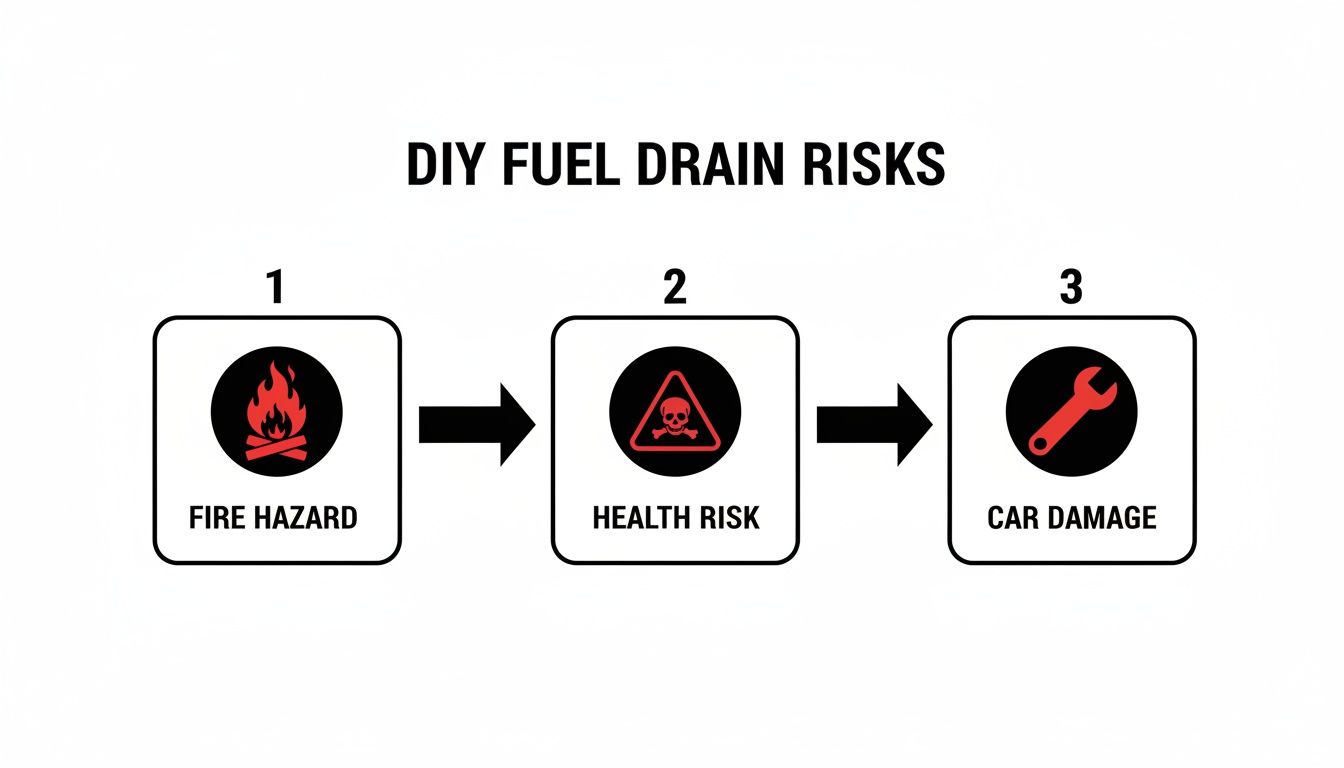
Think of it like a chain reaction. One mistake can easily lead to the next.
Assembling Your Essential Safety Toolkit
This is not a job for a bucket and a bit of old hosepipe. Seriously. Using the wrong gear dramatically increases your risk. Your first job is to get the right tools and personal protective equipment (PPE) together.
Essential Gear Checklist:
Approved Fuel Containers: You’ll need one or more UN-approved jerry cans. Their total capacity must be more than your car’s fuel tank. Do not even think about using milk cartons, water bottles, or garden buckets.
Manual Siphon Pump: Get a proper hand-operated siphon pump made specifically for petrol. Never, ever use your mouth to start a siphon. Swallowing or inhaling petrol is a genuine medical emergency.
Personal Protective Equipment (PPE): This is non-negotiable. Get some fuel-resistant nitrile gloves and wrap-around safety goggles. Petrol splashes can cause nasty skin burns and permanent eye damage.
Fire Extinguisher: You must have a dry powder or CO2 fire extinguisher rated for Class B (flammable liquid) fires within arm's reach at all times.
Drip Tray and Rags: A large drip tray and a stack of old rags are essential for catching any spills the second they happen.
Preparing the Vehicle and Your Workspace
Got the kit? Good. Now you need to prep the car and the area around it. The goal is simple: eliminate every single potential source of ignition before any fuel is exposed.
The most critical step is to disconnect the car battery. Always remove the negative (-) terminal first. This stops any stray sparks from the car's electrical system, which would be catastrophic. Once it's off, wrap the terminal connector in a thick cloth to make sure it can't accidentally touch the battery post.
Park the car on a flat, level surface. This keeps the draining process consistent and stops the car from rolling. Chock the wheels for good measure. Finally, take your phone and any other electronics out of your pockets and put them somewhere far away. Even a phone vibrating can create a tiny internal spark.
Expert Warning: Static electricity is your invisible enemy here. It's a powerful ignition source. Don't wear nylon or other synthetic clothes that build up static easily. Stick to cotton, and before you start, touch a metal part of the car's body to discharge any static you've built up.
The Draining Process Step-by-Step
With all your prep done, you're ready to start the draining process. Siphoning is the most common DIY method, but be warned: many modern cars have anti-siphon devices that will stop you in your tracks.
Siphoning From the Filler Neck
Gently slide the intake hose of your manual siphon pump into the fuel filler neck. Push it in slowly until you feel it hit the bottom of the tank. If you come up against a hard block, your car probably has an anti-siphon mesh. This method won't work.
Stick the outlet hose deep inside your approved jerry can, making sure it won't pop out. The can has to be lower than the car's fuel tank so gravity can help the flow.
Start pumping the hand pump. You should see fuel start flowing into the can. Keep a steady rhythm until the flow is consistent.
Watch it like a hawk. Never leave a running siphon unattended. As one jerry can gets full, stop the flow, switch to an empty one, and screw the cap on the full one immediately.
Accessing a Fuel Line (Advanced Method)If you can't siphon from the neck, there is another way: disconnecting a fuel line. This is much trickier and comes with a far higher risk of spills and breaking things. It usually means getting under the car to get at the fuel filter or a line near the engine.
Honestly, unless you are very experienced with car mechanics, I would strongly advise against this. One wrong move could damage the fuel system, causing leaks and a repair bill that makes a professional call-out look cheap.
Once you think the tank is empty, remember there's still contaminated fuel in the lines and filter. The only proper way to clear this is to add a bit of fresh, correct fuel and flush it through – something a professional service is set up to do properly. Finally, reconnect the battery (positive terminal first this time) and get ready for the next critical step: safely and legally getting rid of the hazardous waste you’ve just collected.
Legally Disposing of Contaminated Fuel in the UK
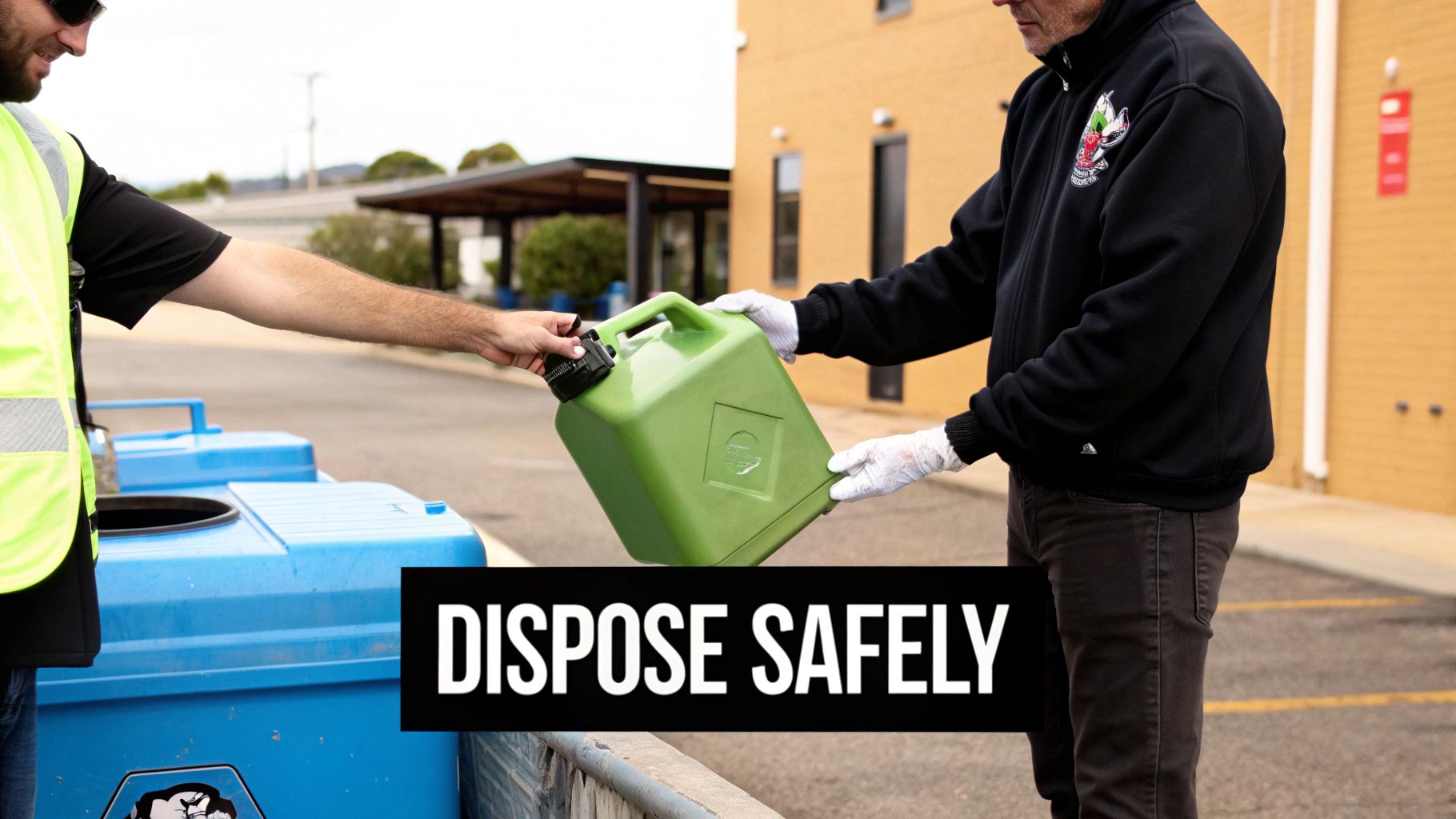
So you've wrestled with the fuel tank and finally drained it. You're probably feeling relieved, but your job isn't quite done. You're now left staring at several jerry cans full of a petrol-diesel cocktail, which is legally classified as hazardous waste. Honestly, this is where a DIY job can go from being a hassle to a serious legal problem.
It’s tempting to look for a quick and easy way out, but don't even think about it. Pouring contaminated fuel down a drain, on the ground, or sneaking it into your household bin is strictly illegal in the UK. This isn't just a bit of council red tape; it's a critical environmental law.
Just to put it in perspective, a single litre of petrol has the potential to contaminate up to one million litres of drinking water. The damage is immense and long-lasting, which is exactly why the authorities take it so seriously.
Why You Can't Just Tip It Away
Contaminated fuel isn't just petrol or diesel anymore; it’s a useless and dangerous chemical mix that can't be put in any engine. This sludge presents several risks that normal waste disposal services are completely unprepared for.
Fire Hazard: The fumes are incredibly flammable. Imagine the risk of an explosion in the back of a bin lorry or at a recycling centre.
Toxic Pollution: If it gets into the ground, these chemicals will leach into the soil and can eventually contaminate groundwater, poisoning local wildlife and water supplies.
Health Risks: The fumes and direct contact are a danger to sanitation workers and anyone who comes across it.
Getting caught disposing of this stuff improperly isn't just a slap on the wrist. Under the Environmental Protection Act 1990, you could be hit with unlimited fines and even jail time for fly-tipping hazardous materials. That penalty will almost certainly be more than it would have cost to just call a mobile fuel drain service in the first place.
Finding Your Local Hazardous Waste Disposal Site
Okay, so what’s the right way to handle it? You must take the contaminated fuel to a licensed hazardous waste disposal facility. These are often located at your local council’s household waste recycling centre (HWRC), but you can't just rock up.
Your first step is vital: check your local council's website. A quick search for "hazardous waste disposal" or "chemical waste" along with your town's name should get you the right page. This will tell you which sites accept liquid fuel, their opening hours, and any specific rules you need to follow.
Important Tip: You almost always have to book an appointment, and you'll likely need to bring proof of address like a council tax bill. Turning up unannounced is the fastest way to get turned away.
Getting the Fuel There Safely
Once you have a location and an appointment, you have to transport the contaminated fuel legally and safely. Make sure your UN-approved jerry cans are sealed tight and wedged upright in the boot of your car so they can’t tip over. You don't want those fumes leaking into your car on the journey.
When you get to the site, listen carefully to the staff. They'll show you exactly where to go to hand over the containers safely.
The whole process—finding a site, booking a slot, and then safely transporting flammable liquid—really throws the value of a professional service into sharp relief. A mobile fuel drain technician takes care of everything, including the safe and legal disposal of the contaminated fuel, lifting that entire burden right off your shoulders.
Fuel Supply and Management for UK Drivers
Knowing how to drain a petrol tank is a handy skill, but it’s even more important to understand why you want to avoid that situation in the first place, especially here in the UK. Putting the wrong fuel in your car is always a nightmare, but that personal disaster can escalate into a full-blown crisis if the nation's fuel supply is already stretched thin.
The UK's entire fuel network runs on a super-efficient "just-in-time" system. What that means is petrol stations don't sit on massive underground lakes of fuel. Instead, they rely on a steady, predictable stream of tanker deliveries to meet our daily driving demands. It works brilliantly most of the time, but it’s also surprisingly fragile.
The Knock-On Effect of Supply Shocks
This finely tuned system can be thrown into chaos when our behaviour as drivers suddenly changes. All it takes is a news report or a rumour spreading on social media to trigger a wave of panic buying. Local forecourts can be drained dry in hours, long before the next scheduled tanker is due to arrive.
This creates the perfect storm for someone who's just misfuelled. You’ve not only got a car that won't run, but you're now faced with the impossible task of finding the right fuel to replace it with. The pumps at your local garage might be empty, and the next one could have queues stretching back onto the main road.
We saw this exact scenario play out during the autumn of 2021, a sharp lesson in just how brittle our supply chain can be. The crisis wasn't caused by an actual shortage of petrol in the country, but by a sudden, intense stampede of panic buying.
That period showed everyone how a simple misfuelling blunder could spiral from a personal headache into a major ordeal. Imagine going through the hassle of draining your tank only to find there’s no unleaded or diesel to be found for miles. It really drives home the value of getting it right at the pump, every single time. It also highlights the huge advantage of calling a professional mobile drain service—they don't just fix your mistake; they arrive with a supply of the correct fuel to get you moving again.
Lessons from the 2021 Fuel Crisis
The chaos of 2021 is a powerful reminder of this vulnerability. Spooked by reports of an HGV driver shortage, the public rushed to the pumps, stripping forecourts bare. At the height of the panic, BP reported that around 30% of their 1,200 UK sites had completely run out of at least one main grade of fuel. You can read a full rundown of this widespread supply disruption on Wikipedia.
What this teaches us is that being careful at the pump isn't just about protecting your engine or your wallet. It's about guaranteeing your own mobility and making sure you don't get stranded during a supply crunch. A misfuelling error at the wrong moment could leave your car stuck on the drive for days, not just hours.
Understanding UK Fuel Consumption Trends
When you’re staring at a tank full of the wrong fuel, your problem feels intensely personal. But every time you pull up to the pump, you’re plugging into a massive, complex energy network with its own weak spots. Understanding this bigger picture helps explain why fuel quality, supply, and simply getting the right stuff in your tank are so critical for every driver in the UK.
For years, the UK was a major oil producer, but that landscape has flipped completely. Our own domestic production has been in a long-term slide, making the country far more reliant on a stable global supply chain to keep things moving. This shift has a direct knock-on effect for everyone on the road.
The UK's Growing Reliance on Fuel Imports
The latest figures really spell it out. Back in 2021, UK production of primary oils dropped to a 7-year low at just 41 million tonnes—a massive 17 percent decrease from the year before. That plunge meant the UK was once again a net importer, highlighting just how much we depend on international markets for the fuel in our tanks. You can see the full government breakdown in the 2022 Digest of UK Energy Statistics.
What this means for you is that global events, shipping problems, or political friction can hit prices and availability at your local petrol station much faster than they used to. It’s a subtle reminder that every litre of fuel is a valuable commodity that needs to be handled with care.
When the supply chain is already stretched, a simple mistake like misfuelling becomes more than just an inconvenience. It can happen at the worst possible time, compounding the stress of an already difficult situation.
Long-Term Trends in How We Use Fuel
So, while we’re importing more, the way we actually use fuel has also been changing. You might assume we’re guzzling more petrol and diesel than ever, but the data tells a very different story.
Believe it or not, the UK's overall petroleum use for transport actually peaked way back in 2007. Since then, thanks to more fuel-efficient engines, hybrids, and the slow but steady rise of electric vehicles, our national demand has been on a downward trend.
Despite this progress, petrol and diesel are still, by a huge margin, the dominant fuel sources for UK transport. We are still a nation that runs on petroleum. This means the challenges of maintaining a stable supply and ensuring fuel quality are as important as they’ve ever been.
For the driver on the ground, this shifting energy landscape reinforces a simple truth: looking after your vehicle's fuel system—from putting the right stuff in to knowing how to drain a petrol tank safely if it all goes wrong—is a fundamental part of modern car ownership.
Your Top Questions About Draining a Fuel Tank
After the initial shock of misfuelling wears off, it’s completely normal for a flood of practical questions to follow. It's a stressful situation, and you need clear, straightforward answers to figure out what to do next. Let's run through some of the most common queries we handle every single day.
How Much Does a Professional Fuel Drain Cost in the UK?
It’s often much more affordable than you might think, especially when you weigh it up against dealership prices or the potential for massive engine repair bills down the line.
The final price will vary a bit depending on your specific vehicle and where you are, but it's a fixed-cost service. This price typically covers everything: the complete drain, a full system flush, a top-up of the correct fuel to get you going, and the safe, legal disposal of the contaminated mixture. The best way to get a precise figure is to call for a no-obligation quote.
Key Insight: A professional mobile service is almost always significantly cheaper than getting recovered to a main dealer. Dealerships often charge premium labour rates for the exact same job, whereas you're paying a specialist to fix one specific problem, not general garage time.
Will Putting Petrol in a Diesel Car Ruin the Engine?
It can cause some very serious damage, but here's the crucial part: only if you've started the car. If the engine hasn't been run, a professional fuel drain will almost certainly solve the problem with no lasting harm.
The issue is that petrol acts as a solvent in a diesel system, stripping away the vital lubrication from the high-pressure fuel pump and injectors. Driving the car, even for a minute, forces this solvent through those delicate parts and can cause expensive component failure. Recognising the symptoms of wrong fuel in a car early is absolutely vital if you have turned the key. A specialist can flush the entire system to mitigate this risk.
Can I Just Top Up the Tank with the Correct Fuel?
This is a dangerous myth that can lead to catastrophic, wallet-emptying engine damage. Trying to dilute the wrong fuel by simply topping up the tank is a terrible idea for modern, sensitive engines.
All you'll achieve is circulating a harmful cocktail of fuels through a system that is not designed to handle it. The only safe and correct solution is to have the entire tank and all the fuel lines drained completely before adding any fresh, correct fuel.
While UK vehicle efficiency has improved over the years, petroleum remains vital. In 2023, transportation consumed a staggering 44.3 million metric tons of petroleum products. That figure really underscores our reliance on getting the right fuel in our tanks every time. You can find more insights on UK transport fuel consumption on Statista.com.
If you're stuck with the wrong fuel in your tank, don't risk it. The team at Misfuelled Car Fix offers a 24/7 mobile fuel drain service across England to get you safely back on the road. Call us for immediate, professional help.