Wrong Fuel in Car Symptoms and How to Save Your Engine

It's a gut-wrenching moment.That sinking feeling when you glance down and realise you've grabbed the wrong nozzle at the pump. If your car suddenly starts making a rattling noise, chugging out smoke, or struggling to even start right after you’ve filled up, there’s a good chance you’ve just made this costly mistake.
Recognising Wrong Fuel Symptoms at the Pump
We’ve all been there – distracted by a busy day at a hectic petrol station, only to realise the nozzle in your hand is the wrong colour. This momentary lapse is far more common than you'd think, catching out an estimated 150,000 UK drivers every year.
In fact, research from Go.Compare shows that nearly 29% of motorists have done it, with younger drivers and those in bustling cities being especially prone.
The key is to spot the signs straight away. Your next move will determine whether this is a minor inconvenience or a wallet-busting mechanical disaster. The symptoms you’ll experience depend entirely on whether you've put petrol in a diesel car or the other way around.
Common Signs of Petrol in a Diesel Car
Putting petrol into a diesel engine is by far the most common—and the most damaging—misfuelling mistake. Petrol is far too volatile for a diesel engine, igniting chaotically under the high-pressure conditions and causing a whole host of immediate problems.
Worse still, petrol acts like a solvent. It completely strips away the essential lubricating film that diesel provides, leaving critical metal components to grind against each other.
Crucial Tip: If you realise the mistake while you're still at the pump, whatever you do, do not start the engine. Keeping the contaminated fuel confined to the tank is the single best way to prevent catastrophic damage.
If you have turned the key, you’ll notice these symptoms very, very quickly:
Loud Knocking Sound: A distinct, metallic rattling will come from the engine as the petrol ignites at the wrong time.
Loss of Power: The car will feel incredibly sluggish and will struggle to accelerate as the engine can't run efficiently.
Excessive Smoke: White or grey smoke will pour from the exhaust—a classic sign of unburnt fuel being cooked in the exhaust system.
Engine Stalling: The car will likely cut out completely and then refuse to restart.
For a more detailed look at this specific scenario, check out our complete guide on the symptoms of petrol in a diesel car and the immediate steps you need to take.
Wrong Fuel Symptom Checker Petrol vs Diesel
When you're stood on the side of the road in a panic, it helps to have a quick reference. This table breaks down the distinct warning signs for each type of misfuelling mistake so you can diagnose the problem in seconds.
Symptom | Petrol in a Diesel Car (Most Common) | Diesel in a Petrol Car |
|---|---|---|
Engine Starting | May start briefly, then stall. | Usually fails to start at all. |
Engine Noise | Loud, metallic knocking or rattling sound. | Misfiring or sputtering sounds. |
Exhaust Smoke | Heavy white or grey smoke. | Thick, black smoke if it starts. |
Performance | Severe loss of power and jerky driving. | Engine will misfire and run erratically. |
As you can see, while both scenarios are bad news, the symptoms are quite different. Recognising them quickly is your first and best line of defence against a massive repair bill.
Why Petrol in a Diesel Engine Is So Damaging
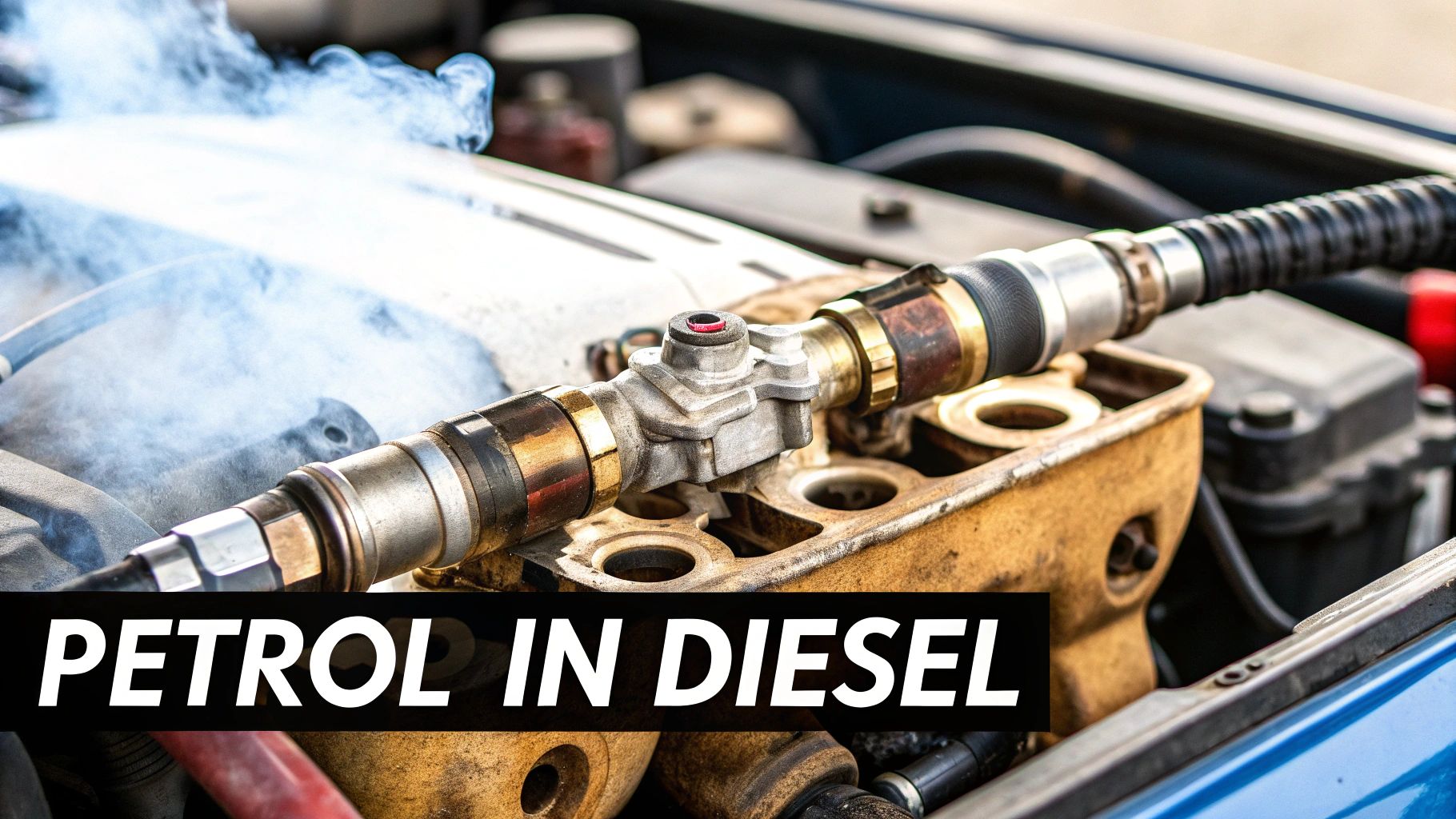
Putting petrol into a diesel engine is easily the most common and destructive misfuelling mistake you can make. While they're both fuels, they couldn't be more different in how they work. Pumping petrol into a diesel system is less like giving it the wrong food and more like feeding it a fast-acting poison.
To really get your head around the wrong fuel in car symptoms, you first need to understand a crucial fact about diesel. It isn't just for the 'bang'; it's also a vital lubricant. Diesel fuel has an oily quality that coats the incredibly precise components of the high-pressure fuel pump and injectors. This oily film is all that stands between intricate metal parts grinding themselves to pieces under immense force.
Petrol, on the other hand, is the exact opposite. It’s a solvent.
Think of it like this: trying to run a diesel engine on petrol is like swapping your engine oil for washing-up liquid. It aggressively strips away that essential lubricating film, causing immediate metal-on-metal friction that chews up components and creates tiny metallic particles.
This catastrophic loss of lubrication is the root of all the damage that follows. Without that protective barrier, the parts start to self-destruct with alarming speed.
The Chain Reaction of Damage
Once you turn that key, a devastating and predictable sequence of events kicks off. The fuel pump starts circulating the petrol, and in that moment, a destructive chain reaction begins to ripple through your entire fuel system.
Here’s a blow-by-blow account of how the damage unfolds:
Fuel Pump Failure: The high-pressure fuel pump is always the first and most expensive victim. Starved of its essential lubrication, it rapidly overheats and begins to disintegrate from the inside, spewing tiny metal fragments down the fuel lines.
Injector Clogging: These little shards of metal, known as swarf, travel with the fuel and slam into the fuel injectors, permanently blocking their microscopic nozzles. This ruins the fine spray pattern needed for combustion.
Engine Combustion Chaos: Here's where the noise comes from. Petrol ignites at a much lower pressure than diesel. Instead of a controlled, powerful burn, it detonates violently and prematurely inside the engine cylinders. This is what causes that distinct, alarming knocking sound you'll hear.
This chaotic combustion isn't just noisy; it’s horribly inefficient. The engine is fighting itself, unable to generate proper power, which is why you experience that sluggish performance before it eventually stalls. And that thick white smoke pouring from the exhaust? That’s simply unburnt fuel and vaporised engine components getting cooked in the hot exhaust system.
Every second the engine runs on petrol, the damage multiplies. This is precisely why the golden rule is to never start the car. If the contamination is just sitting in the tank, a professional fuel drain is a straightforward fix. But once that key is turned, you’re looking at potential repairs costing thousands of pounds, often needing a full replacement of the entire fuel system. It’s a very expensive lesson in the critical differences between the two fuels.
Understanding Diesel in a Petrol Car
Putting diesel into a petrol car is a less frequent mistake, but it brings its own unique flavour of trouble. It all boils down to a simple mismatch in how the two fuels are designed to ignite. Think of it like trying to light a damp log with a match; it’s a frustrating and almost entirely useless exercise.
A petrol engine works by mixing a fine, vaporised mist of fuel with air, which is then ignited by a perfectly timed, high-energy spark from a spark plug. Diesel, on the other hand, is a much heavier, oilier substance. It stubbornly refuses to vaporise in the same way because it’s engineered to ignite under immense compression, not from a tiny spark.
This fundamental difference is why the most immediate of all wrong fuel in car symptoms in this situation is often a car that simply won't start.
Why Your Petrol Car Will Refuse to Run
When you turn the key, the thick diesel oil gets pumped through the fuel system, but the spark plugs just can't light it. Instead, the oily diesel coats them in a greasy film, effectively snuffing out the very spark they’re meant to create. At the same time, the fuel injectors get clogged with this thick liquid, making it impossible for them to produce the fine mist needed for combustion.
Key Takeaway: The primary problem here is ignition failure. Diesel is just too thick and oily for a petrol car's spark plugs to ignite. This leads to a system-wide clog rather than the destructive friction you see when you put petrol in a diesel engine.
If your car does manage to splutter into life, it's probably because there was still some petrol left in the fuel lines. It won't run for long, though. You can expect to see:
Engine Misfiring and Spluttering: The engine will cough and struggle as it fails to burn the diesel properly.
Thick, Black Smoke: Any diesel that does get partially burned will produce clouds of sooty, black smoke from the exhaust pipe.
Inevitable Stalling: The engine will quickly cut out as the diesel smothers the spark plugs and clogs the injectors. It almost certainly won't restart.
While this scenario is generally less catastrophic than putting petrol in a diesel, it's far from harmless. That oily residue can still damage sensitive components like your oxygen sensors and the catalytic converter if it isn’t dealt with properly. For a full breakdown of the process, you can learn more about what to do after putting diesel in a petrol car in our dedicated guide.
Ultimately, a professional fuel drain is still essential to clean out the entire system and head off any costly, long-term damage.
The AdBlue Mistake: A Modern Diesel Problem
Modern diesel cars come with a new kind of pitfall that drivers of older models never had to worry about: AdBlue contamination. This isn't a type of fuel. It's an essential emissions-reducing fluid, a urea-based solution that gets sprayed into the exhaust system to clean up what comes out. But if you accidentally pour it into your diesel tank, it's like injecting corrosive salt water straight into your engine's most delicate fuel lines.
The wrong fuel in car symptoms for an AdBlue mix-up are totally different from a petrol-diesel mistake. Because AdBlue has zero combustion properties, the engine usually won’t even start. Instead, your dashboard will likely light up with specific warnings about the Selective Catalytic Reduction (SCR) system or other emissions faults. That’s your car’s first, and most urgent, cry for help.
The Corrosive Crystallisation Effect
While petrol strips lubrication, AdBlue’s primary threat is its incredibly aggressive and corrosive nature when it mixes with diesel. This chemical cocktail is pure poison for your fuel system. But what makes it even more destructive is that as this water-based solution cools, it forms hard, sharp crystals that spread throughout the entire system.
These crystals will cause irreversible and catastrophic damage:
Destroying the Fuel Pump: The pump is a precision-engineered part with fine tolerances that are no match for these abrasive crystals.
Blocking Fuel Injectors: The microscopic nozzles get completely clogged by the crystals and will almost certainly need replacing.
Corroding Seals and Hoses: AdBlue literally eats away at rubber seals and hoses, leading to leaks and total system failure.
Crucial Warning: Turning the ignition is the single most damaging thing you can do. The moment you do, the fuel pump will circulate the corrosive AdBlue solution, kicking off the crystallisation process and guaranteeing extensive—and incredibly expensive—repairs that can easily run into thousands of pounds.
This very modern mistake highlights just how careful you need to be at the pumps. The AdBlue filler cap is usually blue and located right next to the main diesel cap, making it a shockingly easy error for an unwary driver to make. Simply understanding that this fluid is not a fuel is the first step to preventing a complete disaster in your diesel car's advanced systems.
Your Immediate Action Plan After Misfuelling
It’s that sinking feeling every driver dreads. You hang up the nozzle, glance down, and see it – the green handle, not the black one. Your heart drops.
If you’ve just put the wrong fuel in your car, the first thing to do is take a deep breath. What you do in the next sixty seconds is absolutely critical. It can be the difference between a simple, roadside fix and a repair bill that stretches into the thousands.
The single most important rule is non-negotiable: do not start the engine. Seriously. Don't even turn the key to the 'on' position to listen to the radio. The moment you turn that key, the fuel pump kicks in and starts pushing the contaminated fuel from the tank into your car’s most sensitive—and expensive—components. Your mission is to keep it contained in the tank.
What to Do Immediately
If you're still on the forecourt, the first priority is to make sure you and your car are safe. It's best to let the petrol station staff know what's happened. Don't worry, they've seen it all before and can help secure the pump or the area around your car.
From there, just follow these simple steps:
Stay Calm: Panic leads to bad decisions. You've spotted the mistake, which is the most important step.
Keep the Keys Out: This can't be said enough. It's the golden rule of misfuelling.
Put the Car in Neutral: This will let you move the vehicle without needing to start the engine.
Push to a Safe Spot: With some help, push your car to a designated parking bay, away from the busy pumps. If you're on your own, ask the station staff if they can lend a hand.
Call a Specialist: Your very next move should be to call a mobile wrong-fuel drain service.
The difference between a £200 fuel drain and a £5,000+ repair bill is often just the turn of a key. By stopping the fuel from circulating, you keep the problem manageable and protect your fuel pump, injectors, and engine from destructive damage.
The table below gives you a clear checklist of what to do—and more importantly, what not to do—the moment you realise your mistake.
Immediate Misfuelling Do's and Don'ts
Action | What to Do (The 'Do's') | What to Avoid (The 'Don'ts') |
|---|---|---|
Ignition | Take the key out immediately. | Do not turn the key or start the engine. |
Safety | Let station staff know. | Do not try to start the car "just to see". |
Movement | Put the car in neutral. | Do not attempt to drive to a garage. |
Location | Push the car to a safe parking spot. | Do not panic or rush your decisions. |
Solution | Call a professional fuel drain expert. | Do not try to drain the fuel yourself. |
Following these simple steps keeps the situation under control and significantly limits the potential for expensive damage.
This decision tree shows the clear path forward if you think you've made an AdBlue error, but the core principle is exactly the same.
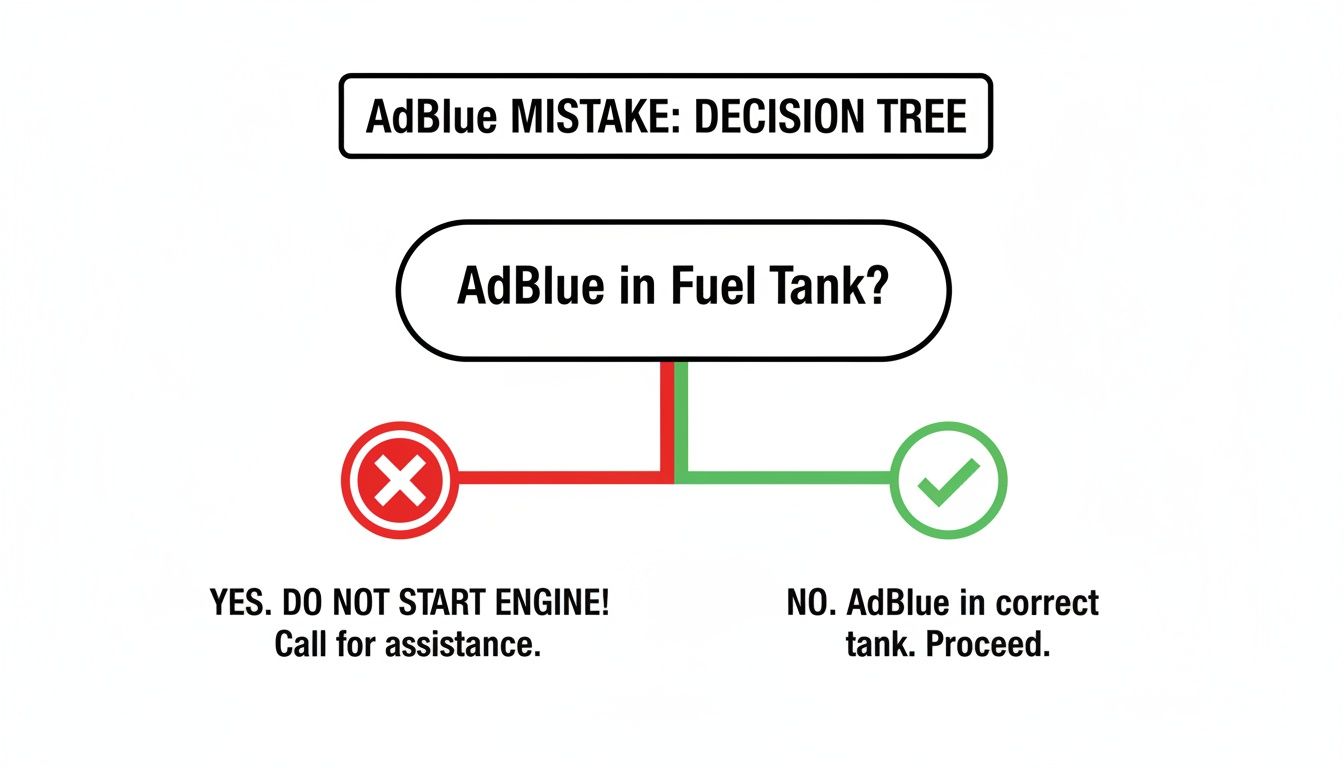
As the chart makes clear, the only correct response is to stop everything and call for professional help to prevent catastrophic damage. A specialist like Misfuelled Car Fix is the fastest way to get an expert out to you, drain the tank, and get you safely on your way.
For a deeper dive into the specific damage caused by putting petrol in a diesel car, our dedicated guide explains everything.
What to Expect from a Professional Fuel Drain
Calling for roadside help can be a stressful experience, especially when you’re worried about what’s happening to your car. Knowing what’s coming can make all the difference, so let’s walk through what a professional fuel drain service actually does, step by step, from the moment they pull up.
The first thing a qualified technician will do is make sure your car is parked in a safe spot. They’ll quickly assess the situation, confirm the type of misfuel, and then explain the whole process to you. It’s all about making sure the scene is safe and giving you a bit of peace of mind before any tools come out. Think of their mobile service van as a workshop on wheels; it’s kitted out with all the specialised gear they need.
The Draining and Flushing Process
The main event, of course, is the fuel drain. Using industry-approved pumping equipment, the technician will safely remove every last drop of the contaminated fuel from your tank. This isn't just a simple hose and a bucket; the equipment is specifically designed to be spark-free and fully compliant with safety regulations for handling highly flammable liquids.
But the job isn’t done once the tank is empty. The wrong fuel is sneaky and can hide in the fuel lines, filter, and pump.
A proper professional service will always perform a full system flush. They do this by circulating a small amount of clean, correct fuel through the system to wash out any remaining contaminants. This step is absolutely vital to prevent leftover petrol from stripping away lubrication or stray diesel from clogging up sensitive components later on.
Finally, with the system squeaky clean, the technician will add a fresh supply of the correct fuel to your tank – usually just enough to get you comfortably to the nearest petrol station.
Getting You Back on the Road
With clean fuel in the system, the technician will start your car. They’ll let it run for a few minutes, making sure everything is circulating as it should and there are no lingering wrong fuel in car symptoms like a knocking engine or a spluttering exhaust. A true professional won’t leave your side until they are 100% confident your vehicle is running smoothly and is safe to drive away.
And what about all that mixed-up fuel? A reputable service will handle the environmentally safe disposal of it, sticking to very strict regulations. This professional, all-in-one approach isn't just faster and safer than attempting a DIY fix; it's also often significantly cheaper than getting your car recovered to a main dealer. A mobile service is designed to get you back on your journey with the minimum of fuss and cost.
Your Top Misfuelling Questions Answered
Once the initial shock of using the wrong fuel wears off, it's completely normal for your head to fill with questions. The practical worries start to creep in. Let's tackle the most common concerns we hear from drivers every day, giving you straight answers to help you figure out what to do next without making a bad situation worse.
Will My Car Insurance Cover This?
This is usually the first question on everyone's mind. The honest answer? Probably not. Most standard car insurance policies do not cover misfuelling. Insurers typically classify it as a preventable, self-inflicted error rather than an accident.
That said, it's not a complete write-off. Some comprehensive policies or specific add-ons do offer misfuelling cover, so it's always worth digging out your policy documents for a proper read. Just be aware that even if you are covered, making a claim could whack your no-claims bonus and bump up your future premiums. Frankly, many drivers find that the cost of a specialist fuel drain is less than their policy excess anyway.
Can I Just Top It Up with the Correct Fuel?
The thought of just diluting the bad fuel by topping the tank up with the right stuff is a tempting but dangerous myth. It’s a DIY fix that simply doesn't work and will almost certainly cause far more expensive damage.
Think of it like adding a shot of bleach to a pint of water – even if you top it up with more water, you still wouldn't drink it. The same logic applies to your engine. The damaging properties of the wrong fuel—whether it's petrol's solvent effect or diesel's clogging nature—are still present and will be pumped right through your system, wrecking sensitive components along the way.
Crucial Advice: Never try to dilute the problem away. The only safe and effective solution is to have the entire fuel system professionally drained and flushed. This is the only way to guarantee every trace of the contaminant is gone before it destroys your engine.
What If I Drove a Short Distance Before I Realised?
That sinking feeling when you realise your mistake a few miles down the road is awful, but don't assume the worst just yet. The absolute key here is to pull over safely and kill the engine immediately. The less time the engine runs on the wrong fuel, the better.
Even driving for a minute or two is long enough to circulate contaminated fuel through the pump and injectors. Your next step is to call a mobile fuel drain specialist right away. Make sure you tell them you've driven the car. They'll know to perform a more intensive system flush to clear any residue from the fuel lines and check for the first signs of damage before getting you safely started again.
If you're dealing with any of these wrong fuel in car symptoms, stay calm and don't risk a DIY fix. For immediate, professional help anywhere in England, call the experts at Misfuelled Car Fix. Our 24/7 mobile fuel drain service will get you back on the road safely and without breaking the bank. Contact us now for a rapid response.
Article created using Outrank