Small Amount of Diesel in a Petrol Car and What to Do Next

Updated: Feb 18
24/7 Hotline Nationwide: 0800 999 1182
National Wrong Fuel Rescue: https://www.misfuelledcarfix.co.uk
If you found this page, we cover you in England!
Book Online:
That sinking feeling when you realise you’ve put the wrong fuel in your car is a moment every driver dreads. If you've just put a splash of diesel into your petrol car, your first instinct might be to panic. Don't. What you do in the next 60 seconds is absolutely critical.
The most important thing to do is… absolutely nothing. Seriously. Do not start the engine. Don't even put the key in the ignition or press the start button. That single action is what turns a simple, manageable problem into a potential four-figure repair bill.
Your Immediate Action Plan After Misfuelling
You’re not alone in this. Misfuelling is a surprisingly common slip-up on the forecourt. Your quick response now can make all the difference, protecting your engine from serious harm.
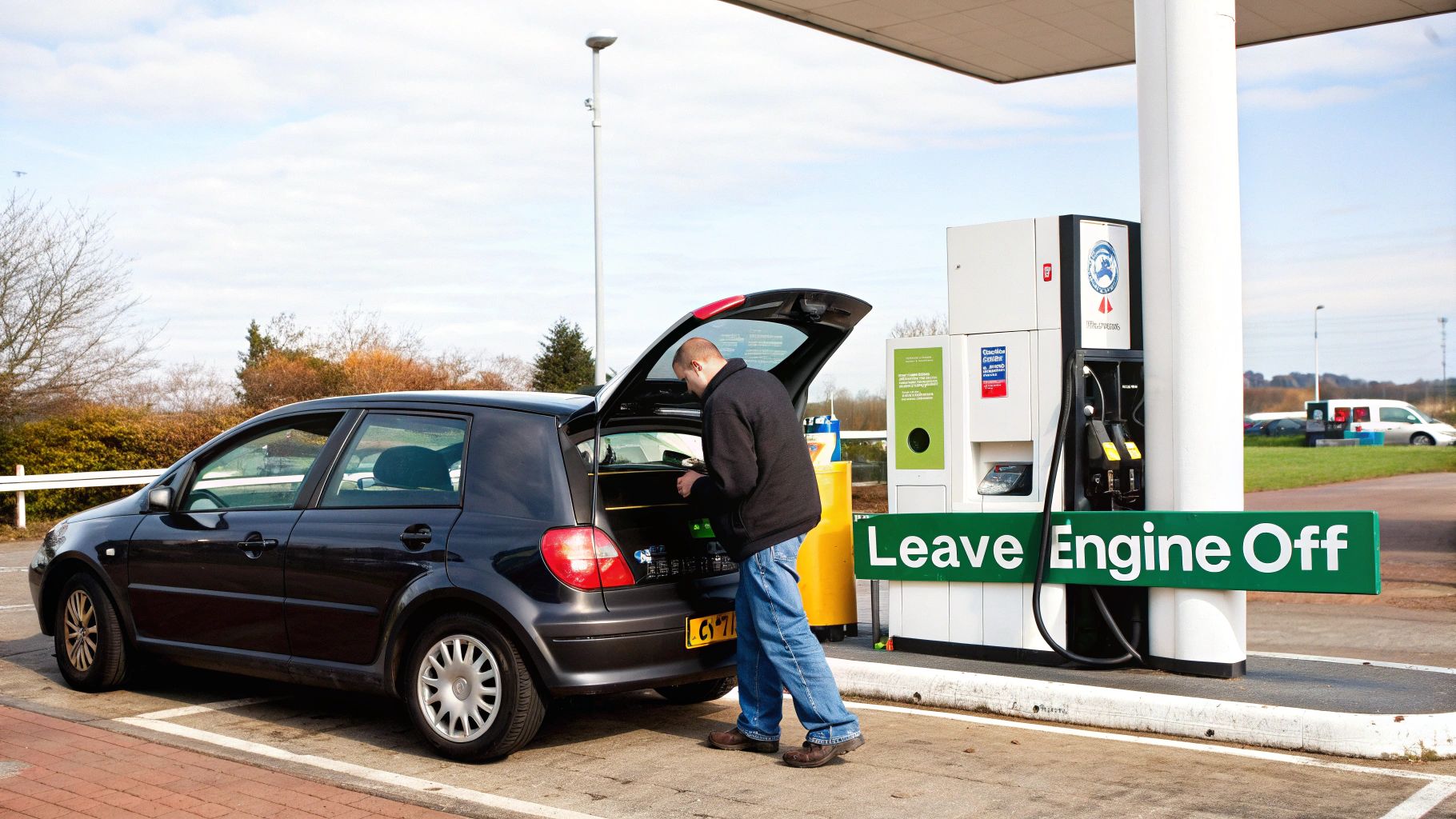
This mistake is far from rare. Industry estimates suggest it happens to about 1 in every 2,500 drivers each year. In England alone, that translates to between 14,000 and 17,000 wrong fuel incidents annually, with diesel-in-petrol errors making up a huge chunk of those callouts. For a deeper dive into the numbers, you can read the full report on UK misfuelling incidents.
To help you navigate this stressful moment, here's a quick reference guide on what to do and, crucially, what not to do.
Immediate Dos and Don'ts After Misfuelling
Action (Do This) | Mistake (Avoid This) |
|---|---|
Leave the car where it is. | Starting the engine, even for a second. |
Take the keys out of the ignition. | Putting the key in the ignition or pressing 'start'. |
Tell the petrol station staff immediately. | Trying to "top up" with petrol to dilute the diesel. |
Put the car in neutral and get help to push it. | Locking the car with the remote fob (can prime the pump). |
Call a specialist fuel drain service. | Attempting a DIY drain without proper equipment. |
Following the "Do This" column keeps the problem contained and manageable. Any action from the "Avoid This" column risks circulating the contaminated fuel, leading to expensive damage.
Secure Your Vehicle and Inform Staff
Your first priority is safety. Leave the car right by the pump – don't try to move it to another parking space. Even just pushing the car can cause fuel to slosh around and potentially enter the fuel lines.
Once you’re safely away from the vehicle, there are two key things to do:
Let the petrol station staff know what's happened. They’ve seen it all before. They'll know to close the pump and can put out cones to keep the area safe for other drivers.
Don't lock the car with your remote fob. This is a subtle but important tip. On many modern cars, pressing the unlock or lock button can prime the fuel pump, which is the very last thing you want to happen. If you need to lock it, use the physical key in the door.
Why You Must Not Start the Engine
Diesel and petrol are fundamentally different. Diesel is a thicker, oilier substance that ignites under compression, whereas petrol needs a spark plug. When you introduce oily diesel into a petrol engine, it simply doesn't burn properly. Instead, it coats and clogs everything it touches.
By leaving the engine off, you keep the contamination contained within the fuel tank. Starting the engine, even for a moment, will pull the diesel-petrol mix into the fuel pump, lines, injectors, and cylinders, leading to extensive and expensive damage.
Call a Professional Fuel Drain Service
Your next call should be to a specialist mobile fuel drain service. While breakdown services like the AA or RAC can certainly help, a dedicated wrong-fuel company is often the quicker and more cost-effective choice.
They have the specific equipment needed to safely drain the contaminated fuel right there on the forecourt, flush the system properly, and get you back on your way. This avoids the hassle and extra cost of getting towed to a garage, making it the most efficient way to resolve the problem.
How a Little Diesel Causes Big Problems for a Petrol Engine
It’s a question we hear all the time from worried drivers standing on the forecourt: "It was only a little bit, will it really cause a problem?"
Unfortunately, the answer is a definite yes. Even a small amount of diesel in a petrol car can spiral into some pretty serious issues. To understand why, you just need to appreciate the huge difference between the two fuels.
Think of petrol as a fine, highly flammable mist. Diesel, on the other hand, is much more like a light, greasy oil. Petrol is designed to ignite with a tiny spark from a spark plug, while diesel is much thicker and heavier, needing immense pressure to atomise and combust.
When you introduce diesel into your petrol tank, it doesn't blend in. It acts like a thick, oily contaminant, completely changing the chemical makeup of the fuel your engine is expecting.
The Journey of Contaminated Fuel
If you were to turn the ignition key, the fuel pump would immediately start pulling that contaminated mixture from the tank. This is where the trouble begins. Diesel’s oily nature means it’s far thicker than petrol, putting an instant strain on a fuel pump designed to handle a much thinner liquid.
From there, the mucky mixture travels through the fuel lines and hits the fuel filter. This filter is designed to catch tiny particles of dirt, not a thick, oily fluid. It can get clogged or “gummed up” in no time, restricting the flow of fuel to the engine.
The real damage happens when this contaminated fuel gets to the heart of your engine. Diesel's lubricating properties, which are a benefit in a diesel engine, are a complete disaster for a petrol system. It coats the spark plugs, making it impossible for them to create a strong enough spark to ignite the now-compromised petrol.
This failure to ignite is the critical breakdown point. The engine's brain, the ECU, keeps trying, telling the injectors to spray more of the mix into the cylinders. But because diesel doesn't vaporise like petrol, it just goes in as tiny droplets of oil.
Clogged Injectors and Damaged Components
Your car's precision-engineered fuel injectors are often the first—and most expensive—casualties. They have microscopic nozzles designed to spray a fine mist of petrol. When they're forced to push a thicker, oilier substance through, they block up fast.
Once this starts happening, you'll begin to notice some serious issues if the car is running. You can learn more about the specific wrong fuel in car symptoms you might experience. These typically include:
Engine Misfires: With spark plugs coated in oil and injectors clogged, the cylinders will fail to fire properly. This causes the engine to judder, shake, and run incredibly rough.
Engine Knocking: The contaminated fuel can detonate at the wrong time, creating a destructive knocking or pinging sound that can lead to severe internal engine damage.
Excessive Smoke: Unburnt diesel oil gets forced into the exhaust system, producing thick white or blue smoke. This can quickly overwhelm and destroy the catalytic converter—a repair that can easily cost over £1,000.
In short, the oily diesel makes its way through the entire system, leaving a sticky, damaging residue on every single component it touches. This is precisely why a professional fuel drain isn't just a suggestion; it's an absolute necessity. The goal is to get every last drop of that contaminant out before it has a chance to circulate and turn a simple mistake into a mechanical catastrophe.
How Much Diesel is Too Much? Assessing the Damage
Right after that sinking feeling of putting the wrong nozzle in your car, the big question hits you: just how bad is this?
Honestly, it all boils down to one thing: the ratio of diesel to petrol now sloshing around in your tank. The more diesel you've added, the higher the risk of serious, and immediate, damage to your engine.
Getting a handle on this isn't just for your own peace of mind. It's crucial information for the fuel drain technician you'll be calling. A tiny splash is a completely different job from a tank that's a quarter full of the wrong stuff. Being able to give them an accurate picture helps them turn up prepared and work more efficiently.
A Quick Bit of Forecourt Maths
You don't need a calculator for this, just a rough estimate. First, think about your car's fuel tank capacity (check your handbook or a quick Google search if you're not sure). Then, think about how much diesel you accidentally pumped in.
Let’s use a common car like a Ford Focus as an example. It has a 52-litre petrol tank.
If you only added 2 litres of diesel before you realised, the contamination is less than 5%. That's a pretty low level. If you haven't started the engine, a straightforward fuel drain will almost certainly prevent any damage whatsoever.
But what if you were distracted and put in 10 litres? Suddenly, the contamination jumps to nearly 20%. At this concentration, the risk to sensitive parts like your fuel pump and injectors goes up dramatically if that mixture gets circulated.
This simple calculation helps frame the problem. A higher percentage means the oily diesel has a greater chance of overwhelming the remaining petrol, coating your spark plugs and clogging filters the second the engine turns over.
This decision tree shows the most important factor in this whole mess.
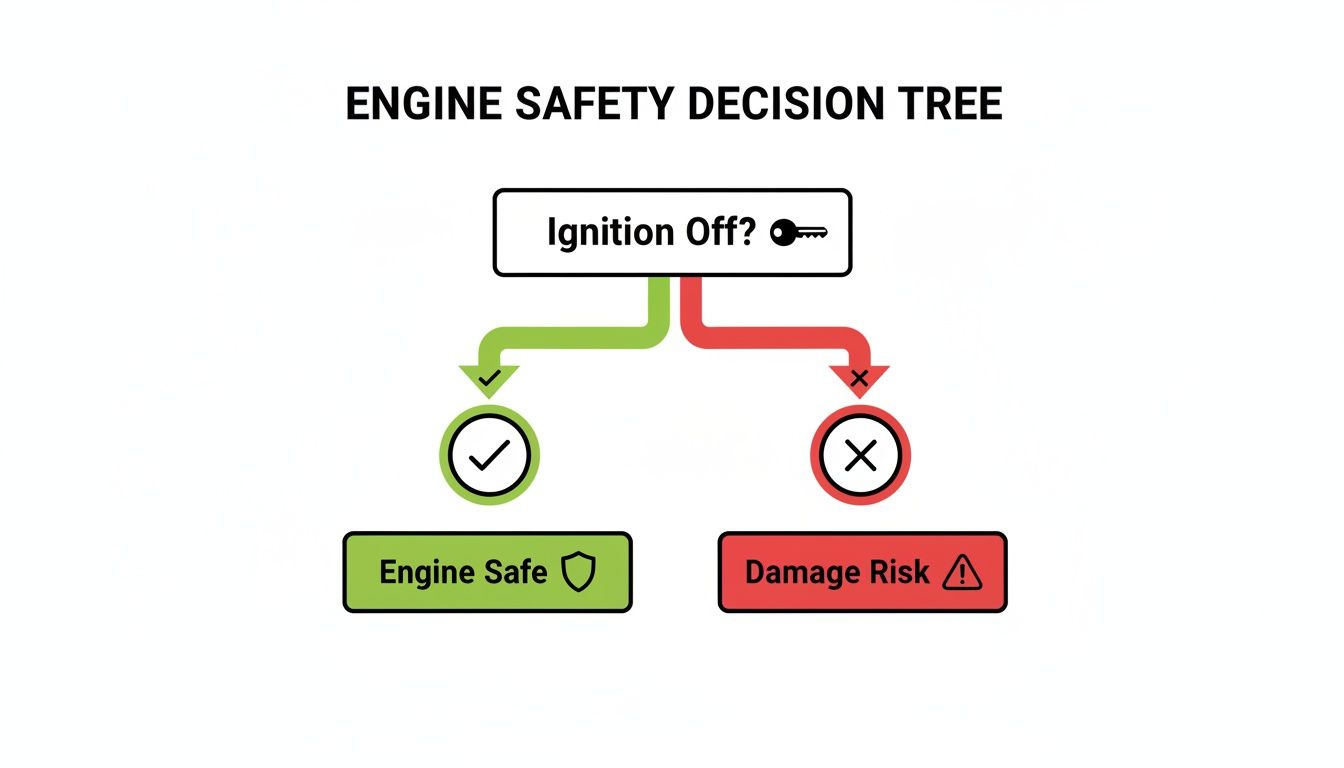
As you can see, keeping that key out of the ignition is the single best thing you can do to protect your engine, no matter how much diesel went in.
To help you gauge the situation, here’s a quick breakdown of what to expect at different contamination levels.
Misfuelling Risk Levels by Contamination Ratio
Contamination Level (Diesel in Full Petrol Tank) | Potential Risk | Common Symptoms (If Driven) |
|---|---|---|
< 5% (e.g., up to 2.5 litres in a 50L tank) | Low | Minimal symptoms, but you might notice slightly rough running or a bit of smoke. Damage is unlikely if the engine is stopped quickly. |
5% - 10% (e.g., 2.5 to 5 litres in a 50L tank) | Moderate | Noticeable engine juddering, power loss, and visible smoke from the exhaust. The car will struggle to run properly. Risk to spark plugs and sensors increases. |
> 10% (e.g., over 5 litres in a 50L tank) | High | Severe misfiring, significant power loss, and thick clouds of smoke. The engine will likely cut out and refuse to restart. There is a high risk of damage to the catalytic converter, fuel pump, and injectors. Driving even a short distance is likely to cause costly damage. |
This table gives you a clear idea of how a small mistake can quickly escalate if the engine is started.
Warning Signs If You’ve Already Driven It
If the engine was started, even for a moment, the game changes. It's no longer just about the ratio in the tank; it's about how far that contaminated fuel has travelled. Your car will almost certainly let you know something is very wrong.
Spotting these symptoms and stopping the car immediately is your best shot at limiting the damage. Every metre you drive pulls more of that engine-clogging mix through the system, turning a simple flush into a complex and expensive repair job.
Keep an eye (and an ear) out for these red flags:
A Juddering or Misfiring Engine: It will feel like a violent shaking or stuttering, especially when you try to accelerate. This is the oily diesel coating the spark plugs and stopping them from igniting the fuel properly.
Serious Loss of Power: Your car will feel sluggish, weak, and unresponsive. The fuel injectors are getting clogged and can't deliver enough clean fuel, starving the engine.
Loads of Exhaust Smoke: You'll see thick plumes of white or bluish smoke pouring out of the back. This is unburnt diesel being forced through the hot exhaust system, a clear sign it's overwhelming the catalytic converter—which can quickly lead to permanent, costly damage.
Engine Knocking Sounds: A distinct metallic "knocking" or "pinging" noise can start. This happens as the low-octane mix detonates incorrectly inside the cylinders, which can cause severe internal damage to pistons if you keep going.
If you experience any of these, pull over as soon as it's safe, kill the engine, and do not try to start it again. When you call your fuel drain technician, make sure you tell them the car was driven and describe exactly what you saw and heard. That information is vital for them to assess the potential damage and figure out the best way to get you sorted.
The Professional Fuel Drain Process Explained
Calling a specialist mobile fuel drain service can feel a bit daunting if you've never done it before. You’re likely stressed out, stuck on a petrol station forecourt, and just wondering what on earth happens next. The good news is that the whole process is surprisingly quick, safe, and efficient when you've got a pro on the job.
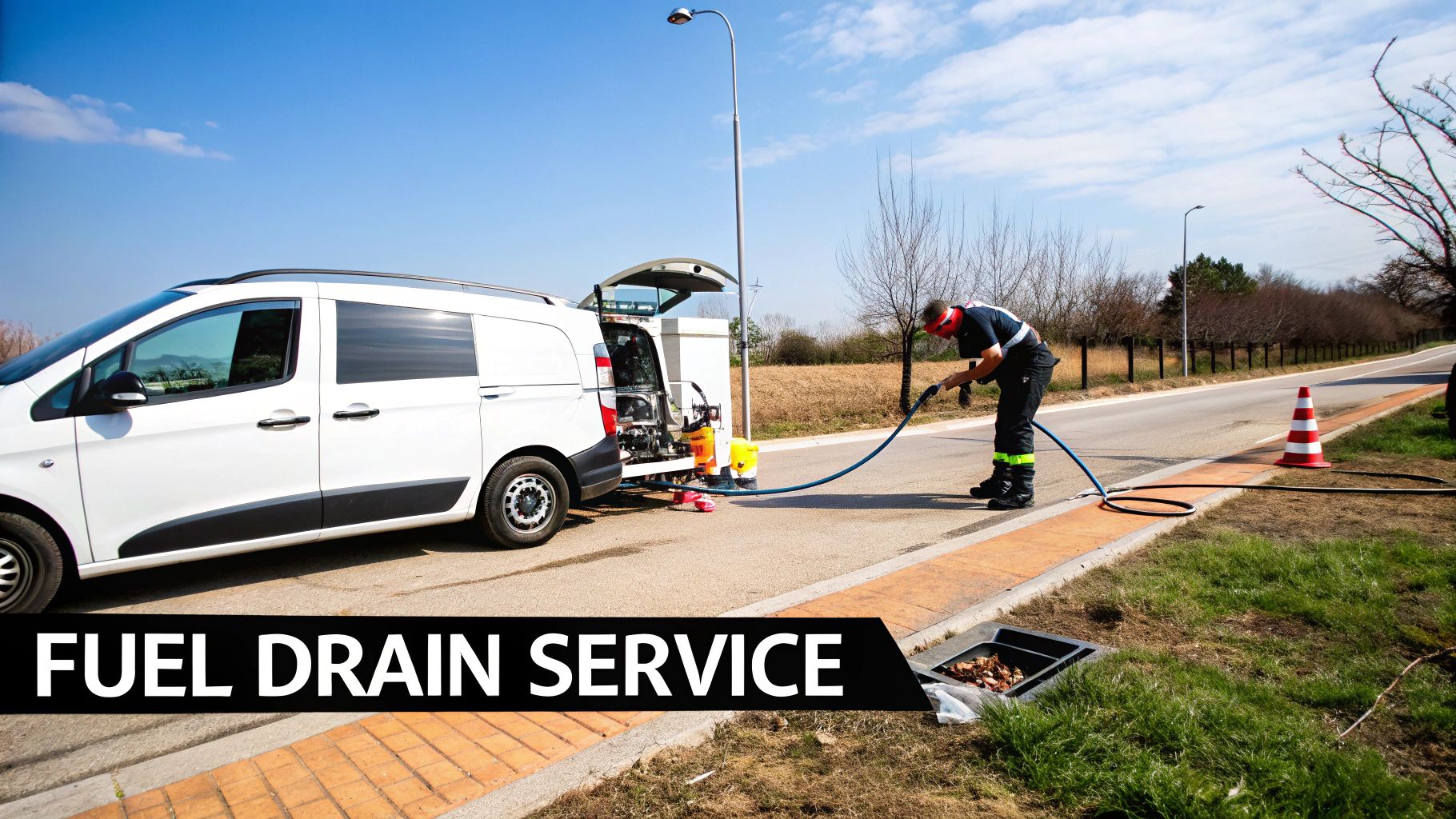
From the moment our technician arrives, their first priority is making the scene safe. They’ll secure the area around your vehicle, often with cones and warning lights, before doing a quick risk assessment. It’s all about ensuring the process is safe for you, them, and anyone else nearby.
Accessing and Draining the Contaminated Fuel
Once the site is secure, the real work begins. Our technicians use specialised, intrinsically safe pumping gear designed specifically for handling flammable liquids. This isn't something you can copy with a bit of hosepipe from the garden shed; the equipment is ATEX-approved, which means it’s certified to prevent any sparks that could ignite fuel vapours.
The technician will usually access the fuel tank through the filler neck. In some cars, they might need to get at it by temporarily removing the fuel sender unit, which is often found under the back seats. The contaminated diesel and petrol mix is then carefully pumped out into a secure, sealed container inside their service van. The whole process is clean and contained, removing the bulk of the problem fluid from your car.
The core principle here is total removal. A technician’s goal is to drain 100% of the contaminated fuel from the tank. Trying a DIY drain often leaves a significant amount of the wrong fuel sloshing around, which is precisely why getting a professional in is so crucial. To see just how risky going it alone can be, have a look at our guide on how to safely drain a petrol tank.
Performing a Full System Flush
Just draining the tank isn’t the end of the story, especially if you turned the ignition on. Any leftover diesel residue in the fuel lines, filter, or injectors can still cause some major headaches down the line. This is where a proper system flush becomes absolutely essential.
The technician will circulate a small amount of clean petrol through the entire fuel system. This simple action does a few critical jobs:
Cleans the Fuel Lines: It pushes out any remaining droplets of the contaminated mix that are hiding between the tank and the engine.
Purges the Fuel Pump and Filter: It helps clear out the oily diesel residue that can clog up these very sensitive parts.
Washes Out Injectors: It removes the diesel that might have coated the fine nozzles of your fuel injectors, making sure they can spray a clean mist of petrol again.
This flushing process is vital for preventing long-term damage and making sure your car runs smoothly once the right fuel is back in.
Final Checks and Getting You Moving
With the system fully drained and flushed, the final steps are pretty straightforward. The technician will put a small amount of fresh, correct petrol into your tank—usually around 5-10 litres. It’s just enough to get you safely to the nearest petrol station to fill up properly.
Before they pack up, they’ll start the car and let it run for a few minutes. They'll have a listen to the engine, check for any warning lights on the dash, and just make sure everything is ticking over as it should. This final check gives you peace of mind that the issue is completely sorted. The entire roadside process usually takes less than an hour.
This professional approach isn't just about convenience; it's a vital preventative measure. Recent reports from AA Fuel Assist really highlight the financial stakes, showing a mobile drain averages around £800 – a stark contrast to the £4,000+ repair bills if the problem is ignored. The data reveals that a shocking 25% of neglected cases end up needing full engine rebuilds, a cost that can easily spiral into the thousands.
Understanding the Costs and Getting Back on the Road
After the initial shock of realising you’ve put a bit of diesel in your petrol car, two questions immediately pop into your head: "How much is this going to set me back?" and "How long am I going to be stuck here?"
The good news is, providing you haven't started the engine, the answers are usually a lot less painful than you might think.
The final bill really depends on who you call. You’ve got three main choices: a specialist mobile fuel drain service, your usual breakdown provider, or getting the car towed to a local garage. If you want this sorted quickly and without breaking the bank, a dedicated mobile service is almost always your best bet.
Comparing Your Recovery Options
Towing your car to a garage might feel like the traditional, safe option, but it often adds unnecessary costs and a whole lot of waiting around. You’ll be paying for the tow, then standard garage labour rates (which are usually higher than a mobile specialist's), and your car will likely end up at the back of a queue.
A mobile fuel drain technician, on the other hand, comes straight to you. No towing fees, no waiting. They can sort you out right there on the forecourt, at the roadside, or even on your driveway. Their entire business is built around solving this one specific problem, and they’re incredibly efficient at it.
The key thing to remember is that you're paying for a specialised skill, not just general mechanical work. A mobile technician arrives with all the proper ATEX-approved kit to drain the fuel safely and get rid of the contaminated mixture legally, all in one go.
This laser-focused approach is why their pricing is so competitive. While the exact cost will vary a bit depending on where you are and what car you drive, you can typically expect to pay between £150 and £250 for a full mobile drain and flush.
That’s often a huge saving compared to the tow-plus-garage route, which can easily top £300-£400 before they’ve even looked at replacing any parts. For a more detailed look at what these services involve, our guide on misfuel recovery services nationwide has all the details.
Realistic Timelines for the Fix
Just as important as the cost is how quickly you can get moving again. A misfuelling mishap can throw your whole day off course, but a professional service is designed to get you sorted with minimal fuss.
Here’s a realistic idea of what to expect from the moment you pick up the phone:
Arrival Time: Most specialist services in the UK will aim to have a technician with you within 60 to 90 minutes, traffic permitting.
The Job Itself: Once the technician is on site, the actual work of draining the tank, flushing the system, and putting in some fresh petrol is surprisingly quick. For a typical car, the whole process usually takes between 40 and 60 minutes.
Total Downtime: All in, from making that initial call to turning the key and driving away, you're usually looking at a delay of around two to two-and-a-half hours.
Now, compare that to the garage alternative. You’ll be waiting for a tow truck (which can take an hour or more), then the journey to the garage, then waiting for a mechanic to free up. A two-hour hiccup can easily become a half-day or even an overnight headache.
Going with a mobile service means you'll be back on your way before your engine has even had a chance to get cold.
Your Misfuelling Questions Answered
Even after the initial panic has faded, it's natural to have a few lingering questions. Let's run through some of the most common queries we get from drivers who've just had that sinking feeling at the pump. We'll give you clear, straight-up answers based on years of roadside experience.
Will Putting Diesel in My Petrol Car Void My Warranty?
This is a big worry for many drivers, and rightly so. The short answer is that misfuelling is almost always classed as driver error, meaning any resulting damage won't be covered by your manufacturer's warranty. Warranties are there to cover faults in how the car was built, not accidental mishaps.
But here's the crucial part: if you get the fuel professionally drained right away, there won't be any damage to claim for in the first place. A proper drain and flush is all about prevention, keeping your engine pristine and avoiding any awkward conversations about your warranty.
Is Misfuelling Covered by My Car Insurance?
On the insurance front, the news is often a bit brighter. Many fully comprehensive policies in the UK include cover for accidental damage, and misfuelling can fall under this umbrella. You’ll need to check the exact wording of your own policy to be sure.
If you are covered, you can often claim for the cost of the fuel drain and any necessary repairs. Before you pick up the phone to your insurer, though, it’s worth doing a quick calculation. Weigh up the cost of the call-out against your policy excess and think about how a claim might affect your no-claims bonus. In many cases, paying for the drain yourself works out cheaper in the long run.
Can I Just Top Up the Tank to Dilute the Diesel?
This is a dangerous myth that just won't go away, and following this advice can turn a simple fix into a financial disaster. The logic of diluting the diesel with a full tank of petrol seems plausible, but it's based on a complete misunderstanding of how the two fuels behave.
Diesel is an oil. Petrol is a solvent. They don't mix properly. Even a tiny amount of diesel in the system is enough to coat spark plugs, clog up your fuel injectors, and potentially ruin your catalytic converter. It simply won't burn correctly.
The absolute worst thing you can do is try to 'run it through'. All this does is guarantee the contaminating diesel gets pumped through your entire fuel system. It’s the fastest way to turn a simple, sub-£250 fuel drain into a repair job that could easily run into thousands.
The only safe, correct, and guaranteed solution is to have 100% of that contaminated fuel drained out by a professional.
What Happens to the Drained Fuel?
Disposing of that petrol-and-diesel cocktail is a serious business. It’s legally classified as hazardous waste, so you can't just pour it down a drain or put it in the bin.
Our technicians pump the contaminated fuel directly into specially designed, sealed containers on our vans. This waste is then taken to a licensed treatment facility where it’s processed and recycled according to strict Environment Agency regulations. Using a professional service doesn't just fix your car – it ensures you're complying with UK environmental laws and avoiding hefty fines for improper disposal.
What if I Already Drove the Car a Short Distance?
If you started the car and drove off before the penny dropped, your immediate priority is to pull over and stop as soon as it's safe. Don't try to limp home. Every metre you drive pushes more of that damaging diesel through the engine, dramatically increasing the risk of serious, expensive damage.
Once you’re safely stopped, switch the engine off and do not restart it for any reason. Call a professional misfuelling service straight away and make sure you tell them the car has been driven. Our technicians are fully equipped for this exact scenario. The job will still involve a complete drain and flush, but we’ll likely need to do a deeper clean of the fuel lines, injectors, and filters. Stopping quickly is your best shot at avoiding a massive repair bill.
If you've put a small amount of diesel in a petrol car, don't risk it. Contact Misfuelled Car Fix for immediate, professional assistance 24/7 across England. Our expert technicians can be with you in as little as 60 minutes to safely drain the wrong fuel and get you back on the road. Call our freephone number or visit https://www.misfuelledcarfix.co.uk now.