Protect Your Engine: small amount of petrol in a diesel car - Quick Fixes
- Misfuelled Car Fixer

- Feb 6
- 13 min read
Updated: Feb 8
That gut-wrenching moment you realise you’ve just put a small amount of petrol in a diesel car. It’s a feeling of pure dread, but what you do in the next few seconds is absolutely crucial.
There is one golden rule, and it’s non-negotiable: do not start the engine. Don't even turn the key to the accessory position. Keeping the keys out of the ignition is the single biggest factor that separates a simple fix from a catastrophic, wallet-emptying engine failure.
That Sinking Feeling: Small Amount of Petrol in Diesel Car
It’s a nightmare scenario that plays out far more often than you’d think. You pull into a busy petrol station after a long drive, maybe you’re tired or distracted, and you grab the wrong nozzle. If this is you, you’re certainly not alone. A 2023 survey found that an astonishing 29% of UK motorists admit to having misfuelled their vehicle at some point. You can read more about these common motoring mistakes in the full research.
The instant you spot your mistake, everything that happens next matters. The absolute worst thing you can do is start the engine, even just to shuffle the car a few feet to a different parking bay. The second you turn that key, the fuel pump will whir to life, sucking the contaminated fuel from the tank and sending it coursing through your entire system.
Why Starting the Engine Is So Damaging
Modern diesel engines are incredibly precise pieces of engineering, and they rely on the fuel itself for lubrication. Diesel has an oily quality that protects the high-precision parts inside the high-pressure fuel pump and injectors. Petrol, on the other hand, is the complete opposite—it acts as a powerful solvent.
When petrol gets into the system, it immediately strips away that essential lubricating film. This causes brutal metal-on-metal friction inside the most delicate and expensive components of your fuel system. The damage isn't gradual; it begins within seconds, long before you'd ever notice a cough or a splutter from the engine.
"The golden rule after misfuelling is to prevent the contaminated mixture from circulating. Leaving the car off keeps the problem contained within the fuel tank, making the solution straightforward and much cheaper."
Your Immediate Action Plan at the Pump
Panic is a natural reaction, but a clear, calm plan can turn this stressful blunder into a manageable problem. The moment you realise what’s happened, this is your game plan.
To make it even clearer, here’s a quick rundown of what to do (and what not to do) right now.
Immediate Dos and Don'ts After Misfuelling
What You Should Do Immediately | Why It Is Important |
|---|---|
Keep the keys out of the ignition. | Prevents the fuel pump from activating and circulating the contaminated fuel. |
Put the car in neutral. | This will allow you to push the vehicle safely without needing to start it. |
Push the car to a safe spot. | Move it away from the pumps to clear the area and avoid causing an obstruction. |
Inform the station staff. | They can help secure the area and are used to dealing with this exact situation. |
Following these steps contains the problem and sets you up for the quickest, cheapest resolution.
Here's the plan in more detail:
Do Not Turn the Key: This can't be stressed enough. Leave the ignition completely off. Don't even turn it to the accessory position, as on many cars this can prime the fuel pump and start the damage.
Inform Station Staff: Let an attendant know what’s happened. They’ve seen it all before and can help manage the situation, perhaps by putting cones around your car to keep the area safe.
Move Your Car Safely: Your car is now an obstacle. Put the vehicle in neutral, release the handbrake, and ask for help to push it to a safe parking spot away from the pumps.
Gather Key Information: While you wait for assistance, it’s a good idea to note down a few key details: your vehicle’s make and model, your exact location, and a rough estimate of how much petrol you put in.
How Much Petrol in a Diesel Tank Is Too Much?
Once that initial wave of panic subsides, the one question that really matters is, "Just how bad is it?" The answer really comes down to ratios. While any amount of the wrong fuel is bad news, the severity of the problem depends entirely on how much petrol is now sloshing around in your diesel tank.
There’s a rule of thumb in the motor trade known as the "5% rule." This is widely seen as the point of no return, where the petrol concentration becomes seriously damaging. It might not sound like a lot, but for a standard 50-litre tank, 5% is only 2.5 litres of petrol. A moment's distraction at the pump can easily get you past that tipping point.
Even putting 1% petrol into a diesel tank is enough to dramatically lower its flash point—that’s the temperature where it ignites. This tiny change is enough to throw off the engine’s finely tuned combustion cycle, which can lead to engine knock and put a huge amount of stress on internal components.
The Tipping Point for Engine Damage
Look at it this way: a small splash of less than a litre, while far from ideal, is a completely different ball game than accidentally pumping in five or ten litres. Think of it like adding a drop of paint thinner to a bucket of oil versus adding a full cup – one is a minor contamination, the other changes the oil's properties completely.
Here’s a more practical breakdown of how things stack up:
A Small Splash (Under 2%): You’ve put less than a litre into a nearly full tank. It’s still a risk, and the loss of lubrication is a concern, but the high dilution might just save you from immediate, catastrophic failure.
A Significant Amount (5-10%): This is the 2.5 to 5-litre danger zone. At this level, the risk of serious damage to your fuel pump and injectors shoots up. The petrol will have stripped away far too much of the diesel’s vital lubricating qualities.
A Major Misfuel (Over 10%): Anything above this threshold is almost guaranteed to cause very noticeable problems—and likely expensive damage—if the engine is run for any length of time.
"The most sensitive part of a modern diesel engine is the high-pressure common rail fuel system. It relies entirely on diesel's oily properties for lubrication. Even a small amount of petrol acts as a solvent, causing rapid, irreversible wear."
Symptoms to Watch For if You’ve Driven Off
If you did accidentally start the engine, even for a few seconds, you need to be on high alert for the tell-tale signs of trouble. Spotting these symptoms quickly and stopping the car immediately can save you from far worse damage. The longer that engine runs, the more that contaminated fuel gets circulated, grinding away at your engine’s most vital parts.
Keep an eye out for these classic warning signs:
Excessive Smoke: You might see thick plumes of white or even bluish smoke pouring from the exhaust. This is a dead giveaway that the fuel isn’t combusting properly.
A Knocking Sound: A sharp, metallic knocking or ‘pinking’ noise is a very bad sign. It’s the sound of petrol igniting way too early under the diesel engine’s high compression.
Loss of Power: The car will feel sluggish and weak. It might struggle to accelerate or start to judder, especially when you’re trying to go up a hill.
Engine Warning Lights: Your dashboard could light up like a Christmas tree. An engine management light or other warnings are your car's computer screaming that something is critically wrong.
If you experience any of these symptoms, pull over as soon as it is safe to do so and switch off the engine. Being able to describe these signs clearly to a recovery specialist will give them the vital information they need to understand what's happening. Your job now is to turn that initial panic into a clear-headed assessment.
So, What's the Smartest Way to Fix This?
Right, your car is safely parked, and the engine is off. The next decision you make is the most important one. The old-school reaction might be to phone a tow truck and get the car hauled off to the nearest garage. But honestly, there's a much faster, cheaper, and far less stressful way to handle this: calling a specialist mobile fuel drain service.
This really is the modern, common-sense approach to fixing a misfuel. Instead of a long, drawn-out saga involving a tow truck, a wait in the garage queue, and steep workshop labour rates, one call brings a trained technician straight to you. It doesn't matter if you're stuck on the forecourt, pulled over on a busy A-road, or even parked on your own drive – they have everything needed to sort the problem right there and then.
The Obvious Perks of an On-Site Service
The biggest advantage is pure, simple convenience. A tow truck is just the start of a much longer chain of events. Once your car finally gets to a garage, it’s just another job in their queue. You could be waiting hours, or even until the next day, before a mechanic even lifts the bonnet.
A mobile service, on the other hand, is a one-stop shop. These technicians deal exclusively with misfuelling jobs, day in and day out. Their vans are custom-kitted workshops on wheels, carrying all the specialist gear to drain the tank, flush the system, and get you moving again, often within an hour of arriving.
Let's boil it down: a mobile service brings the workshop to you. It cuts out the delay, the extra cost, and the sheer hassle of getting your car to a garage. It turns what could be a day-long disaster into a brief, manageable hiccup in your day.
Be Ready for a Quick Fix
To help the technician sort you out as quickly as possible, it pays to have a few bits of information ready when you call. This gives them a clear picture of the situation before they even set off, making sure they’re fully prepared.
What to have handy:
Your Exact Location: Use a map app on your phone, note a nearby landmark, or find a road name. The more precise you can be, the faster they'll get to you.
Vehicle Details: Have your car’s make, model, and registration number ready. For example, "It's a 2018 Ford Focus, reg AB18 CDE."
The Fuel Mix: Give them your best guess of how much petrol you put in and how much diesel was already in the tank. This helps them gauge the severity.
Choosing this direct approach will absolutely save you time and money. While you're feeling that sinking feeling of putting a small amount of petrol in a diesel car, remember that the right help is designed to be fast, efficient, and get you sorted with minimum fuss. You can find out more about the benefits of a specialist wrong fuel in car rescue service and see just how it minimises the disruption to your day.
What to Expect From the Fuel Drain and Recovery Process
When the specialist technician turns up, don't picture a frantic, messy scene. It’s a calm, organised process designed to get you sorted with as little fuss as possible. Their van is essentially a mobile workshop, packed with all the right gear to safely handle the situation right there on the spot, whether you're stuck on a busy forecourt or sitting on your own driveway.
This isn't just about "emptying the tank." It's a meticulous procedure to make sure every last trace of that damaging petrol is gone for good.
First things first, they'll get access to your fuel tank. Using specialised, industry-approved pumping equipment, the technician will drain the entire petrol and diesel mix into a secure, sealed container built for the job. Critically, this gear is designed to be spark-free and meets all the strict safety standards for handling flammable liquids.
This simple graphic shows you just how straightforward the process is, from your call to the solution arriving at your side.
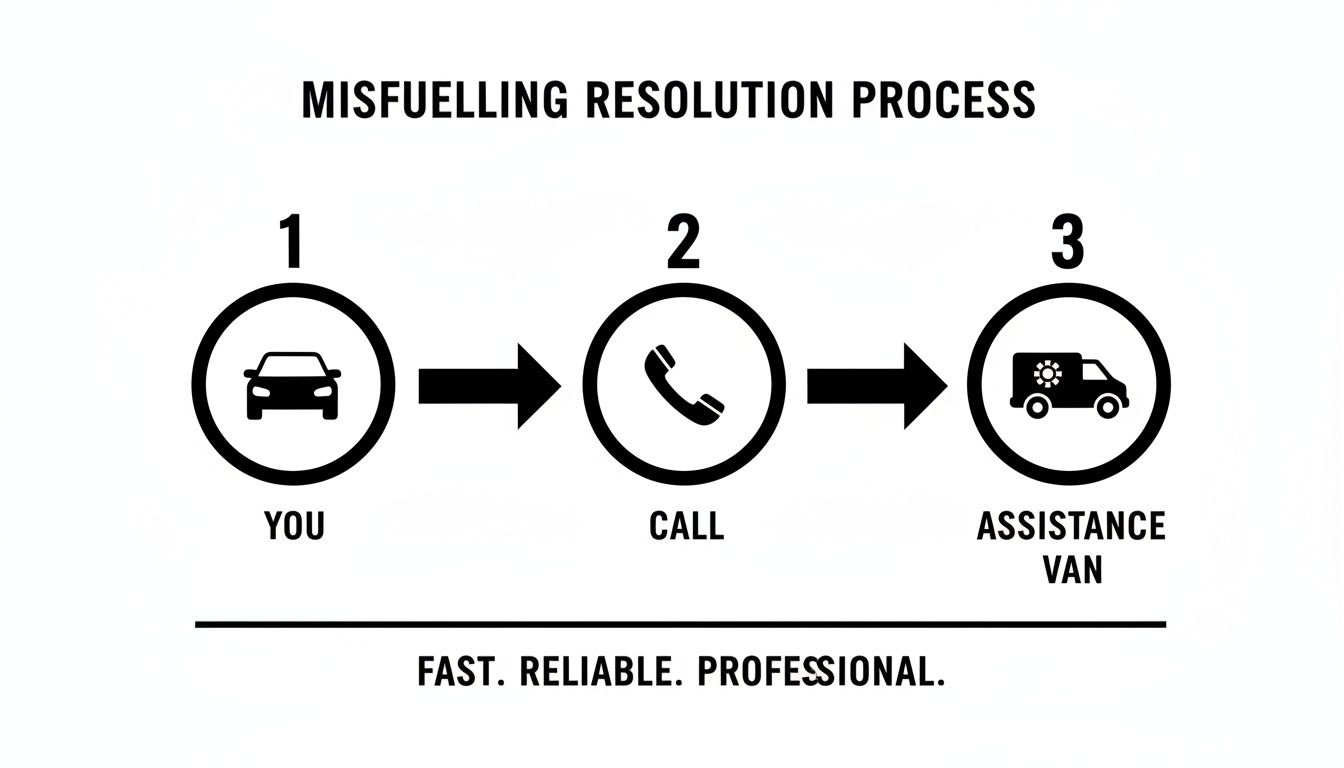
As you can see, a single call is all it takes to get the expert help you need rolling towards you, streamlining the entire recovery.
Flushing the Entire Fuel System
Just draining the tank isn’t the end of the story, especially if you’ve turned the key. That simple act could have pulled the petrol mixture into the fuel lines, filter, and even the high-pressure pump. Because of this, a full system flush is an absolutely non-negotiable part of the job.
The technician will circulate clean diesel right through the system to purge any remaining contamination. This is vital. Even a tiny residue of petrol can compromise the lubricating properties of the fresh diesel, continuing to cause wear and tear on sensitive parts like your fuel injectors long after you've driven away.
A professional fuel drain isn't just about removal; it's about restoration. The goal is to return your fuel system to its pre-incident state, ensuring no lingering contaminants can cause delayed damage.
Once the flush is complete, the system is primed with a small amount of fresh, correct diesel. Sometimes, a special additive is also included to help restore lubricity and condition any components that were exposed to the petrol's solvent effect. This makes sure that when the engine fires up again, it's getting nothing but pure, protective diesel from the very first moment.
What Happens to the Contaminated Fuel
A key part of any professional service is the responsible disposal of that unusable mixed fuel. Your technician is legally required to handle and dispose of this hazardous waste according to strict environmental regulations.
The contaminated fuel is transported in their van's secure container and taken to a licensed waste management facility. It’s a crucial final step that gives you complete peace of mind that the problem has been solved correctly and responsibly from start to finish. You can find out more about the specifics in our detailed guide on how to drain a fuel tank safely.
The True Cost of Misfuelling Your Diesel Car
Let's talk numbers, because that’s what really matters when you're standing on a cold forecourt, staring at the wrong fuel nozzle in your hand. The cost of calling out a mobile fuel drain service might seem like an unexpected hit to the wallet. But trust me, when you weigh that one-off fee against the potentially catastrophic cost of engine repairs, it’s not just a fix—it’s the smartest financial move you can make.
A simple slip-up at the pump can spiral into a multi-thousand-pound nightmare the second you turn the key. That petrol acts like a solvent, immediately stripping away the vital lubricating film that diesel provides. This causes instant, grinding friction inside your high-pressure fuel pump and injectors – two of the most complex and eye-wateringly expensive parts of your engine.
Mobile Drain vs Garage Repair Bill
The difference between dealing with this proactively (calling for a drain) and reactively (driving until the car breaks down) is absolutely staggering. A mobile fuel drain is a predictable, fixed-fee service that solves the problem right there on the spot. Think of it as an investment in damage prevention.
Now, contrast that with the bill from a garage after a modern diesel car has been run on contaminated fuel. The figures can be genuinely shocking.
High-Pressure Fuel Pump Replacement: This component is incredibly sensitive to a lack of lubrication. If it fails, you’re easily looking at a bill for £1,000 - £3,000.
Fuel Injector Set: If the failing pump sends tiny metal fragments (swarf) through the system, they’ll shred your injectors. A new set can add another £800 - £2,000.
Full System Decontamination: This isn't just a simple drain. It’s a labour-intensive job involving the cleaning of the tank, lines, and rails to get every last metal filing out.
Putting petrol in a diesel car is a remarkably common mistake, and it adds up to a huge financial drain for UK drivers. In fact, recent motoring analyses show that misfuelling blunders contribute to a collective loss of around £330 million every year.
The real cost isn't the mobile drain service. It's the potential for a catastrophic repair bill that could easily write off an older vehicle. Calling for a drain is like paying for an insurance policy against a much bigger financial disaster.
The Hidden Long-Term Consequences
Beyond the immediate, wallet-busting repair bill, there are other hidden costs to think about. Running your car on the wrong fuel mix, even for just a few minutes, puts immense stress on the entire system. This can lead to accelerated wear and tear that might not even surface for months.
It can also have some serious knock-on effects for your car's paperwork and future value.
Voided Warranty: If your car is still under the manufacturer's warranty, any damage from misfuelling will almost certainly not be covered. They see it as driver error, leaving you to foot the entire, painful bill.
Impact on Resale Value: A service history showing major engine work, especially on the fuel system, can be a massive red flag for any savvy buyer, potentially knocking a fair bit off your car's resale value.
When you lay out the financial stakes this clearly, it becomes obvious that calling for an immediate fuel drain is the only sensible choice. It protects your car, your warranty, and your bank balance from enormous headaches down the road. You can get a better feel for the numbers involved by reading our complete wrong fuel in car cost guide.
Your Top Questions Answered
Even after you've made the right call and have help on the way, it's natural to have a head full of questions. It’s a stressful moment, and the uncertainty about cost, damage, and what comes next can be overwhelming. Let's tackle some of the most common concerns we hear from drivers every single day.
Think of this as your rapid-fire guide to the practical, financial, and mechanical questions that pop up the moment you realise you’ve put petrol in your diesel car. Knowing the answers can help you feel more in control and dial down the anxiety.
Does Car Insurance Cover Putting in the Wrong Fuel?
This is usually the first question people ask, but the answer, unfortunately, isn't great. The vast majority of standard car insurance policies in the UK do not cover misfuelling. It’s almost always filed under driver error, which means the cost of the fuel drain and any resulting repairs lands squarely on you.
Some top-tier comprehensive plans or specialist breakdown add-ons might offer some cover, but it’s far from a given. You'd need to go through your policy documents with a fine-tooth comb. Honestly, in nearly every case, calling a dedicated mobile fuel drain service is the quickest, most direct, and cheapest solution. It cuts out all the hassle and potential premium hikes that come with an insurance claim.
What if I Already Drove the Car a Short Distance?
If you’ve started the engine and driven off, the one and only rule is to pull over as soon as it's safe and kill the engine. Instantly. Every single second the engine is running, that damaging petrol mix is being forced further into your high-pressure fuel pump and injectors, massively increasing the risk of serious damage.
That said, driving a few hundred yards isn't an automatic death sentence for your engine. While the risk is definitely higher, acting fast can still prevent a total catastrophe. A professional fuel drain and a complete system flush are now absolutely critical to purge the entire system of that harmful mixture. Your priority is to stop the car and call for expert help—the longer you drive, the higher that potential repair bill climbs.
How Can I Avoid Misfuelling in the Future?
Trust me, this mistake can happen to anyone, even the most seasoned drivers. It usually happens during a moment of distraction, when you're tired, or using an unfamiliar petrol station. The best prevention is to build a simple, conscious routine every single time you fill up.
Always Double-Check the Pump: Before you even touch the nozzle, make a point of reading the label on the pump and checking the colour. In the UK, diesel nozzles are black and petrol is green. Make it a deliberate habit.
Minimise Distractions: Put your phone away. Pause your conversation. Just a few seconds of pure focus while you're at the pump is all it takes to avoid this whole situation.
Consider a Misfuelling Device: For total peace of mind, you can buy a special replacement filler cap. These are cleverly designed to physically block the narrower petrol nozzle from fitting into your wider diesel tank neck, making it impossible to make the same mistake again.
If you've found yourself in this stressful situation, don't panic. The expert team at Misfuelled Car Fix is available 24/7 to provide a fast, professional mobile fuel drain service across England. We'll come to you, wherever you are, and get you safely back on the road with minimal fuss and expense. Call us now or visit https://www.misfuelledcarfix.co.uk for immediate assistance.