


How to drain petrol tank safely in the UK
- Misfuelled Car Fixer

- Feb 8
- 14 min read
Updated: Feb 19
24/7 Hotline Nationwide: 0800 999 1182
National Wrong Fuel Rescue: https://www.misfuelledcarfix.co.uk
If you found this page, we cover you in England!
Book Online:
It’s a moment of pure panic. That horrible, sinking feeling you get standing on the petrol station forecourt when you realise the wrong nozzle is in your hand. The damage is done.
But what you do in the next few seconds is absolutely critical. The single most important thing you can do is this: DO NOT turn the key or even think about starting the engine. This one simple action can be the difference between a quick fix and a repair bill running into the thousands.
That Sinking Feeling at the Pump | How To Drain Petrol Tank
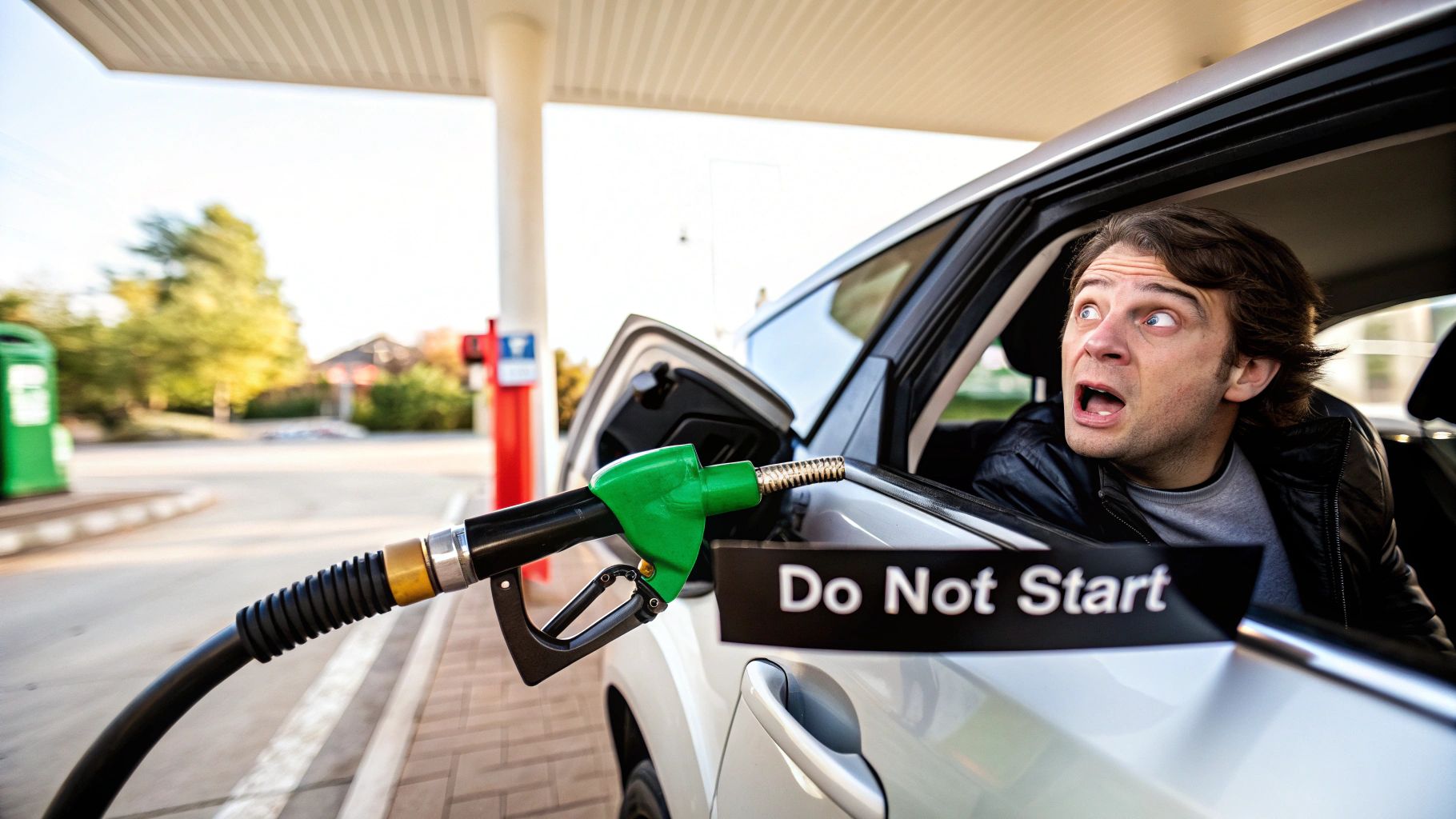
This scenario plays out across the UK every single day. You might be rushing to a meeting, distracted by the kids in the back, or just running on autopilot after a long day. For a split second, you grab the green nozzle instead of the black one, and before you know it, unleaded petrol is flooding your diesel tank.
If this is you right now, take a deep breath. You are far from alone in making this common mistake.
Just How Common Is Misfuelling?
The numbers might actually make you feel a bit better. Research shows that a staggering 29% of UK motorists have admitted to putting the wrong fuel in their car at some point. Men are slightly more likely to do it than women, and it’s younger drivers aged 18-24 who are the most frequent culprits. Interestingly, London drivers top the regional charts, with nearly 48% having done it.
So, you’re in good company. But that doesn’t change the mechanical reality of what happens next.
To make it crystal clear, here’s a quick-reference table of the immediate steps you need to take the second you realise your mistake.
Immediate Actions After Misfuelling
Action | Why It's Critical |
|---|---|
Do NOT Start the Engine | This is the golden rule. Starting the engine pulls the contaminated fuel into the sensitive fuel system, causing severe damage. |
Don't Even Turn the Key | Many modern cars prime the fuel pump when you turn the ignition on. This alone can start circulating the wrong fuel. |
Put the Car in Neutral | This will make it easier to move the vehicle away from the busy pumps. |
Inform Petrol Station Staff | They’ve seen this before and can help by cordoning off the pump and ensuring the area is safe. |
Push to a Safe Spot | With some help, push your car to a designated parking bay. This gets you out of the way and in a safe place to call for help. |
Following these steps keeps a manageable problem from spiralling into a mechanical and financial disaster.
The most critical takeaway is to resist every instinct you have to "just see if it'll be okay." Starting the engine transforms a simple, reversible mistake into a potentially catastrophic and wallet-emptying mechanical failure.
How to drain petrol tank? Don't try! The moment that engine turns over, the wrong fuel is sucked from the tank and sent hurtling through the entire system. For a diesel engine, petrol is a nightmare. It acts as a powerful solvent, not a lubricant, stripping the protective oily film from vital components like the high-pressure fuel pump and injectors.
This leads to metal-on-metal grinding, which sends tiny metal particles flying through the system, causing thousands of pounds in damage. To get a better grasp of the specific harm, have a look at our detailed guide on what happens when you put petrol in a diesel car.
Luckily, there’s a fast and professional solution right at your fingertips. A mobile fuel drain service can come directly to you, safely drain the contaminated fuel from the tank, flush the system clean, and get you back on your way without the hassle and cost of towing or garage fees.
By keeping that engine off, you ensure the fix is as straightforward and affordable as it can possibly be.
Recognising the Symptoms of a Misfuelled Engine
It’s a horrible, sinking feeling when you realise your mistake at the pump. But sometimes, you don’t. You might drive away completely oblivious, only for your car to start protesting a few miles down the road.
If you’ve recently filled up and your car suddenly feels… wrong, connecting the dots back to a potential fuel mix-up is the first step. Catching it early can be the difference between a simple fix and catastrophic engine damage. The signs your car gives you will be different depending on which fuel you've put in, but either way, they’re crucial warning signals you can't afford to ignore.
Petrol in a Diesel Engine
Putting petrol into a diesel car is the most common and, frankly, the most damaging type of misfuelling. Petrol is a solvent; it strips away the essential lubricating properties that diesel fuel provides. This creates instant, brutal friction between the high-precision components inside a modern diesel engine.
You'll notice the symptoms pretty quickly, and they tend to get worse fast:
A Loud, Knocking Clatter: As the petrol ignites far too early under the immense pressure of a diesel engine, it creates a very distinct, harsh metallic knocking noise, especially when you try to accelerate. It's an ugly sound.
Serious Lack of Power: Your car will feel incredibly sluggish and unresponsive. Pressing the accelerator will result in sputtering and a definite feeling that something is very wrong.
Plumes of White Smoke: All that unburnt fuel has to go somewhere. It gets vaporised in the hot exhaust, emerging as thick clouds of white smoke.
Dashboard Warning Lights: You can bet your dashboard will light up. Expect the engine management light or the glow plug coil light to start flashing.
Eventually, the engine will likely just give up and cut out completely, refusing to restart. The longer you drive, the more irreversible damage you’re doing to the fuel pump and injectors.
Think of a van driver on the M25. He filled up an hour ago and is now struggling to keep up with traffic. The engine is making a terrible racket, and he can see white smoke billowing out of his mirrors. This isn’t just a breakdown; these are the textbook signs of petrol contamination. Pulling over safely and calling for a fuel drain is the only sensible move.
Diesel in a Petrol Engine
This happens less often, mainly because the larger diesel nozzle usually won't fit into the filler neck of a modern petrol car. But it still catches people out. Diesel is much oilier and far less flammable than petrol, so instead of causing friction damage, it effectively clogs up the entire system.
The symptoms are different, but no less serious:
Engine Misfiring and Juddering: The oily diesel will quickly coat your spark plugs, stopping them from creating the spark needed to ignite the fuel. This causes the engine to misfire, run incredibly rough, and judder.
A Struggle to Start: If you’ve switched the engine off, it will be extremely difficult—if not impossible—to get it started again.
Smoky Exhaust: You’ll probably see black or grey smoke puffing from the exhaust as the engine desperately tries (and fails) to burn the thick, oily diesel.
The car will run badly for a very short time before the engine essentially chokes on the wrong fuel and cuts out. The moment you notice any of these signs after a fill-up, find a safe spot to pull over, switch off the engine, and leave it off.
Why a Professional Fuel Drain Is the Only Safe Option
When you're stuck on a forecourt with the wrong fuel in your tank, the temptation to find a quick, cheap fix can be overwhelming. A quick search online might throw up a few videos of someone siphoning fuel with a simple tube, making it all look deceptively easy.
But let's be honest, attempting to drain a modern fuel tank yourself is a decision loaded with serious risks that those videos conveniently gloss over.
The Real Dangers of a DIY Fuel Drain
Handling fuel isn't a casual task. Both petrol and diesel are highly flammable and toxic substances. Without the right personal protective equipment (PPE), you’re risking everything from skin irritation and respiratory problems to the very real danger of a fire or explosion. A single spark from static electricity or a dropped metal tool is all it takes for things to go catastrophically wrong.
Professional technicians don't just use a simple hose and a bucket. They rely on specialised, ATEX-certified pumps. This gear is specifically engineered to be anti-static and spark-proof, making it safe to handle flammable liquids. Trying to use a standard wet-vac or an uncertified pump is incredibly dangerous and a common cause of forecourt fires.
Getting the contaminated fuel out is only half the battle, though. You’re then left with a container full of hazardous waste. You can't just pour it down a drain or chuck it in the bin. Disposing of mixed fuel is governed by strict environmental regulations, and getting it wrong can lead to hefty fines and serious environmental harm. You can find out more in our essential guide to nationwide misfuel recovery services.
The symptoms of misfuelling show just how quickly things can go wrong inside your engine, reinforcing why a swift, correct response is so critical.
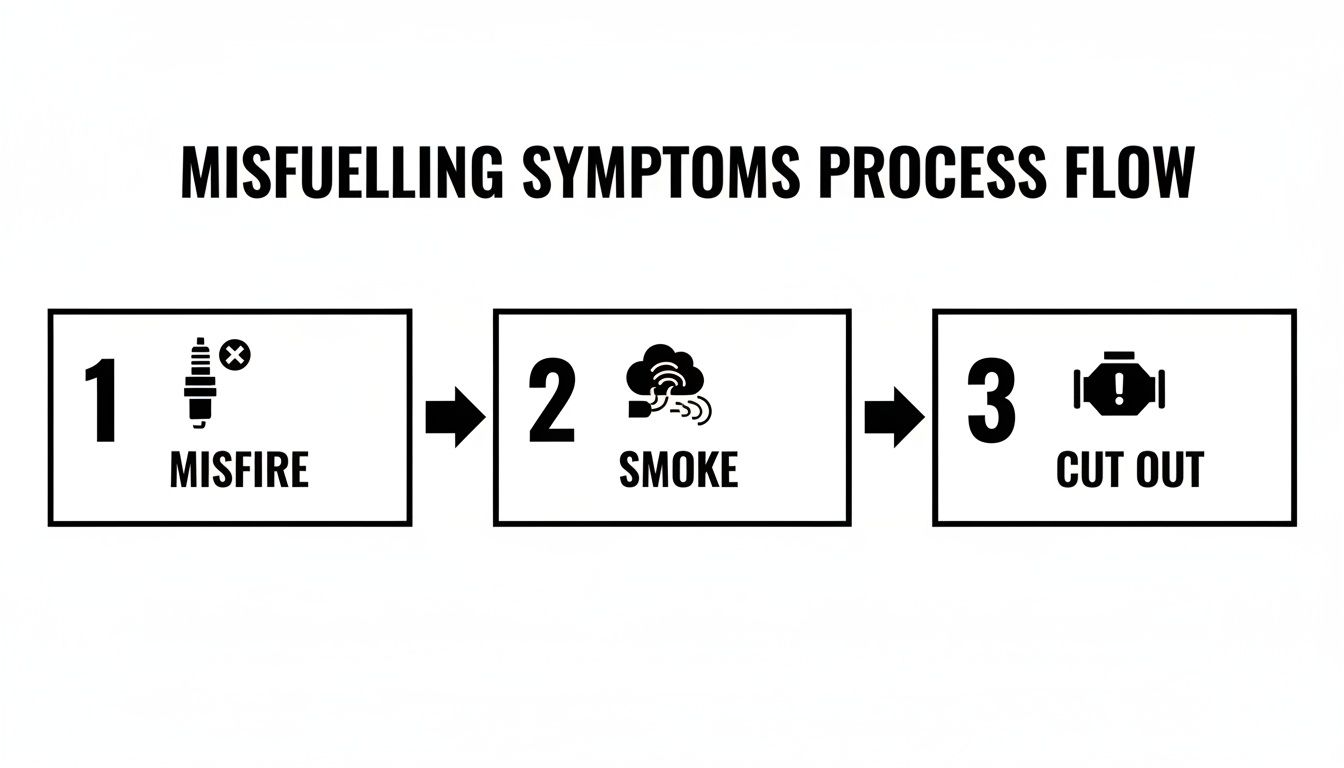
This rapid progression from a simple misfire to a complete engine cut-out is exactly why DIY methods, which can't fully cleanse the system, are never the answer.
DIY Fuel Drain vs Professional Service
It's tempting to think you can save a few quid by tackling the problem yourself, but when you weigh up the risks against the benefits of calling in a pro, the choice becomes crystal clear.
Aspect | DIY Attempt | Misfuelled Car Fix Professional Service |
|---|---|---|
Safety Risk | Extremely high. Risk of fire, explosion, and exposure to toxic fumes. | Minimal. Trained technicians with ATEX-certified, spark-proof equipment. |
Equipment | Improvised tools like hoses and non-certified pumps. | Specialist pumps, spill containment kits, and full personal protective equipment. |
Effectiveness | Incomplete drain is likely. Residual contamination can still damage the engine. | 100% drain of the tank and a full flush of the fuel lines and filter housing. |
Waste Disposal | Your problem. You must find a licensed facility, which can be difficult and costly. | Handled for you. We are licensed to transport and dispose of contaminated fuel legally. |
Time Taken | Can take hours, with no guarantee of success. | Typically 60-90 minutes from arrival to getting you back on the road. |
Potential Damage | High risk of spilling fuel and causing further damage to your car or the environment. | Zero risk. The process is contained, clean, and protects your vehicle's components. |
Ultimately, the small amount you might save on a DIY attempt is dwarfed by the potential costs of getting it wrong – from environmental fines to catastrophic damage to your vehicle.
The Professional Process Explained
When you call a service like ours, you're not just paying for convenience; you're investing in safety, expertise, and peace of mind. A trained mobile technician arrives with everything needed to solve the problem properly, right there on the spot.
The process is methodical and thorough:
Safety First: The first step is always to secure the work area, eliminating any risk of ignition.
Specialist Equipment: The ATEX-approved pump is used to safely drain every last drop of the contaminated fuel from your tank.
System Flush: The job doesn't end there. The technician will then flush the entire fuel system—including the lines and filter—to chase out any residual contaminants. This is vital to prevent future engine problems.
Fresh Fuel Top-Up: We'll add a small amount of the correct, fresh fuel to your tank, priming the system so your engine can be restarted safely.
A professional fuel drain isn't just about emptying a tank. It's a comprehensive service that removes the contamination, cleanses the fuel system, and handles the hazardous waste according to the law, ensuring your vehicle is genuinely safe to drive.
By choosing a professional service, you eliminate personal risk, avoid potential fines, and ensure your car’s fuel system is properly cleaned out. It's the only way to turn a stressful mistake into a resolved issue with complete confidence.
Understanding the True Cost of Misfuelling
That sinking feeling after you’ve misfuelled is usually followed by one anxious thought: how much is this going to cost me? Nobody likes an unexpected bill, but the price of a professional fuel drain is a drop in the ocean compared to the financial disaster waiting for you if you start the engine.
A rapid-response mobile service to drain the contaminated fuel and flush the system will typically cost between £150 and £300. It might seem like a lot for a simple slip-up, but it's crucial to see this as a preventative investment, not a penalty. Think of it as an insurance policy against a repair bill that could easily spiral into the thousands.
The Real Financial Risk of Driving On
When petrol gets into a diesel engine, its solvent properties immediately get to work, stripping lubrication from high-precision parts like the fuel pump and injectors. Driving just a few miles can generate enough friction to destroy them, leading to repair costs that are genuinely staggering.
New Fuel Injectors: A new set can cost anywhere from £1,000 to £2,000, sometimes more.
High-Pressure Fuel Pump: Replacing this critical component can set you back another £1,000 to £3,000.
Engine Damage: In a worst-case scenario, tiny metal fragments from a failed pump can circulate through the engine, demanding extensive work or even a complete replacement.
Suddenly, that call-out fee for a mobile drain looks like an incredible bargain. This mistake is more common than you’d think; every year in the UK, around 150,000 drivers find themselves in this exact spot. Professional draining costs can vary from £120 to over £1,000 depending on the vehicle and how bad the contamination is, but acting fast always keeps the cost down.
The single most expensive decision you can make after misfuelling is to turn the key. The bill from a mobile fuel drain is predictable and manageable; the bill from a main dealer after you've driven the car is an entirely different, and much scarier, beast.
Hidden Costs That Add Up Quickly
Beyond the direct repair bill, other expenses quickly start to mount. If you drive the car until it breaks down, you’ll need to factor in towing fees to get your vehicle to a garage. Once it's there, dealerships and garages will often charge premium labour rates for what has just become a complex mechanical repair, not a simple contamination issue.
For businesses, the cost extends far beyond the vehicle itself. Every hour a commercial van or company car is off the road is an hour of lost productivity, missed appointments, and potential damage to your reputation. A swift, 24/7 mobile service is designed to minimise this downtime, protecting your bottom line and keeping your operations on track. By getting a technician to your location fast, we bypass the need for towing and lengthy garage stays, making it the most cost-effective solution by far.
To get a full picture of the financial impact, our guide on the cost of putting the wrong fuel in your car offers a comprehensive breakdown.
Simple Habits to Prevent Future Misfuelling
Once the crisis is over and your car is running smoothly again, the last thing you want is a repeat performance. The stress, the disruption, and the cost are experiences nobody wants to go through twice.
Fortunately, preventing a future misfuel is far easier than fixing one. It just takes a few simple, conscious habits at the pump.
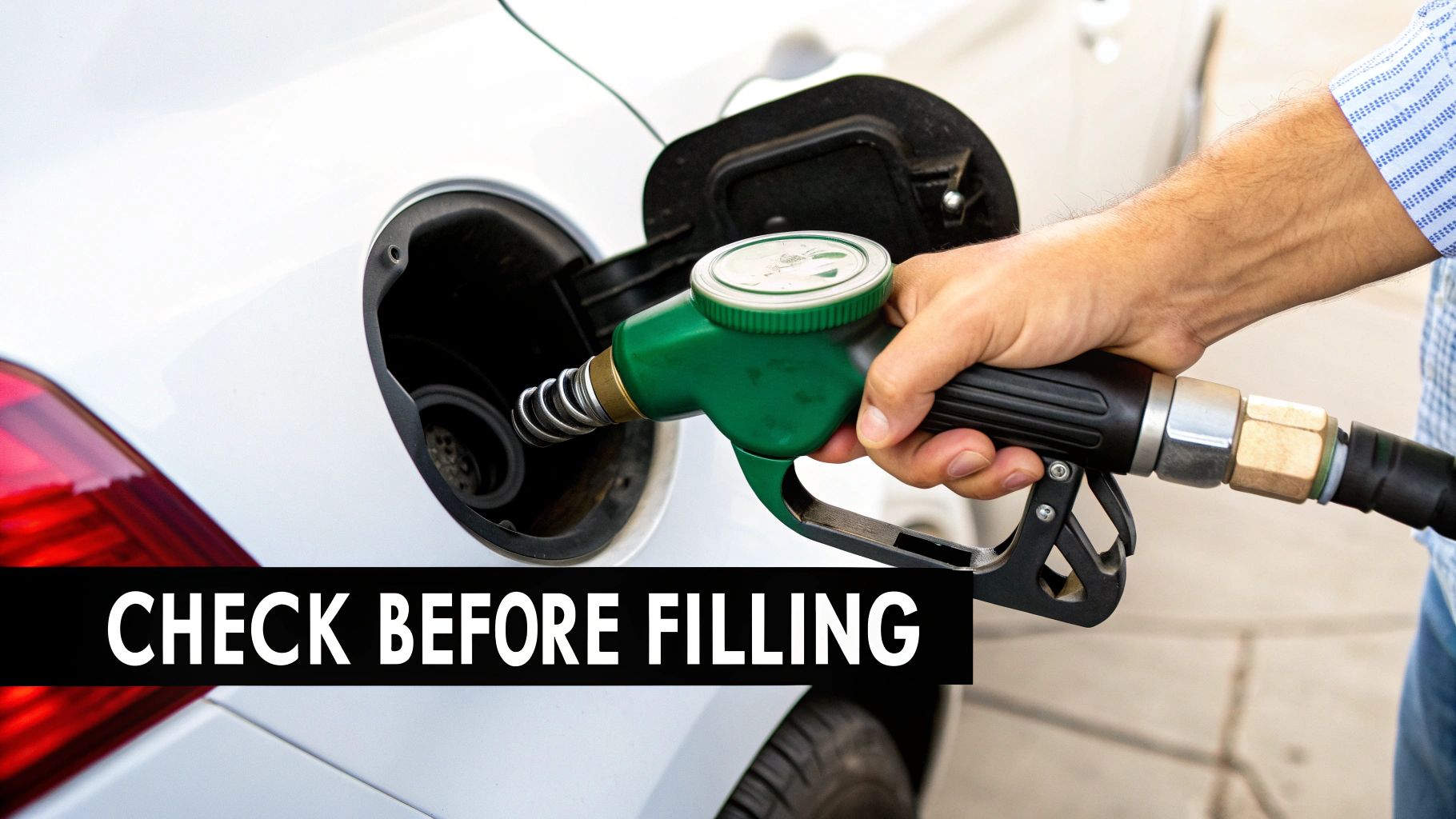
The single biggest cause of misfuelling is simple distraction. You’re in a rush, thinking about where you’re going next, or maybe you're driving a car that isn't yours. The solution is to build a deliberate pause into your routine—a mental checklist—before you even touch the nozzle.
Take one second to consciously check the colour of the pump handle and the label on your car’s fuel cap. This tiny moment of focus can save you hundreds of pounds. This small habit is the single most effective way to prevent a misfuel, as it breaks the autopilot mode that so often leads to grabbing the wrong pump.
Proactive Prevention Tools
For some extra peace of mind, you can go a step further and install a physical barrier. Several companies make specially designed replacement fuel caps that physically prevent the wrong nozzle from being inserted.
These clever devices are engineered to accept only the correct size of fuel nozzle:
A diesel-specific cap will physically block the narrower unleaded petrol nozzle.
They are a brilliant, one-off investment, especially for shared family cars or for drivers who frequently switch between petrol and diesel vehicles.
This simple piece of kit makes misfuelling almost impossible, taking human error completely out of the equation. It’s a smart move if you're worried about making the same mistake twice.
One other common and costly mistake is putting AdBlue directly into the diesel tank instead of its separate, smaller reservoir. This fluid is highly corrosive to fuel system seals and plastics, causing damage just as severe as petrol contamination. Always double-check you're pouring it into the correct filler, which will have a blue cap.
Advice for Fleet Managers
For businesses running multiple vehicles, a single misfuelling incident can disrupt schedules, delay deliveries, and hit your profitability hard. Implementing clear, consistent policies is absolutely key.
A simple but effective measure is to ensure every company vehicle has a prominent sticker inside the fuel flap indicating the correct fuel type—for example, a bright yellow sticker that says "DIESEL ONLY".
During driver onboarding and regular training sessions, reinforce the importance of double-checking at the pump. This simple communication ensures that every driver, whether they're new or experienced, has fuel safety front of mind, protecting your valuable assets from a preventable and expensive problem.
Your Misfuelling Questions Answered
When you’re standing at the pump with that sinking feeling, a million questions race through your mind. It’s a stressful spot to be in, but getting straight answers can make a world of difference. We’ve pulled together the most common and urgent questions drivers ask when they’re staring at a tank full of the wrong fuel.
I've Already Started My Car. What Should I Do Now?
If you've turned the key and the engine is running, the absolute priority is to stop panicking and stop the car. Find the very first safe place you can to pull over, switch the engine off completely, and do not be tempted to restart it under any circumstances.
Every second the engine runs, that contaminated fuel is being dragged deeper into the system. It’s a fast track to serious, wallet-emptying damage to crucial parts like your fuel pump and injectors. Your best move is to call a professional fuel drain service right away. Our technicians are fully equipped to handle situations where a car has been driven; they can carry out a full system flush to clear out the contamination and minimise the damage.
Will Putting the Wrong Fuel in My Car Void My Warranty or Insurance?
This is a huge worry for most people, and the answer really depends on the small print of your specific policy. Most standard car insurance policies do not cover misfuelling because it’s generally classed as driver error. To be covered, you'd probably need a breakdown assistance add-on that explicitly lists misfuelling services.
In the same way, vehicle warranties typically won’t cover damage caused by putting the wrong fuel in. This is exactly why getting immediate professional help is so vital. A proper, timely fuel drain prevents the kind of major damage that leads to a massive, uncovered repair bill.
Don't waste time rummaging through paperwork at the roadside. The real priority is preventing damage. Call for a fuel drain first, and then you can check your policy details later with peace of mind.
How Long Does a Mobile Fuel Drain Take?
Honestly, the whole process is much quicker than most people imagine. Once a certified technician gets to your location—whether you're stuck on the forecourt, stranded on the side of the road, or safe at home—the entire job is usually sorted within 60 to 90 minutes.
This includes:
Safely draining every last drop from the fuel tank.
Flushing the fuel lines and the filter housing.
Adding some fresh, correct fuel to get you started again.
The service is designed from the ground up to get you back on your way with minimal stress and downtime. Everything is handled right there on-site, so there's no need for costly towing or a long wait for a slot at the garage.
What Happens to the Contaminated Fuel?
As a professional service, we’re committed to handling the aftermath responsibly. The mixed petrol and diesel that comes out of your vehicle is a hazardous substance and can’t just be tipped down the nearest drain.
Our technicians store the contaminated fuel securely in specialist, sealed tanks inside their mobile units. From there, it’s transported to a licensed waste management facility. At the facility, it's processed for proper, environmentally-friendly disposal and recycling, all in full compliance with UK environmental regulations. You can be confident the problem is being handled professionally from start to finish.
If you're stuck with the wrong fuel in your tank, don't wait for the problem to get worse. For a fast, professional, and 24/7 mobile fuel drain service anywhere in England, contact Misfuelled Car Fix right now. Call our freephone number or book online to get an expert technician on the way to you immediately. Find out more at https://www.misfuelledcarfix.co.uk.


