


Guide: what happens if put petrol in diesel car
- Misfuelled Car Fixer

- Feb 1
- 13 min read
24/7 Hotline Nationwide: 0800 999 1182
National Wrong Fuel Rescue: https://www.misfuelledcarfix.co.uk
If you found this page, we cover you in England!
It’s a heart-sinking moment every driver dreads: you’ve just put petrol in your diesel car. This mistake is far more serious than just a simple mix-up, and it can lead to thousands of pounds in engine damage. The single most important thing to remember is this: Do not, under any circumstances, start the engine.
What Happens if Put Petrol and Diesel Car
That awful feeling at the pump is a common one, but understanding why this mistake is so mechanically disastrous is the key to preventing a catastrophic failure. Petrol and diesel engines are worlds apart; they're built on completely different principles of combustion and rely on fuels with opposite properties.
A diesel engine works through compression ignition. It squeezes air so tightly that it becomes incredibly hot—hot enough to instantly ignite the diesel fuel the moment it’s injected. But diesel fuel does more than just provide the bang; it’s also a heavy, oily substance that plays a vital second role: lubricating the high-pressure fuel pump and injectors.
Think of diesel as a protective oil, constantly coating the finely-engineered parts of your fuel system to keep them moving smoothly against each other.
A Tale of Two Fuels: Lubricant vs. Solvent
Petrol, on the other hand, is the complete opposite. It's a much lighter, more volatile fuel designed to be ignited by a spark plug. Critically, it has virtually no lubricating qualities. In fact, it acts more like a harsh cleaning agent or a solvent.
When you introduce petrol into a diesel system, it immediately starts stripping away that essential oily film from the high-precision components. This causes instant metal-on-metal friction inside the fuel pump, which begins to grind itself to pieces, creating tiny metal particles that then get flushed through the entire system.
The core danger lies in this total loss of lubrication. A modern high-pressure diesel fuel pump is engineered to microscopic tolerances and relies entirely on the oiliness of diesel to function. Without it, the pump literally starts to destroy itself within seconds of you turning the key.
To really see why they’re so incompatible, a quick side-by-side comparison makes it crystal clear.
Core Differences Between Petrol and Diesel Fuel
Here’s a straightforward breakdown of why these two fuels can never be mixed in an engine.
Characteristic | Petrol | Diesel |
|---|---|---|
Ignition Method | Spark-ignited | Compression-ignited |
Lubricity | Very Low (a solvent) | High (oily) |
Volatility | High (evaporates easily) | Low (greasy) |
Primary Role | Burns via spark | Ignites under pressure and lubricates |
This table really drives home why swapping them is so disastrous. Putting petrol in a diesel car isn't just a case of using the "wrong kind of energy"; it's like pouring a powerful degreaser into a system that is desperately crying out for oil.
The Chain Reaction of Damage Inside Your Engine
To really get what happens if you put petrol in a diesel car, we need to follow the fuel on its destructive journey, from the tank right into the heart of the engine. The moment you turn that ignition key, you kick off a rapid and catastrophic chain reaction. It all starts with the high-pressure fuel pump.
This pump is a masterpiece of precision engineering, operating under immense pressures of up to 30,000 psi. It’s designed to rely completely on the oily, lubricating properties of diesel to keep its delicate metal parts moving smoothly. Petrol, however, is a solvent. It’s a degreaser. It strips that protective oily film away in an instant.
The result is immediate, severe metal-on-metal friction.
The Grinding Halt Begins
With no lubrication, the fuel pump starts to tear itself apart from the inside. This grinding action creates tiny, razor-sharp metal particles—what we in the trade call swarf—which are then blasted at high pressure into the rest of the fuel system. These particles are the real engine killers.
This abrasive metallic paste is forced through the delicate fuel lines and straight into the fuel injectors. Diesel injectors have nozzles with microscopic openings, engineered to spray a super-fine mist of fuel. The swarf clogs these openings in a heartbeat, causing damage that simply can't be reversed.
This flowchart shows just how fast this destructive sequence happens—from the solvent action of the petrol to the friction that follows.
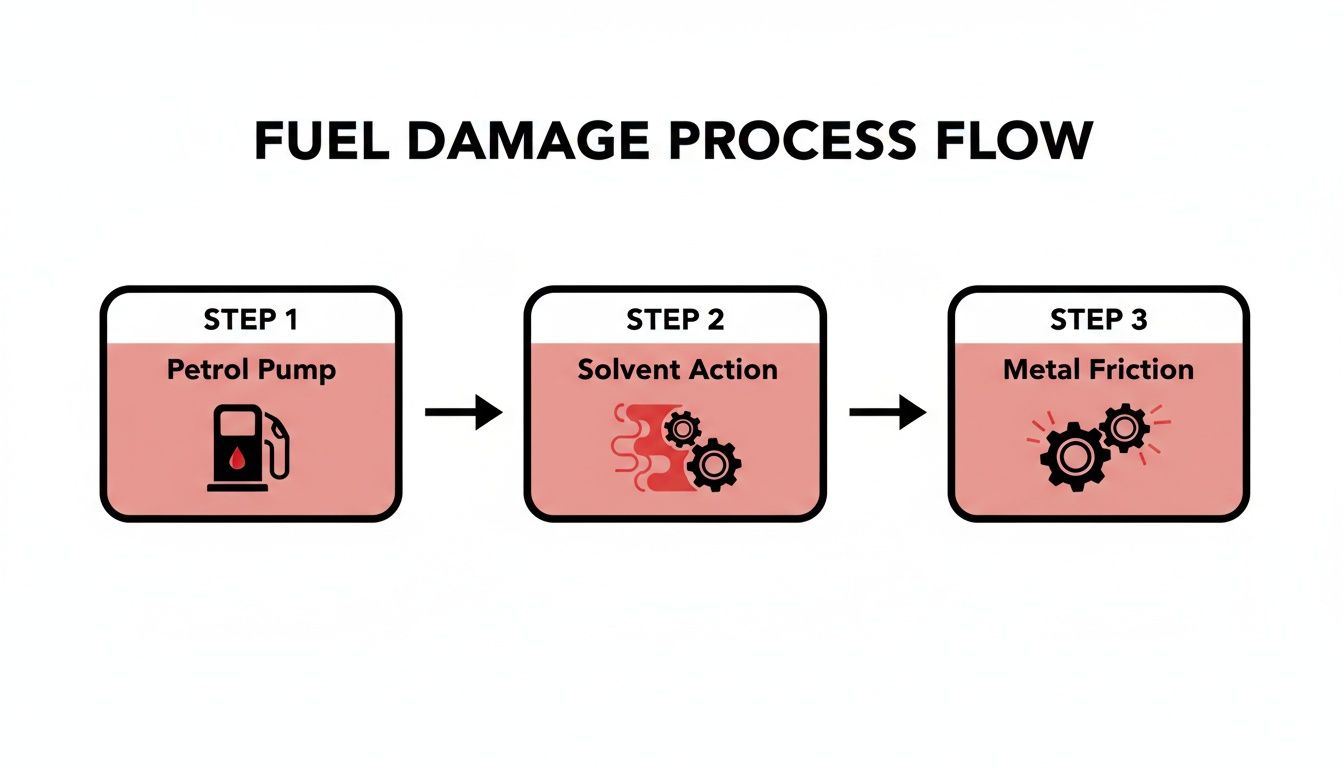
As you can see, the damage isn’t a slow burn; it’s an immediate mechanical cascade that begins the second the pump is starved of its vital lubrication.
Catastrophic Component Failure
Once that swarf has circulated, every single part of the fuel system is compromised. The damage isn't neatly contained in one component; it spreads like a poison.
Fuel Pump: Destroyed by internal friction and scoring.
Fuel Injectors: Clogged solid and ruined by metal particles.
Fuel Filter: Completely overwhelmed and contaminated beyond hope.
Fuel Lines: Caked with abrasive debris that has to be professionally flushed out.
This widespread contamination is exactly why a simple fuel drain isn't enough if you've started the engine. The whole system needs to be professionally cleaned to stop any stray particles from causing a second round of failure later on.
The consequences are financially devastating. If you start the engine, the contaminated fuel circulates and wrecks injectors and pumps within minutes. Repair bills average £1,500-£5,000 but can easily jump to over £10,000 for high-pressure common-rail systems in modern diesels. You can find more details on hydrocarbon management in government statistics.
This isn't a wear-and-tear problem you can put off. It's an acute mechanical emergency. Turning that key is the single most expensive mistake you can possibly make, transforming a manageable problem into a potential write-off.
Key Warning Signs of Misfuelling
If you’ve turned the key after putting petrol in your diesel car—even for a second—it won't take long for your vehicle to protest. The engine's mechanical harmony is instantly shattered, and it will quickly start showing a whole range of alarming symptoms. Spotting these signs immediately is absolutely critical to shutting the engine off and stopping catastrophic damage in its tracks.

The moment that contaminated fuel hits the engine, you'll know something is seriously wrong. The initial signs might be subtle, but they get much worse, very quickly. Your best defence is to pay close attention to how your car sounds, feels, and performs.
What to Look and Listen For
One of the most immediate and scary symptoms is a loud, metallic knocking sound coming from the engine. This isn't your normal diesel clatter; it's a harsh, jarring noise. It’s the sound of the petrol igniting far too early under the high compression of a diesel engine, literally fighting against the pistons' upward stroke instead of pushing them down.
Next, have a look at your exhaust. You might see excessive white or light-coloured smoke billowing out from the back. This is basically unburnt fuel and vaporised petrol being blasted straight through the exhaust system, and it’s a huge visual clue that you have a severe combustion problem.
You’ll also feel a dramatic drop in performance. The engine might:
Suffer a severe loss of power: The car will feel sluggish and weak, really struggling to accelerate.
Misfire or run erratically: It might judder, jerk, or feel incredibly rough, whether you're idling or driving.
Stall completely: Often, the engine will just cut out and then stubbornly refuse to restart.
If you've started driving, the engine management light will almost certainly pop up on your dashboard. This is your car's onboard computer screaming that it has detected a critical fault. Heed this warning and pull over as soon as it's safe to do so.
These symptoms are not minor glitches that will sort themselves out. Every single one points to the severe internal damage that happens when you put petrol in a diesel car. If you notice any of these signs, your only option is to switch off the ignition immediately. Don't try to "drive through it" or hope it gets better. Every second the engine runs just cranks up the risk and the final repair bill. For a more detailed breakdown, you can learn more about the top symptoms of petrol in a diesel car in our complete guide.
Your Immediate Action Plan After Misfuelling
That cold, sinking feeling at the petrol station can quickly spiral into full-blown panic. But what you do in the next few minutes is absolutely critical. It’s the difference between a simple mistake and a mechanical catastrophe. And believe me, it's a surprisingly common slip-up; breakdown services get called out to tens of thousands of these incidents every single year across the UK.

The single most important rule is non-negotiable: Do not put the key in the ignition. Don't even turn it to the 'accessory' position for the radio. The moment you turn that key, the fuel pump can prime itself, starting to circulate the damaging petrol through your car's sensitive fuel system. Once you've realised the error, your only goal is to keep that contaminated fuel locked away in the tank.
What You Must Do Immediately
Follow these steps exactly to give your car the best chance of escaping unharmed. Taking calm, decisive action right now is your best line of defence against serious damage.
Leave the Keys Out: Get the keys out of the ignition and put them in your pocket. This simple step prevents any chance of an accidental start.
Inform Station Staff: Let the staff at the petrol station know what’s happened. They’ve seen this before and can help by coning off the pump.
Move to Safety: Put the car in neutral and ask for a hand to push it to a safe parking bay. Whatever you do, don't start the engine to move it.
What You Must Never Do
Just as important as knowing what to do is knowing what not to do. A few wrong moves here can escalate a simple fuel drain into a repair bill with four figures.
The biggest mistake people make is thinking a little bit of petrol won't hurt. Even a small amount acts like a solvent, stripping away vital lubrication and causing friction. Never, ever try to "dilute" it by topping up with diesel. The only safe way forward is a complete drain.
Avoid these critical errors at all costs:
Do not start the engine. It's worth repeating. This is the cardinal sin of misfuelling.
Do not attempt a DIY drain. Petrol is incredibly flammable, and trying to siphon it yourself is a massive fire hazard and an environmental risk.
Do not drive the vehicle, not even for a few feet.
According to the Green Flag breakdown service, they logged a staggering 45,000 misfuel events in 2024, with projections showing a potential 9% rise in 2025. This spike is often blamed on stressed-out commuters and the general post-pandemic rush, where simple mistakes are all too easy to make. You can get more details on UK car statistics from the official SMMT vehicle data.
Once your car is parked safely, the next step is to call a professional misfuel assistance service. They have the specialist gear to handle the fuel safely and get you sorted. For a more detailed breakdown, check out our guide on the quick steps to avoid damage after putting petrol in a diesel car.
How a Professional Fuel Drain Rescues Your Engine
Discovering you've filled your diesel car with petrol feels like a complete disaster, but a professional fuel drain is a precise, controlled procedure designed to stop the damage in its tracks and get you safely back on your way. It’s a lot more involved than just siphoning the tank; it's a systematic cleanse of your car's entire fuel system, carried out by a trained technician with very specific kit.
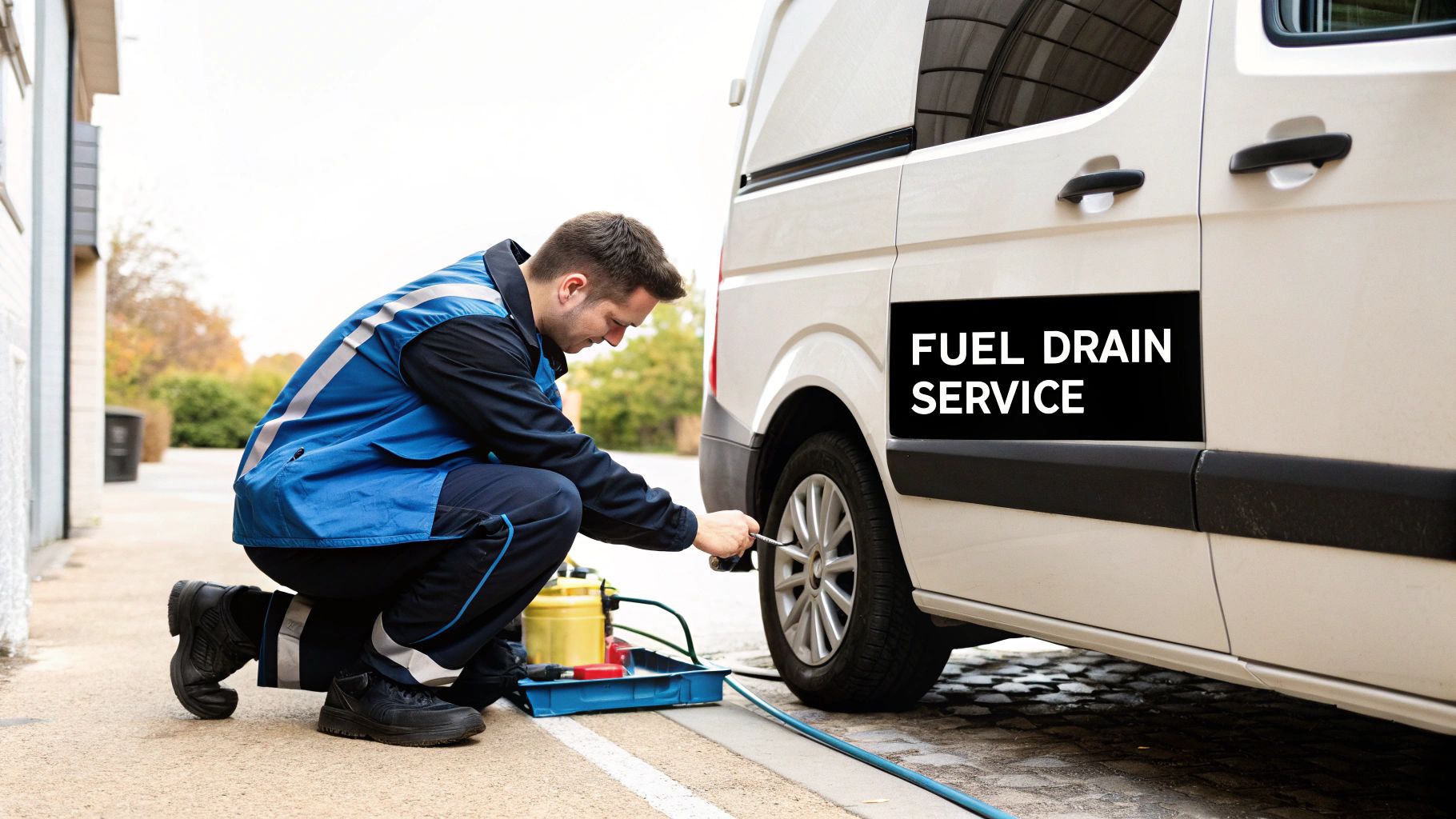
The very first job is to safely drain every single drop of that contaminated petrol-diesel mix from your fuel tank. This isn’t a job for a bit of old hosepipe. It's done using an ATEX-approved pumping system, which is built from the ground up to handle flammable liquids like petrol without creating sparks—a critical safety measure that makes any DIY attempt so incredibly dangerous. The bad fuel is pumped into a secure, separate container, ready for environmentally responsible disposal.
A Full System Flush and Cleanse
Once the tank is empty, the real rescue work begins. The technician will then flush the entire fuel system to get rid of any lingering petrol. Crucially, this also removes any tiny metal particles (known as swarf) that might have been created if you started the engine.
This comprehensive flush is a multi-step process:
Cleaning the Fuel Lines: Fresh, clean diesel is pumped through all the fuel lines to purge any leftover contaminants.
Draining the Fuel Filter Housing: The fuel filter is a hotspot for trapping gunk, so its housing is drained and thoroughly cleaned out.
Clearing the Pump and Injectors: The system is flushed right up to the engine's high-pressure pump and injectors to ensure they are completely free of petrol.
This meticulous process ensures no pockets of that solvent-like petrol are left hiding somewhere, ready to compromise your engine's lubrication. For a deeper look into the nitty-gritty of the process, you can find more detail in our essential guide to misfuel recovery services.
Finally, the system is primed with fresh, correct diesel. We'll often include a high-quality fuel additive in this new fuel, too. This helps to restore the vital lubrication that the petrol stripped away, giving an extra layer of protection to the sensitive parts in your fuel pump and injectors as they get back to work.
The core benefit of a professional service is its thoroughness. A mobile fuel drain specialist not only removes the wrong fuel but actively works to reverse the initial damage by flushing out debris and restoring lubrication—something a simple drain can never achieve.
This expert intervention is exactly why calling a mobile service is almost always faster, safer, and much more cost-effective than getting towed to a main dealer. Instead of waiting days for a garage to fit you in, a technician can fix the problem right there at the roadside, getting you moving again with total confidence in under an hour.
Simple Habits to Prevent Misfuelling Again
After the stress and expense of putting the wrong fuel in your car, the last thing you want is a repeat performance. The good news is, preventing it from happening again is all about building a few simple, solid habits. It’s often the smallest changes, the ones that become second nature, that make all the difference.
Start by creating a deliberate little ritual for refuelling. Before you even lift the nozzle, consciously pause and double-check two things: the label on the pump itself (it will clearly say 'Diesel') and the text right there on your car's fuel filler cap. This two-second check is honestly your most powerful defence against a very costly mistake.
Another huge factor is just slowing down. Misfuelling often happens when we’re distracted, in a tearing hurry, or navigating an unfamiliar petrol station. Make it a rule: never refuel while you're on a phone call, and always give the task your full attention.
Making Your Car Misfuel-Proof
For an extra layer of security, you can go a step further and physically stop the error from ever happening. A cheap but surprisingly effective solution is a brightly coloured diesel-only sticker for your fuel cap. It’s a simple visual jolt every single time you open it.
If you want to make it impossible, you can invest in a misfuelling prevention device. These are clever caps that replace your existing one and are physically designed to only allow a standard-sized diesel nozzle to fit inside. A smaller petrol nozzle just won't go in, making it physically impossible to put petrol in your diesel car.
These habits are absolutely vital when you're behind the wheel of a rental or a company car, as you’re not used to its specific fuelling needs. This is a classic pitfall; for renters and new drivers, a massive 40% of misfuelling errors happen at unfamiliar stations. You can get more insight into why drivers make these slips by exploring trends in vehicle leasing.
By making these simple practices part of your routine—checking the pump, checking the cap, and taking a breath—you can turn a moment of potential panic into a complete non-event. It’s the easiest way to keep your vehicle safe and your journeys stress-free.
Common Questions About Misfuelling Your Car
It’s completely normal to have a head full of questions after putting the wrong fuel in your car. Once the initial panic subsides, the practical worries start to creep in. Let's tackle some of the most common concerns we hear from drivers every day to help you get a clearer picture of what's next.
How Much Petrol in Diesel is a Problem?
This is usually the first thing people ask, hoping a small splash isn't a big deal. Unfortunately, the answer is pretty brutal: any amount is too much.
Modern high-pressure diesel engines are incredibly sophisticated and rely entirely on diesel's oily properties for lubrication. Petrol is the complete opposite – it’s a solvent. Even a tiny contamination, as little as 1%, starts to strip away that vital lubricating film, putting your high-pressure fuel pump and injectors at immediate risk.
Many people fall for the old myth of just topping up the tank with diesel to dilute the mistake. This is a recipe for disaster. Adding more diesel won't magically make the petrol go away; it just ensures that harmful mixture gets pumped through every delicate part of your fuel system. The only truly safe option is a professional fuel drain, no matter how little you put in.
Is It Worse to Put Petrol in Diesel or Vice Versa?
Both are bad news, but putting petrol into a modern diesel engine is almost always the more destructive and expensive error. It all comes back to that critical issue of lubrication.
Your diesel’s fuel system is a high-precision, high-pressure world where components are built to microscopic tolerances. They need the oiliness of diesel to stop them from grinding themselves into metal filings. Petrol’s solvent nature causes catastrophic friction and wear in a matter of minutes.
Putting diesel in a petrol car is still a serious problem, but the failure happens in a different way. Diesel is thicker and much less flammable than petrol, so it won’t ignite properly. It ends up clogging the spark plugs and the entire fuel system, leading to clouds of smoke and the engine eventually conking out. While you could still be looking at a hefty bill for things like a new catalytic converter, you generally avoid the immediate self-destruction that happens when petrol contaminates a diesel.
Will My Insurance Cover Misfuelling Damage?
This is a real grey area, and the honest answer is, it all comes down to the small print in your policy. Some fully comprehensive insurance policies will cover the cost of a fuel drain and subsequent repairs under their "accidental damage" clause. However, many specifically exclude misfuelling, seeing it as a preventable error.
It's absolutely crucial to check your policy documents. Never just assume you’re covered. Some insurers require you to have a specific breakdown cover add-on that includes misfuel assistance. If you're not sure, the best thing to do is call your provider to clarify their position before you green-light any expensive garage repairs.
Regardless of your insurance situation, getting a specialist mobile fuel drain sorted is often far cheaper than your policy excess anyway. Acting fast to get the wrong fuel out is your best defence against costs spiralling out of control.
If you've made a mistake at the pump, don't panic and definitely don't start the engine. Call the professionals at Misfuelled Car Fix for immediate, 24/7 assistance across England. Our expert technicians will safely drain and flush your system, getting you back on the road quickly and affordably. Visit our website to learn more or book a recovery now.


