


Diesel in Petrol Car Symptoms and How to Minimize Engine Damage
- Misfuelled Car Fixer

- Jan 28
- 16 min read
Updated: Feb 1
24/7 Hotline Nationwide: 0800 999 1182
National Wrong Fuel Rescue: https://www.misfuelledcarfix.co.uk
If you found this page, we cover you in England!
It’s that sinking feeling. You’ve just finished filling up, hang the nozzle back on the pump, and your eyes catch the colour. Green. Not the red or yellow one you should have used for your petrol car. It's a surprisingly common mistake, but what happens next is what really matters.
The most obvious diesel in petrol car symptoms will be an engine that either refuses to start, runs like it's about to fall apart, or just cuts out altogether. If you do manage to get it moving, you'll likely notice a serious lack of power, maybe some black smoke from the exhaust, and the unmistakable smell of diesel.
What Happens When You Put Diesel in a Petrol Car | Diesel in Petrol Car Symptoms
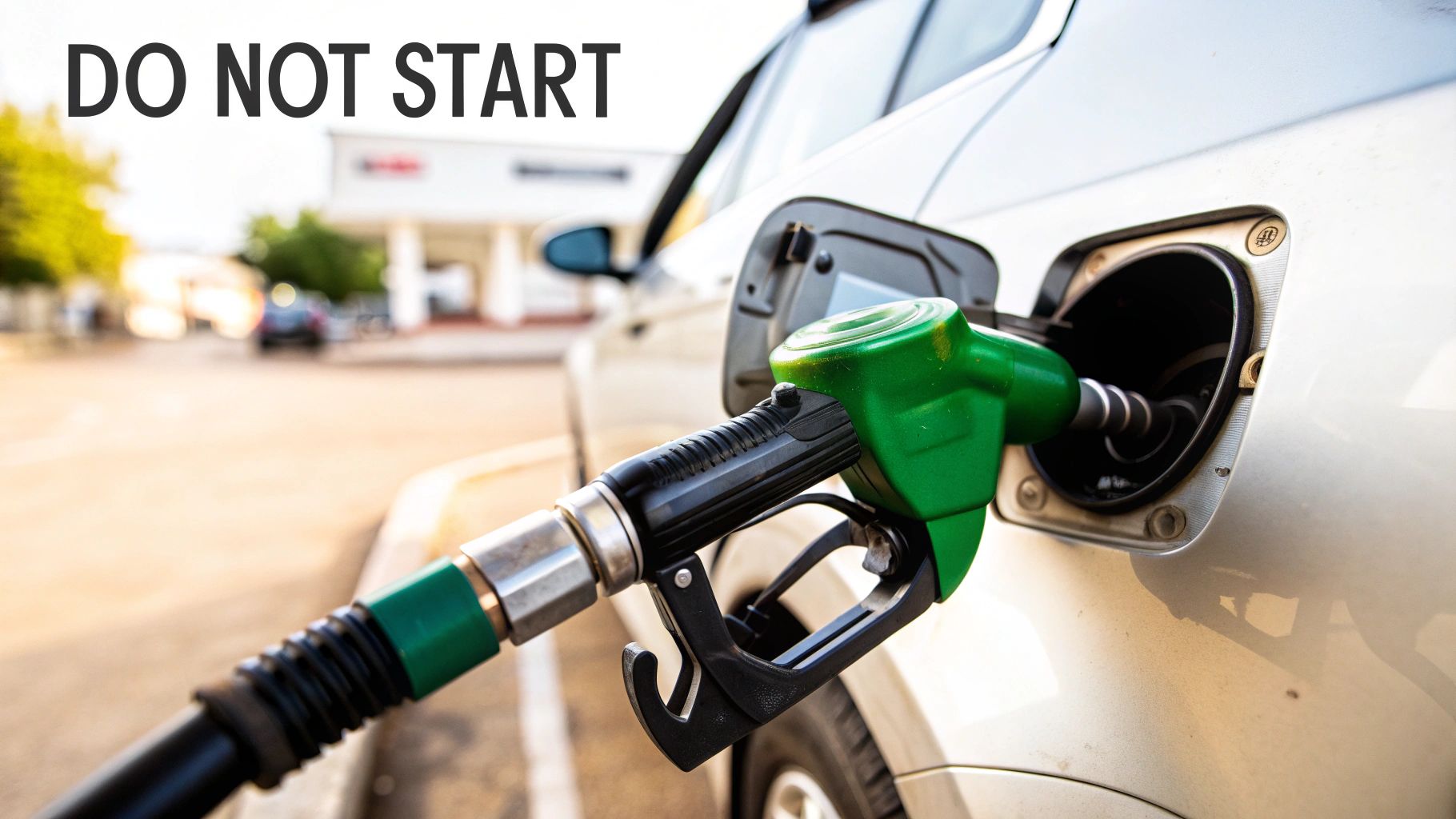
Realising you’ve used the wrong fuel pump is a heart-stopping moment, but take a small bit of comfort in knowing you’re not alone. Misfuelling is responsible for a huge number of breakdown calls every year. According to data from the UK Department for Transport, services like Misfuelled Car Fix attend over 100,000 misfuelling incidents annually. What's more, figures from the AA and RAC show diesel-in-petrol mix-ups make up around 45% of those cases in England. For a deeper dive into UK vehicle incident data, you can see reports published by sources like GB News.
The absolute golden rule to remember here is that the real damage happens when you turn the key. Think of it like this: petrol is a fine, highly flammable solvent, while diesel is a much thicker, oily fuel. Your petrol engine is designed to create a spark that ignites a fine mist of petrol. It simply can't do the same with heavy, oily diesel.
The most critical advice is also the simplest: Do Not Start the Engine. If you haven't turned the ignition, the diesel is just sitting in the fuel tank. The problem is contained, making the fix far easier and much, much cheaper.
Understanding the Immediate Signs
If you've clocked your mistake at the pump, you're in the best possible position to prevent any serious, wallet-busting damage. The situation only escalates once that diesel gets sucked into the fuel lines and engine components.
But what if you only suspect something is wrong after you’ve turned the ignition? Well, the symptoms will be immediate and pretty hard to ignore. Your car will start protesting because it’s being fed a fuel it just can't process. Spotting these signs instantly gives you the chance to shut the engine off before the real harm is done.
The table below breaks down what you'll see and feel, why it’s happening, and the risk involved if you keep the engine running. Think of it as your quick-reference checklist to confirm your suspicions and take the right action.
Quick Guide to Immediate Misfuelling Symptoms
Symptom | What You Will Notice | Why It Is Happening | Risk Level if Ignored |
|---|---|---|---|
Engine Fails to Start | The engine cranks over and over, but never actually catches and fires up. | Diesel is too thick and heavy to be properly atomised and ignited by a petrol engine's spark plugs. | Low (if not started) |
Engine Misfiring / Juddering | The car might start, but it will run horribly, shaking and juddering violently. | Any small amount of petrol left in the lines is igniting, but the engine is choking on the oily diesel. | High |
Excessive Smoke | Thick, dark, sooty smoke pours from the exhaust pipe. | This is unburnt diesel fuel being cooked in the hot exhaust, creating soot from incomplete combustion. | High |
Engine Stalling | The engine might catch for a few seconds before cutting out, or stall after a very short distance. | The thick diesel is clogging the fuel injectors and coating the spark plugs, starving the engine of anything it can burn. | Very High |
Loss of Power | The car feels sluggish and completely unresponsive when you press the accelerator. | The engine isn't generating any real power from the wrong fuel, causing a dramatic drop in performance. | Very High |
Each of these symptoms is a clear cry for help from your engine. The moment you notice any of them, the only safe move is to pull over, switch off the ignition, and call for professional help.
Why Diesel Is So Damaging to a Petrol Engine
To really get why the "do not start" rule is so critical, it helps to understand what's actually going on inside your engine. Putting diesel in a petrol car isn't just a simple mix-up; it's like trying to run a finely tuned watch with thick treacle instead of delicate watch oil. The two fuels are worlds apart, and a petrol engine is completely unprepared for what diesel brings to the party.
Picture trying to light a thick, damp log with a single match. That's pretty much what your spark plugs are up against with diesel. Petrol is a thin, highly volatile solvent, designed to vaporise into a fine mist and ignite instantly with a tiny spark.
Diesel, on the other hand, is an oil. It's much denser, heavier, and is designed to ignite under immense compression, not from a spark. This one core difference is where all the damage begins.
The Clogging Effect of Oily Fuel
A petrol car’s fuel system is a delicate network of narrow pipes, fine filters, and injectors engineered with microscopic precision. These parts are all designed for the free-flowing, watery consistency of petrol.
When you introduce thick, oily diesel, it can't move through this system properly. Instead of flowing cleanly, it starts to clog everything it touches. The fuel filter, meant to catch tiny bits of debris, quickly gets saturated with thick oil, starving the engine of any fuel at all.
Worse, the fuel injectors—which have tiny nozzles to spray a perfect mist of petrol—get completely bunged up by the syrupy diesel. This is a primary reason why the engine will misfire, stall, or refuse to run.
Lubrication Breakdown and Component Wear
Here’s a crucial point that catches many drivers out: petrol acts as a cleaning solvent in the fuel system, while diesel is a lubricant. That might sound like a good thing, but in a petrol engine, it’s a disaster. The high-pressure fuel pump and other components are built with incredibly tight tolerances and rely on the constant flow of petrol to keep them clean and cool.
Introducing an oily lubricant like diesel has the opposite effect. It coats everything, causing parts to gum up and stop working correctly. Modern petrol engines are not designed to be lubricated by their fuel; that’s what engine oil is for.
When the wrong fuel circulates, it’s not just a combustion issue; it’s a mechanical one. The oily diesel residue can prevent engine oil from reaching critical moving parts, causing metal-on-metal friction. This leads to rapid and severe wear on pistons, cylinder walls, and bearings.
The Problem with Combustion and Ignition
Even if a bit of diesel manages to squeeze past the clogged filters and injectors, the engine still can't use it. Petrol engines rely on spark plugs to ignite the fuel mix. Diesel needs massive pressure to auto-ignite—pressure that a petrol engine's compression stroke simply can't create.
When diesel gets into the combustion chamber, a few things happen, and none of them are good:
Spark Plug Fouling: The oily diesel coats the tips of the spark plugs, insulating them and preventing them from creating a spark. No spark means no ignition. This is a direct cause of misfiring or the engine not starting.
Incomplete Combustion: Any tiny bit of petrol left in the system might ignite, but the diesel itself won't burn properly. This leads to the thick, black smoke you see billowing from the exhaust—it's essentially just partially burnt, sooty diesel.
Engine Knocking: An engine's timing is precisely calibrated for petrol's instant ignition. The slow, incomplete burn of diesel throws this timing completely out of whack, causing violent knocking and juddering. This uncontrolled combustion puts enormous stress on the engine's internal parts.
Ultimately, the combination of clogged fuel lines, failed ignition, and improper lubrication is a recipe for catastrophic engine failure. This is why a professional fuel drain is the only safe solution and why simply "topping up" with petrol won't fix the underlying mechanical chaos. To see the full extent of the damage, you can learn more about what happens inside a diesel in petrol engine in our detailed guide.
Recognising Symptoms After Starting the Engine
If you’ve turned the key before spotting your mistake, the problem of diesel in your petrol car goes from a quiet mistake in the tank to a very loud, very obvious protest from the engine. The second that contaminated fuel gets pulled into the fuel lines, the symptoms become impossible to ignore. These aren't minor glitches; they're clear, urgent signals that your engine is in serious trouble and damage is happening right now.
What starts as a hesitant cough when you turn the ignition will quickly get much worse. The car might fire up and run for a few moments on the petrol still left in the lines, but that grace period is incredibly short. As soon as the thick, oily diesel hits the engine, the real problems begin.
Escalating Engine Problems and Power Loss
The first and most dramatic thing you'll feel is a violent juddering or shaking. Your car will start to run erratically, feeling like it's about to stall at any second. This is happening because the engine is being starved of the right kind of fuel. The spark plugs, which are designed to ignite a fine vapour of petrol, are now getting coated in a thick film of diesel that they simply can't set fire to.
This leads directly to a catastrophic loss of power. When you press the accelerator, you’ll get almost no response. The engine might rev weakly before bogging down, refusing to build any speed. This is incredibly dangerous if you’ve already pulled out onto a busy road. The car will feel sluggish and heavy, struggling to move under its own power because it isn't generating any real combustion.
A classic sign of this scenario is the engine completely refusing to rev much beyond idle. Data from the AA shows that a staggering 73% of misfuelling callouts report that the engine cuts out entirely after just a few hundred yards. To find out more about UK vehicle trends, you can review findings from sources like Tyresafe.org.
Loud Noises and Alarming Smoke Signals
Along with the awful performance, you'll likely hear some pretty distressing sounds coming from under the bonnet. A loud knocking or "pinking" noise is very common. This sound is detonation—uncontrolled explosions inside the engine's cylinders. A petrol engine is timed precisely for the rapid ignition of petrol; the slow, incomplete burn of diesel throws this cycle into chaos, putting immense physical stress on the pistons and cylinder walls.
The visual signs are just as alarming. A quick look in your rearview mirror will probably reveal thick, dark smoke billowing from your exhaust. This isn't normal exhaust vapour; it's a clear signal of incomplete combustion.
Black Smoke: This is basically soot, created as the unburnt diesel gets cooked by the high temperatures in the exhaust system. It’s a visible sign that the fuel isn’t being burned properly.
Blue-Tinged Smoke: In some cases, you might see a bluish tint to the smoke, which often means engine oil is being burned. This can happen if the diesel washes past the piston rings and thins out the engine oil.
These symptoms are your engine's final warning flares. The moment you notice any of them, your only job is to find a safe place to pull over, switch off the engine immediately, and stick your hazard lights on. Every second the engine runs, you're massively increasing the risk of permanent, expensive damage to parts like the fuel pump, injectors, oxygen sensors, and catalytic converter. If you're unsure about what to look for, you can find a comprehensive list of all the potential wrong fuel in car symptoms in our detailed guide. Trying to drive on, even for a short distance, just isn't worth the risk.
Your Emergency Action Plan for Misfuelling
It’s that sinking feeling every driver dreads. You’re at the pump, you hang up the nozzle, and then you see it—the black handle, not the green one. The moment you realise you’ve put diesel in your petrol car, your mind starts racing. But before panic sets in, just take a breath.
What you do in the next few minutes is absolutely critical. A calm, clear head now can mean the difference between a simple, inexpensive fix and a repair bill that runs into thousands. This is your checklist for turning that moment of panic into a manageable problem.
The Immediate Steps You Must Take
Your first actions are by far the most important. The goal is simple: stop that oily diesel from being pumped into your petrol engine’s highly sensitive fuel system.
If you’ve already started the car and are wondering what’s going on, this quick guide shows you what to look out for—and what to do.
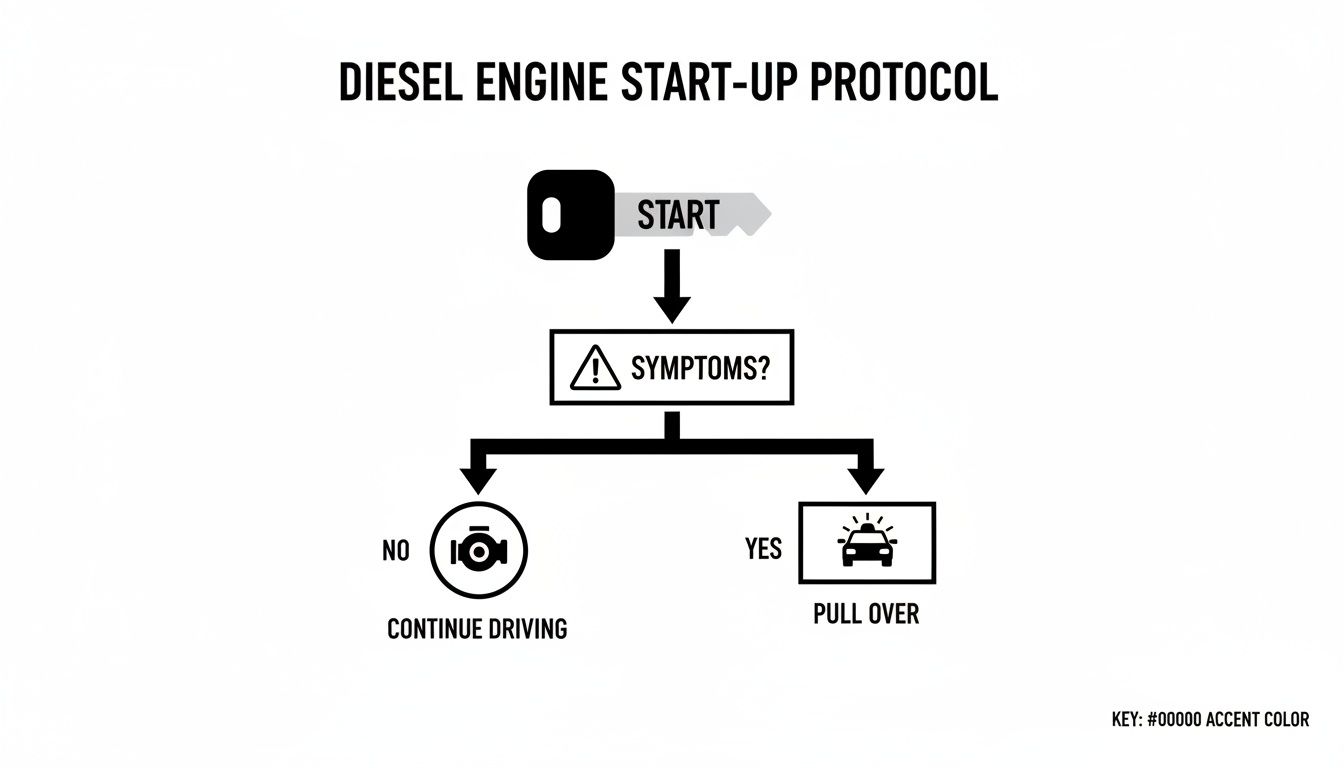
As you can see, the second you notice any of the classic diesel in petrol car symptoms, your only option is to pull over safely and turn the engine off. Immediately.
No matter your situation, follow these steps right now:
Do Not Touch the Ignition: If you’re still at the pump, this is the golden rule. Do not start the car. Don't even turn the key to put the radio on, as this can prime the fuel pump and start circulating the diesel. If you were already driving, find the first safe place to pull over, stop, and switch the engine off.
Secure Your Vehicle: Put the car in neutral and pull the handbrake on tight. If you've had to stop on a public road, get your hazard lights flashing to warn other drivers. Your safety comes first, especially if you’ve broken down in a tricky spot.
Inform the Petrol Station Staff: If you're still on the forecourt, let the staff know what’s happened. They’ve seen it all before. They can cone off the pump and might even help you push your car into a safe parking bay while you sort things out.
Calling for Professional Help
With the car secured and the engine off, the final step is getting it fixed properly. You might hear old myths about "diluting" the fuel or trying to drain it yourself. Don't be tempted—it's dangerous and simply doesn't work with modern cars.
The only guaranteed safe solution is a professional fuel drain. Trying a DIY fix without the right gear can lead to fuel spills, a serious fire risk, and the illegal disposal of contaminated fuel.
Call a Wrong Fuel Recovery Service: Your next call should be to a mobile specialist like Misfuelled Car Fix. To make the call as smooth as possible, have this information ready: * Your exact location (a postcode, road name, or the petrol station address). * Your car’s make, model, and registration number. * A rough idea of how much wrong fuel you put in. * Whether you started the engine or not.
A professional technician has the specialised, approved equipment to drain the tank, flush the entire fuel system, and get you back on your way safely. This is the fastest, safest, and most effective way to deal with the situation once you spot those diesel in petrol car symptoms.
Understanding the Professional Fuel Drain Process
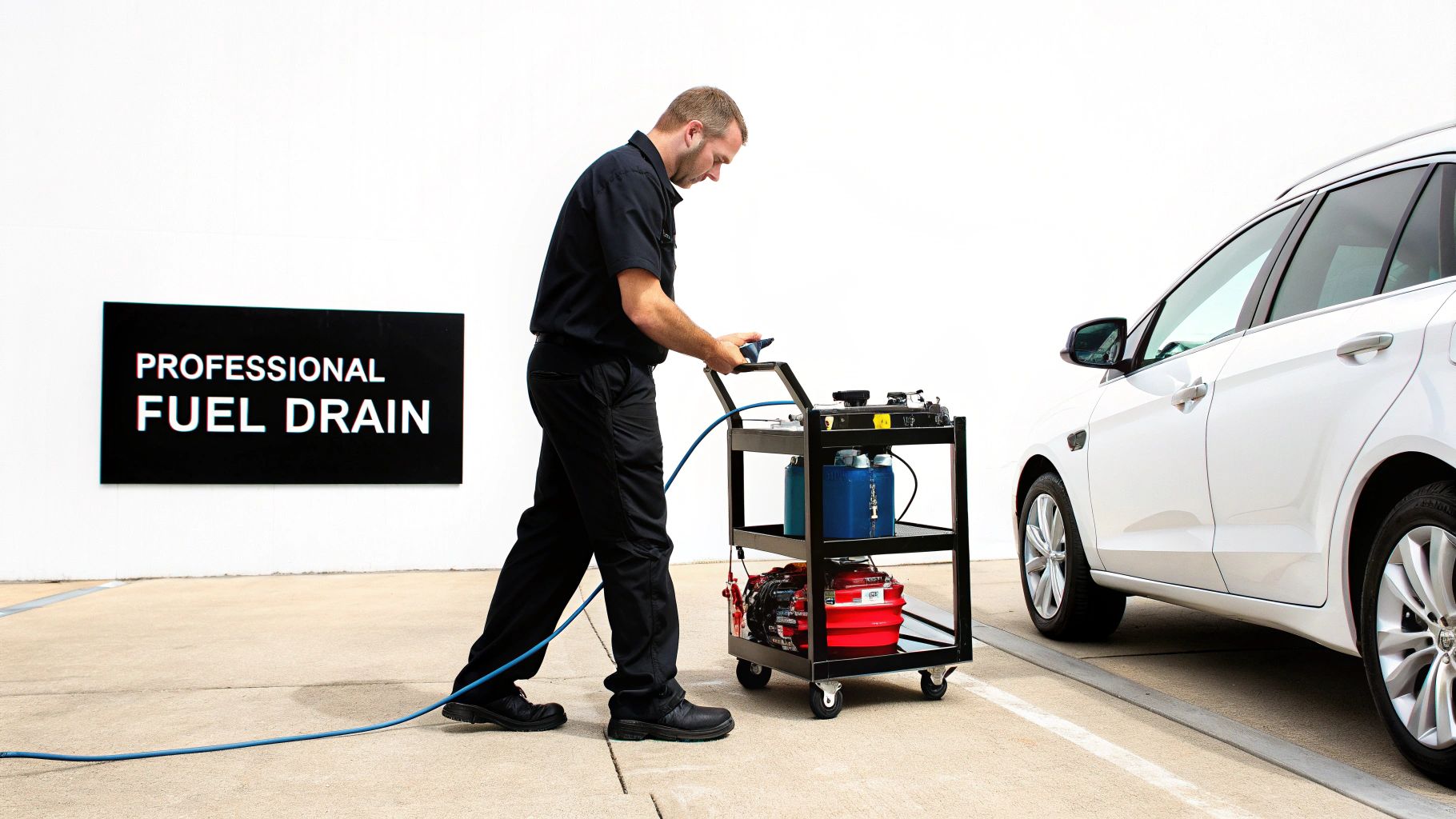
Seeing the flashing lights of a mobile fuel drain van pull up is a massive relief. But what actually happens next? The process is a whole lot more sophisticated than just siphoning the fuel out; it's a systematic cleanse of your car’s delicate fuel system, designed to stop any long-term damage from the diesel contamination in its tracks.
A trained technician won't just rock up with a hose and a jerry can. They arrive in a fully equipped, specialised vehicle packed with approved pumping gear, separate waste tanks for the contaminated fuel, and all the tools needed to access your car’s fuel system without causing any damage. This professional setup is non-negotiable for your car's health and for environmental safety.
The Draining and Flushing Procedure
First things first, the technician needs to safely drain the entire contents of your fuel tank. They’ll use a powerful, intrinsically safe pump system built specifically for this job. Crucially, this equipment is non-sparking and fully compliant with safety regulations—an absolute must when you're dealing with highly flammable liquids.
Once the tank is completely empty, the most critical part of the job begins: flushing the entire system. This isn't just a quick rinse. The technician will circulate clean, fresh petrol through the whole fuel network to dissolve and banish every last trace of that oily diesel residue.
This comprehensive flush is meticulously targeted to clean several key areas:
Fuel Lines: Scrubbing clean the pipes that ferry fuel from the tank to the engine.
Fuel Filter: Pushing fresh petrol through to dissolve any diesel that has soaked into the filter material.
Injectors and Fuel Rail: Making sure the microscopic nozzles of your fuel injectors are completely clear of any clogging diesel deposits.
This painstaking cleaning process is exactly what sets a professional service apart from a risky DIY attempt. It’s the only way to be absolutely certain that no damaging diesel is left lurking in the system to cause problems down the road.
The real beauty of this on-site process is its speed. It stops the clock on potential engine damage by removing the contaminant right away, rather than you having to wait for a garage appointment. This immediate action is key to dodging more severe mechanical failures.
Refuelling and Final System Checks
With the flush complete, the technician will add a small amount of the correct, clean petrol to your tank—usually around 5-10 litres. This is just enough to get the system primed and ready to start, so you don’t need to worry about having a fuel can handy.
The final, vital step is to start the engine. The technician will let the car run for several minutes, carefully monitoring its performance. They’ll be listening for any hint of engine hesitation, checking for a smooth, steady idle, and making sure no warning lights pop up on the dashboard. This is the final confirmation that the flush was a success and your car is happy running on pure petrol again.
The whole process, from arrival to departure, is designed to be as quick and hassle-free as possible, getting you back on the road safely in well under an hour. Specialised services are incredibly well-practised; some nationwide providers in England log around 1,800 diesel-in-petrol drains every single month. Their on-site flushing method is proven to cut the risk of lasting damage by up to 80% when compared to driving the vehicle to a garage.
This professional approach gives you total peace of mind, knowing the job has been done right. You can learn more about the specifics by checking out our guide on how to drain a fuel tank safely.
Simple Habits to Prevent Future Misfuelling Mistakes
Once you’ve dealt with the stress of a misfuelling incident and your car is back on the road, the last thing you want is a repeat performance. The good news is, making sure it never happens again is usually just a case of building a few simple habits into your routine. It’s an easy mistake to make, especially when you’re tired, distracted, or just in a rush.
Your best defence is simply to be more mindful at the pump. Life is full of distractions, but the petrol station forecourt is one place where sixty seconds of focused attention can save you from a four-figure repair bill.
Create a Distraction-Free Zone
By far the biggest culprit behind misfuelling is distraction. A tense phone call, kids kicking off in the back seat, or your mind already being at your next destination can easily make you grab the wrong nozzle on autopilot.
To fight this, make a deliberate effort to pause before you even touch the pump.
Kill the Call: Finish your phone conversation or text exchange before you get out of the car.
Take a Breath: Before you even open the fuel cap, just stop for one second. Focus.
Check the Pump: Look at the pump, look at the handle, and say the fuel type out loud. "Diesel."
This simple three-step mental checklist creates a vital pause. It breaks the autopilot cycle and forces your brain to actually engage with what you’re doing.
Understanding Nozzle Design and Its Limits
You’d think the physical design of the fuel nozzles would make this impossible, right? A standard diesel nozzle has a wider diameter than an unleaded one, so it physically shouldn’t fit into the filler neck of a modern petrol car. While this is a decent safeguard, it is not foolproof.
Some older cars have wider filler necks, and sometimes a bit of brute force is all it takes to make the nozzle feel like it fits. More importantly, this design does absolutely nothing to prevent the opposite, more destructive mistake of putting the narrower petrol nozzle into a diesel tank.
Never rely on the nozzle size as your only line of defence. Always double-check the colour of the handle—typically black for diesel and green for petrol in the UK—and read the label on the pump itself.
By adopting these simple, deliberate habits, you can turn a stressful past experience into a valuable lesson. It ensures every future trip to the petrol station is a smooth and correct one, and minimises any risk of experiencing those dreaded diesel in petrol car symptoms ever again.
Common Questions About Putting Diesel in a Petrol Car
After the initial shock of putting the wrong fuel in wears off, you’re usually left with a head full of nagging questions. What if I’d done something differently? What are the long-term consequences? We’ve got clear, direct answers to the most common queries to give you some peace of mind and bust a few dangerous myths along the way.
Can I Just Top Up with Petrol to Dilute the Diesel?
This is probably the most persistent and perilous myth out there. The logic seems simple enough: add enough petrol to thin out the diesel until the engine can burn it. But this is categorically untrue and a surefire way to cause serious damage.
Think of it like trying to mix oil and water; they just don't blend properly. The thick, oily diesel will still be there, ready to clog your fuel filter and coat your spark plugs, no matter how much petrol you pour on top. Trying to run the engine on this concoction only guarantees that the harmful diesel gets pumped through the entire system, causing the very damage a fuel drain is designed to prevent.
The only safe solution is to remove 100% of the contaminated fuel. Dilution isn't a fix; it's just a way of ensuring the wrong fuel reaches every delicate part of your engine.
How Much Wrong Fuel Actually Causes a Problem?
It’s easy to assume that just a small splash of diesel won't do any real harm, but modern petrol engines are incredibly sensitive. Even a tiny amount—as little as 5% diesel in a full tank of petrol—is more than enough to cause serious running issues.
That small percentage is all it takes to lower the octane rating of the petrol, foul up the spark plugs, and start clogging the fuel filter. You'll quickly notice the classic diesel in petrol car symptoms like engine juddering, a major loss of power, and puffs of smoke from the exhaust. There really is no "safe" amount of contamination.
Will This Mistake Void My Warranty or Insurance?
This is a common worry, and unfortunately, the answer can be a bit complicated. Most standard car insurance policies do not cover misfuelling as part of their comprehensive plans. It’s generally classed as driver error. However, many providers offer breakdown cover as an add-on, which may include assistance for misfuelling.
It's a similar story with your manufacturer's warranty. It’s designed to cover mechanical failures from faulty parts, not damage caused by putting the wrong fuel in. It's crucial to check the specific terms of your policy, but you should probably expect to cover the cost of the fuel drain yourself.
Is the Car Safe to Drive After a Professional Drain?
Absolutely, yes. A professional fuel drain isn't just about emptying the tank. The service involves a complete system flush, where clean petrol is circulated through the fuel lines, filter, and injectors to get rid of every last trace of diesel residue.
Once the system is clean and refilled with the correct fuel, the car is immediately safe to drive. The technician will run the engine and perform checks to ensure everything is operating perfectly before they leave, giving you complete confidence to get back on your journey.
If you've put the wrong fuel in your car, don't panic and definitely don't start the engine. Call the experts at Misfuelled Car Fix for immediate, 24/7 assistance across England. Our mobile technicians will safely drain and flush your system, getting you back on the road quickly. Visit us at https://www.misfuelledcarfix.co.uk or call our freephone number for rapid help.


