Diesel Fuel Contamination Symptoms What to Know and Do

Updated: Feb 19
24/7 Hotline Nationwide: 0800 999 1182
National Wrong Fuel Rescue: https://www.misfuelledcarfix.co.uk
If you found this page, we cover you in England!
Book Online:
If your engine starts stuttering, stalling, or feels like it's lost all its get-up-and-go, you're likely seeing the classic signs of diesel fuel contamination. It’s a bit like your car has suddenly come down with a nasty bug – its performance takes an immediate nosedive the moment it's fed compromised fuel.
Diesel Fuel Contamination Symptoms

When your diesel engine starts acting up, it’s not being difficult for the sake of it; it's sending out a clear distress signal. Learning to spot these signals early is your best defence against severe, and often eye-wateringly expensive, damage. Think of it like a doctor diagnosing an illness—different symptoms point to very different underlying problems.
Bad diesel can make an engine cough and splutter, much like a person with a chesty cold. This isn't just a small inconvenience. It's a direct threat to the health of your fuel injectors, pump, and filters. A modern diesel engine is a finely tuned bit of kit, and any impurities act like grit thrown into its delicate inner workings.
Common Symptoms to Watch For
The first hints of trouble are often subtle, but they have a habit of escalating quickly. A little bit of vigilance now can save you from a complete breakdown later. Here are the most frequent red flags that your fuel might be compromised:
Difficulty Starting the Engine: The engine struggles to turn over, or it just won’t fire up at all.
Reduced Power and Acceleration: The car feels sluggish and weak. You put your foot down, but there’s no real response.
Engine Stalling or Misfiring: It might cut out unexpectedly while you're stopped in traffic, or you'll feel it shuddering as you drive.
Increased Fuel Consumption: Contaminated fuel just doesn't burn right, forcing your engine to guzzle more of it to produce the same amount of power.
Black or White Exhaust Smoke: This is a dead giveaway that the fuel isn’t combusting properly inside the engine cylinders.
In the UK, engine misfiring and power loss are incredibly common, showing up in up to 65% of misfuelled diesel vehicle cases handled by roadside assistance. When petrol is the culprit, it strips diesel of its vital lubricating properties, causing injectors to grind themselves to failure. Data from UK misfuel recovery firms shows that 40% of these incidents lead to the car stalling within just 5-10 miles.
How Different Contaminants Affect Your Vehicle
Not all contamination is created equal. Petrol, water, AdBlue, and even microbial growth (the dreaded "diesel bug") all create their own unique set of problems, each with its own signature symptoms. For instance, the sharp, metallic knocking sound from petrol contamination is a world away from the sputtering and hesitation caused by water in the fuel lines.
Contaminated fuel is the primary cause of premature fuel injector failure. Prolonged exposure to impurities can corrode and degrade the injector’s internal metal surfaces, leading to poor fuel atomisation and, eventually, catastrophic engine damage.
Understanding these distinctions is the first step in figuring out what's gone wrong. If you know you've put the wrong fuel in, you can learn more about the specific wrong fuel in car symptoms in our detailed guide.
Quick Guide to Diesel Contamination Symptoms
To make it even clearer, here’s a quick reference table to help you connect the dots between what your car is doing and what the likely cause is.
Type of Contaminant | Common Symptoms | Engine Sound | Exhaust Smoke |
|---|---|---|---|
Petrol | Loss of power, stalling, misfiring, difficulty starting. | Loud knocking or "pinging" sound from pre-detonation. | Grey or white smoke with a distinct petrol smell. |
Water | Sputtering, hesitation, engine surging while idle. | Rough, inconsistent idling sound. | White, steam-like smoke, especially on acceleration. |
AdBlue | Rapid power loss, engine shutting down, warning lights. | Can be normal at first, then rattling or grinding noises. | Typically no smoke, as the engine often refuses to run. |
Microbial Growth | Clogged filters, rough running, reduced performance. | Normal to slightly rough idle. | Black smoke due to incomplete combustion. |
By paying attention to the unique combination of symptoms—what you can hear, feel, and see—you can get a much better idea of the problem you're facing and what your next steps should be.
The Four Main Culprits Behind Contaminated Fuel
Figuring out what that strange noise or sudden drop in performance means is one thing, but understanding why it's happening is the key to stopping it from happening again. Diesel fuel contamination isn't a single issue; it's a family of problems, each with its own cause and calling card.
Think of your fuel system like a high-performance athlete's diet—it only takes one bad ingredient to wreck the whole thing. Let's break down the four most common contaminants that can sabotage your engine's health.
1. Petrol in Your Diesel Tank
This is, without a doubt, the most common and instantly destructive type of misfuelling out there. Accidentally putting petrol into a diesel tank is like trying to lubricate a Swiss watch with sand. Diesel fuel does two jobs: it powers the engine, and it acts as a crucial lubricant for high-pressure parts like the fuel pump and injectors.
Petrol is the polar opposite. It’s a powerful solvent. The moment it hits the diesel system, it strips away that vital lubricating film, causing precision-engineered metal parts to grind against each other at immense pressures. This creates friction, intense heat, and a swarm of tiny metal particles that get pumped through your entire fuel system, leading to catastrophic failure.
Even a small amount of petrol can slash the flashpoint of diesel, making it ignite far too early in the combustion cycle. This is what causes that distinct, sharp "knocking" sound you hear, and it puts an incredible strain on the engine's internal parts.
The damage isn't a slow burn; it's immediate. Every single second the engine runs with petrol in the mix, the risk of destroying the fuel pump and injectors skyrockets.
2. Water Contamination
Water is the silent enemy of every diesel system. It's sneaky, too. It can get into your tank from condensation building up in a half-empty tank, through a dodgy seal on your fuel cap, or even from a petrol station's own contaminated storage tanks.
Once it's inside, water causes chaos in two main ways. First, it’s corrosive. It causes rust to form on the inside of your fuel tank, lines, and—most critically—your incredibly precise fuel injectors. These tiny rust particles then break off and act like liquid sandpaper, scouring delicate components and wearing them out.
Second, water doesn't compress. If a drop of water gets sucked into the high-pressure fuel pump, the sudden, violent pressure change can cause injector tips to literally explode. This completely ruins fuel atomisation, leading to classic symptoms like rough idling and clouds of white, steamy exhaust smoke.
3. AdBlue Contamination
AdBlue is vital for modern diesel engines to meet emissions standards, but it belongs in its own separate tank and nowhere else. Pouring it into the diesel tank by mistake is like pouring liquid cement into your engine’s arteries. AdBlue is a mix of urea and de-ionised water, and it is completely incompatible with your fuel system.
Unlike petrol, AdBlue doesn't mix with diesel. It’s heavier, so it sinks to the bottom of the tank right where the fuel pump pickup is. The pump sucks it in almost immediately. As soon as it hits the heat of the fuel lines, the water evaporates, leaving behind solid urea crystals.
These sharp crystals block absolutely everything they touch:
Fuel Filters: They get clogged solid, almost instantly.
Fuel Lines: The flow of diesel slows to a trickle or stops completely.
Injectors: The tiny, delicate nozzles are blocked, stopping fuel from spraying correctly.
This crystallisation can cause the engine to shut down in a matter of minutes. Cleaning it up isn't a simple flush; it’s a meticulous, specialist job to dissolve and remove the crystals from every part of the system.
4. Microbial Growth – The Diesel Bug
This might be the most insidious contaminant of all. "Diesel bug" is the catch-all term for a cocktail of bacteria, fungi, and mould that can literally live and breed inside your fuel tank. All these microorganisms need is a tiny bit of water to get started, setting up a perfect home at the point where the water at the bottom of the tank meets the diesel above.
As they feed on the hydrocarbons in the fuel, they produce a thick, slimy gunk known as biomass. This sludge gets sucked into the fuel system, clogging filters with alarming speed. In fact, a filter that blocks up again and again is one of the most reliable diesel fuel contamination symptoms pointing to a diesel bug infestation.
Worse still, these microbes excrete acidic by-products that corrode metal components from the inside out, leading to premature wear on rings, seals, and cylinder liners. The result is an engine that runs rough, blows black smoke from unburnt fuel, and eventually suffers from total fuel starvation.
What to Do Immediately if You Suspect Contamination
It’s that sinking feeling every driver dreads. That split-second realisation at the pump, a sudden stutter from the engine, or an unexpected warning light. The moment you suspect your fuel is contaminated, your very next move is the most important one you’ll make. It’s the difference between a simple fix and a repair bill that could easily stretch into the thousands.
The single, golden rule is this: DO NOT START THE ENGINE. If you’re already driving, pull over safely and turn it off immediately. Don't even turn the key to the 'on' position, as this can prime the fuel pump and start circulating the damaging mixture through your car's veins.
Think of your fuel system like your car's circulatory system. Turning that key is like injecting poison straight into the bloodstream. Once that contaminated fuel gets pulled from the tank towards the high-pressure pump and injectors, the damage starts almost instantly.
Your Immediate Action Checklist
Panic is a natural reaction, but a calm, methodical approach will save you a world of time, money, and stress. The second you think something's wrong, run through these steps:
Switch Off the Ignition: If you're driving, get to a safe spot as quickly as possible and kill the engine. If you've just put the wrong fuel in at a petrol station, leave the keys out of the ignition.
Put the Vehicle in Neutral: Make sure the handbrake is on tight so the car is secure and won't roll.
Inform Petrol Station Staff: If you're still on the forecourt, let the staff know what's happened. They've seen it all before and can help cordon off the pump or move your vehicle to a safe spot.
Do Not Attempt a DIY Drain: Draining a modern fuel tank isn't a job for the roadside. It’s a complex and genuinely hazardous task that requires specialist equipment to do it safely and dispose of the contaminated fuel legally. Trying it yourself creates a massive fire risk and can easily cause even more damage.
The flow of contaminants—whether it's petrol stripping away lubricating films, water causing rust, or AdBlue crystallising—is a rapid and destructive process.
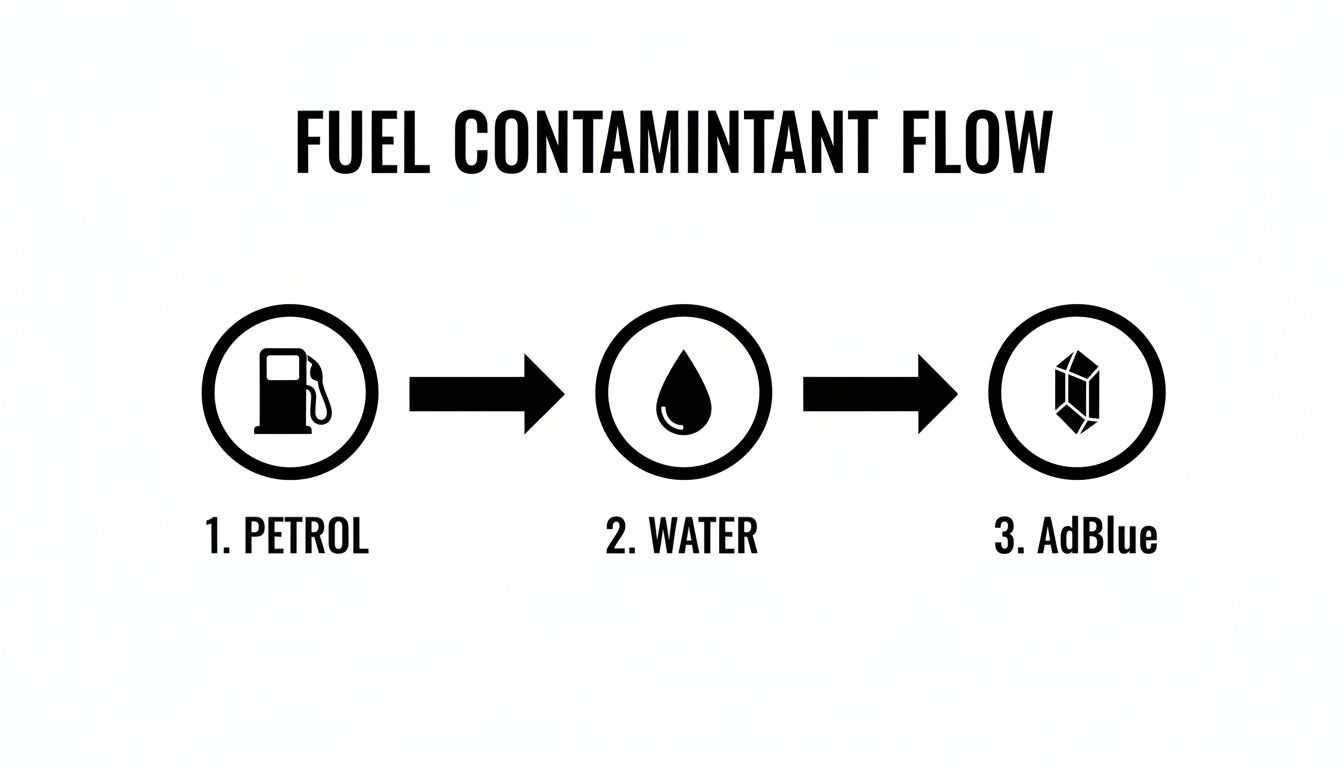
This process shows exactly how different contaminants begin to attack the fuel system, which is why stopping them from circulating is so critical.
Why Calling a Specialist Is Non-Negotiable
Honestly, your best and safest move is to call a professional mobile fuel drain service. This isn't just a friendly recommendation; it's the most crucial step you can take to shield your engine from potentially terminal harm.
A mobile fuel drain service is built for this exact emergency. Technicians arrive with ATEX-approved pumping equipment specifically designed for flammable liquids, ensuring the whole job is safe, clean, and compliant with environmental laws.
A specialist won't just empty the tank. They perform a complete system flush, meticulously removing the contaminated fuel from the lines, filters, and pump to ensure no damaging residue is left behind. It's a deep clean that a standard garage is rarely equipped to handle on the roadside.
Making that call stops a costly mistake from spiralling into a complete engine catastrophe. To get a better idea of what's involved, have a look at our guide on how to drain a fuel tank safely. It breaks down exactly why professional help is the only reliable way to fix diesel fuel contamination symptoms without creating bigger problems.
How a Professional Fuel Drain Service Works
Realising you've got a tank full of contaminated fuel is a heart-sinking moment, but the fix doesn't have to be a nightmare. Calling in a professional fuel drain service might sound drastic, but understanding exactly what they do can take the stress out of the situation and reassure you that your car is in the right hands. This isn't just about siphoning out some bad fuel; it's a precise, methodical operation designed to protect your engine from expensive, long-term damage.
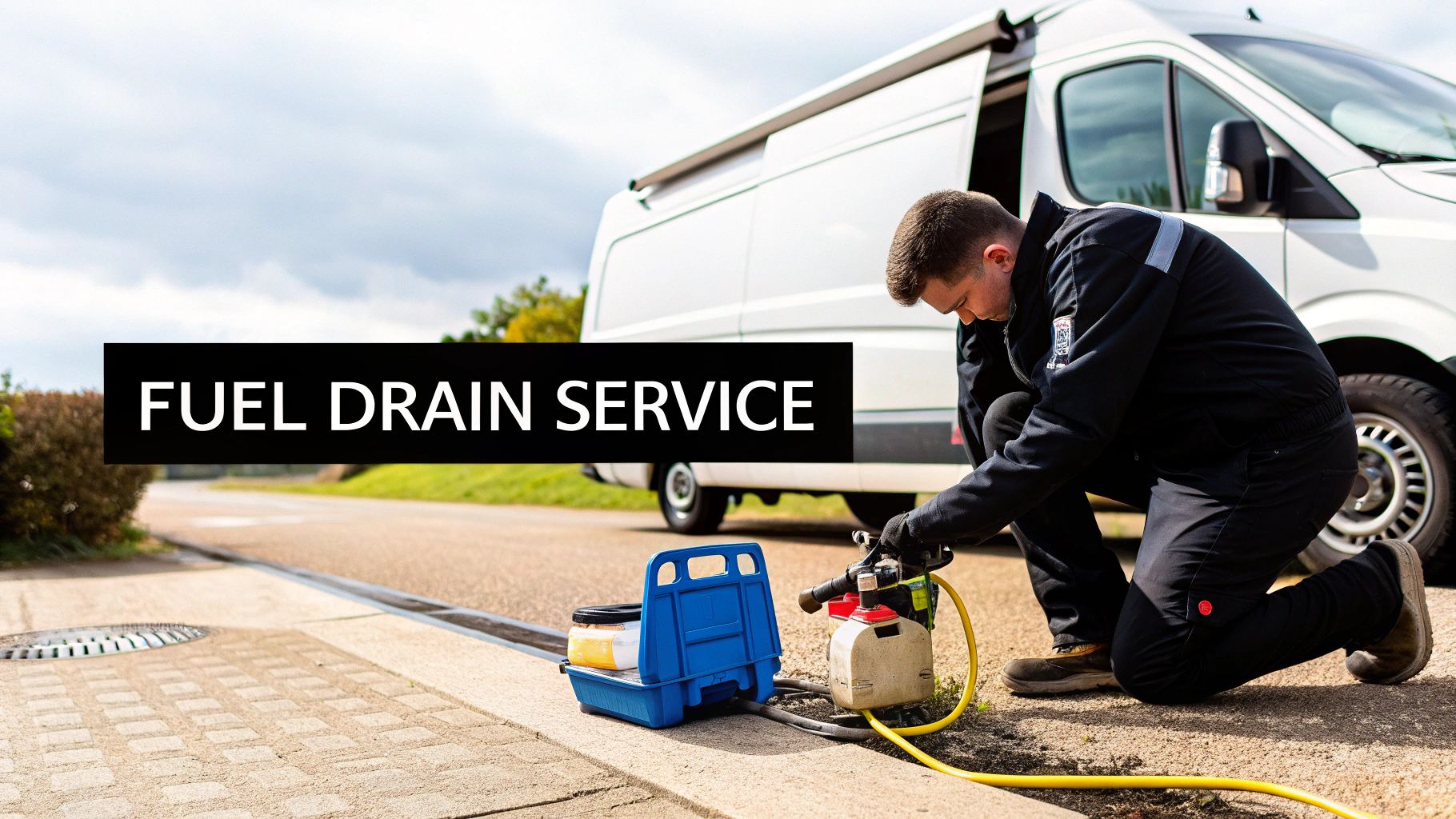
A specialist technician will come right to you—whether you're stuck on a petrol station forecourt, pulled over on the motorway, or sat on your own driveway. They arrive in a vehicle packed with all the right gear for the job. Their process is leagues ahead of what a general mechanic or a DIY attempt could ever hope to achieve, ensuring every last trace of the contaminant is gone for good.
The Initial Assessment and Safety Setup
First things first, the technician makes the area safe. They'll secure your vehicle and often set up a safety cordon, which is absolutely vital if you're on a busy road. This initial step is all about protecting you, the technician, and other drivers.
Next, they’ll run through a quick assessment with you. They'll ask about the specific diesel fuel contamination symptoms you've noticed, what you think might be in the tank, and the all-important question: has the engine been run? This information is crucial as it helps them tailor the job to your exact predicament.
The Draining and Flushing Process
This is the heart of the operation and where their specialist kit really comes into play. The technician uses industry-standard, ATEX-approved pumps specifically designed to handle flammable liquids. This completely eliminates the risk of sparks or fire that you'd face with any kind of makeshift setup.
The process is broken down into a few key stages:
Complete Tank Drain: The technician gains access to your fuel tank and uses their specialised pump to remove 100% of the contaminated fuel. This is then safely transferred into a secure, UN-approved container for proper, legal disposal.
System-Wide Flush: Just emptying the tank isn't nearly enough. Contaminants will have already worked their way into the fuel lines, filter housing, and possibly even the fuel rail. The technician will meticulously flush these parts with clean fuel to purge any nasty residue left behind.
Fuel Filter Check: Depending on what the contaminant was and how bad the situation is, your fuel filter could be completely clogged. The technician will inspect it and let you know if it needs replacing to stop any trapped particles from getting into the fresh, clean fuel.
This thorough approach guarantees no harmful gunk is left hiding in your system, waiting to cause problems down the line. For a broader look at professional roadside help, you might find our essential guide to misfuel recovery services nationwide interesting.
A professional fuel drain isn't just a service; it's an insurance policy against future engine failure. By meticulously flushing the entire system, technicians prevent the long-term corrosive and abrasive damage that leftover contaminants can cause to high-pressure fuel pumps and injectors.
Replenishing and Restarting
Once the entire system is spotlessly clean, the technician adds a small amount of fresh, correct diesel back into your tank. It’s usually just enough to get you safely to the nearest petrol station so you can fill up properly.
Finally, they'll prime the fuel system and start the engine, keeping a close eye on it for any issues. They’ll let it run for a few minutes to ensure the clean fuel is circulating as it should and that all those earlier symptoms have vanished. Only when they're completely satisfied that your vehicle is running smoothly will they pack up, confirm the job is done, and get you back on your way with minimum fuss and maximum peace of mind.
A Practical Guide to Preventing Diesel Contamination
Knowing how to spot the signs of contaminated fuel is a vital skill, but stopping it from ever happening in the first place is the real win. An ounce of prevention truly is worth a pound of cure, especially when a simple mistake at the pump can spiral into thousands of pounds in engine repairs. By adopting a few smart habits, you can dramatically lower the risk of ever having to deal with the stress and expense of a messed-up fuel system.
This isn't about becoming a master mechanic overnight; it's just about being a more mindful vehicle owner. Whether you're an everyday motorist, a fleet manager juggling dozens of vehicles, or a petrol station operator, getting proactive is your best defence.
Simple Habits for Everyday Drivers
For most of us, preventing contamination comes down to paying a bit more attention during the most routine task of all—filling up the tank. It only takes a second of distraction to make a wallet-emptying mistake.
By far the most common slip-up is misfuelling, especially putting petrol into a diesel car. The nozzles are different sizes for a reason, but it still happens with alarming frequency.
Always double-check the pump nozzle and the label before you start filling. The colour-coding is there for a reason: diesel pump handles are black, and unleaded petrol is green. This simple glance is your first and most effective line of defence.
Beyond the forecourt, it's worth thinking about how you store and use fuel at home.
Ditch Old Fuel Cans: If you use jerry cans, make sure they are clean, clearly marked "DIESEL," and not left half-full for months. Old fuel degrades, and condensation can easily introduce water.
Keep Your Tank Topped Up: In colder, damp weather, try to keep your fuel tank at least half full. This minimises the empty space where condensation can form, reducing the risk of water creeping into your fuel.
Choose Reputable Fuel Stations: Stick to busy, well-maintained petrol stations. High fuel turnover means their underground storage tanks are far less likely to have old, degraded fuel or a nasty layer of water sitting at the bottom.
Proven Strategies for Fleet Managers
When you're managing a whole fleet of vehicles, the risk of a misfuel multiplies. One driver's honest mistake can take a critical vehicle off the road, wrecking schedules and racking up serious costs. Prevention here is all about building solid systems and having crystal-clear communication.
Putting a few key strategies in place can virtually eliminate misfuelling incidents right across your fleet.
Clear Vehicle Labelling: Every single vehicle needs a clear, bold "DIESEL ONLY" sticker right on the inside of the fuel flap. It's an unmissable final reminder for the driver at the exact moment they need it.
Driver Training Programmes: Never assume everyone knows the risks. Build specific training on misfuelling prevention into your driver induction and regular safety briefings. You need to explain the brutal mechanical damage and the eye-watering costs involved to really hammer home why being careful matters.
Misfuelling Prevention Devices: Think about fitting your vehicles with specialised caps that physically stop a smaller unleaded nozzle from going into the diesel filler neck. It’s a small investment that offers foolproof protection.
Fuel Card Management: Where possible, link your fuel cards to specific vehicle types. This can be set up to flag or even block a transaction if a driver tries to buy the wrong type of fuel for their assigned vehicle.
Best Practices for Fuel Storage and Maintenance
For anyone storing diesel in bulk—whether for a fleet, farm machinery, or backup generators—tank maintenance is simply non-negotiable. Stored fuel is a sitting duck for water getting in and the dreaded "diesel bug."
Regular checks and good housekeeping are essential to keep your stored fuel clean and stable. The gold standard is to test your stored fuel at least every six months.
Your maintenance checklist should include:
Regular Water Draining: Water is heavier than diesel and always sinks to the bottom of the tank. Use the drain cock on your storage tank regularly to bleed off any water that's built up.
Filter and Vent Checks: Make sure tank vents aren't blocked, as this can create a vacuum that actually sucks in damp air. Regularly inspect and change the filters on your dispensing pumps.
Biocide Treatment: If fuel is going to be stored for more than a few months, treat it with a quality biocide. This kills off any microbes before they get a chance to multiply and create the slimy gunk that clogs filters and eats away at your tank.
Still Have Questions About Diesel Contamination?
Even after getting to grips with the symptoms, it's natural to have a few practical questions rattling around in your head. Once the initial shock wears off, the "what ifs" start to surface. Let's run through some of the most common queries we get from drivers caught in this stressful spot.
Think of this as your quick-fire guide to the practical side of things. Getting these answers straight now will save you a world of worry if you ever find yourself staring at the wrong fuel nozzle.
How Far Can You Drive with Contaminated Fuel?
This is a critical one, and honestly, the answer is "not far enough to risk it." The distance you might get depends entirely on what's in your tank. If you've put petrol in your diesel, the damage begins almost instantly. The petrol starts stripping away diesel's vital lubricating film, and many cars won't make it more than 5 to 10 miles before the engine complains loudly with knocking sounds, before eventually giving up the ghost and stalling completely.
Water contamination is a bit more unpredictable. The car might cough and splutter for a while, hesitating and running rough, before it finally cuts out. With AdBlue, the journey is often the shortest of all. AdBlue is notorious for crystallising and blocking the fuel system, which can shut down an engine within just a couple of minutes.
The most important takeaway here is that trying to "drive it out" is the single worst thing you can do. Every metre you travel forces the contaminant deeper into your engine, multiplying the potential for catastrophic and incredibly expensive damage.
Will Even a Small Amount of Petrol Damage a Diesel Engine?
Absolutely. It's a dangerous misconception that a little splash of petrol won't do any harm. The reality is, even as little as 5% petrol in a tank of diesel is enough to slash its lubricity and lower its flashpoint. This puts your high-pressure fuel pump and injectors in immediate and serious danger.
Modern common rail diesel systems are masterpieces of precision engineering, operating under immense pressures. They rely completely on the oily nature of diesel fuel to stop their finely-tuned components from grinding themselves into dust. Pouring petrol in—which is a solvent—is like tipping sand into a Swiss watch. There is simply no "safe" amount; any quantity is a problem that needs a professional fuel drain, right away.
Is a Fuel Drain Service Covered by Car Insurance?
This is a tricky one, and it really comes down to the fine print of your policy. As a general rule, standard car insurance policies often do not cover misfuelling. It’s usually classed as driver error, not an accident or an unexpected event. Some of the more premium, fully comprehensive policies might offer it as an add-on, but it's rarely included as standard.
Where you might have better luck is with a standalone breakdown cover policy, as many of these do include assistance for misfuelling. It's absolutely crucial to check the specific wording in your documents.
Here's what to look for:
Accidental Damage Clause: Check if misfuelling is specifically mentioned as being included or, more likely, excluded.
Breakdown Assistance: Look for a "wrong fuel" or "misfuel" clause in your breakdown cover.
Policy Excess: Remember that even if it is covered, you'll likely have an excess to pay.
Our best advice? Read the small print on your insurance and breakdown policies before you need them. Knowing where you stand will help you make a clear-headed decision in an emergency, without the added stress of unexpected costs.
How Does a Mobile Fuel Drain Cost Compare to a Garage Repair?
When you’re stuck by the side of the road, cost is a massive factor. A mobile fuel drain service is almost always the cheaper and quicker solution compared to getting towed to a garage. A garage repair piles on extra costs: the recovery truck to get you there, the garage's diagnostic labour charges, and then the fuel drain itself. The whole process can take hours, sometimes days, and the bill can climb alarmingly high.
A mobile service, on the other hand, comes directly to you. This immediately cuts out the recovery fees and the garage's overheads. The entire job is done on the spot, often in under an hour, getting you back on your way with minimal fuss and a much more predictable, lower price.
For instance, getting the AA or a main dealer to sort a misfuel can be significantly more expensive than calling a specialist mobile service. Our entire business model is built around efficiency, and those savings get passed directly to you. It's the difference between calling an emergency plumber to fix a burst pipe versus having your house towed to their workshop. One is a direct, logical fix; the other is needlessly complicated and costly.
If you're facing any of the diesel fuel contamination symptoms we’ve covered in this guide, don't wait for a small problem to become a huge one. Misfuelled Car Fix offers a 24/7 mobile fuel drain service across England to get you back on the road safely and quickly. Contact us now for immediate, expert assistance.